Container Gardens
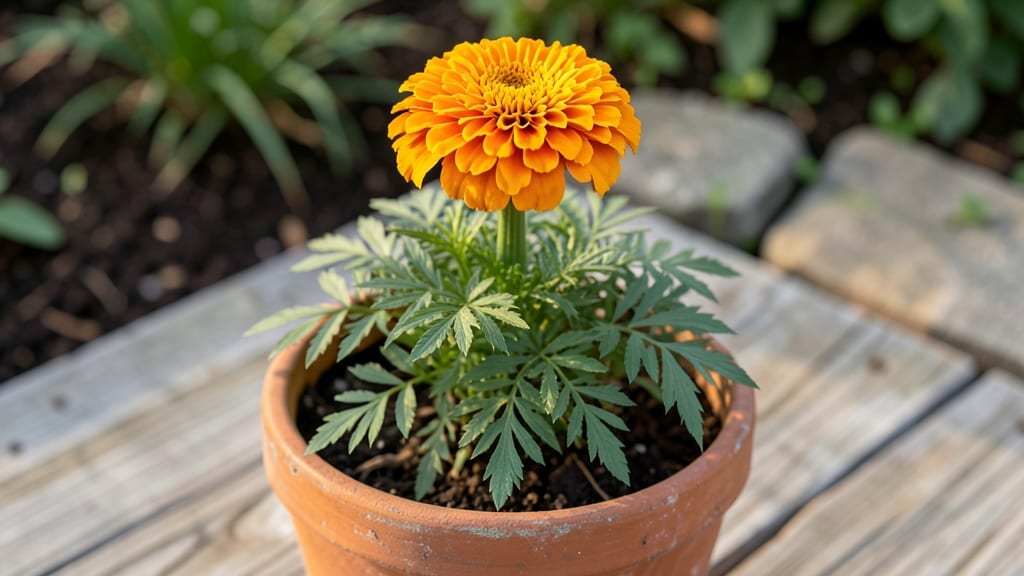
Growing marigolds in flower pots turns your balcony or patio into a pest-repelling powerhouse with vibrant orange and gold blooms that last all season. 🌻 The secret lies in matching their love of sun and well-draining soil to the right container—too small, and they’ll get root-bound; too big, and the soil stays soggy.
I’ve grown marigolds in pots for years, and the key is choosing a container with drainage holes that’s at least 12 inches wide for each plant.
Start with a lightweight potting mix blended with perlite or sand to prevent compaction, and place your pots where they’ll get 6+ hours of direct sunlight daily. Water when the top inch of soil feels dry, but never let them sit in standing water—marigolds hate wet feet.
A balanced, water-soluble fertilizer every 4-6 weeks keeps those blooms coming, and you’ll notice fewer aphids and squash bugs nearby thanks to their natural pest-repelling oils.
By midsummer, your pots will be bursting with fragrant, disease-resistant blooms that outshine store-bought flowers. The best part? You can move them to extend the season or protect them from early frosts.
Just watch for powdery mildew in humid weather—thinning crowded plants and ensuring good airflow prevents it. Your neighbors will ask how you do it, and you’ll have the secret.
Works for terrace gardens, window boxes, or hanging baskets—just adjust pot size for dwarf varieties like ‘Tangerine’ or ‘Bonanza’. The same principles apply whether you’re growing one pot or a whole patio display. Let’s get those marigolds thriving!
📚 In This Guide
- What you need
- Instructions
- Tips and common mistakes
- Wrapping up and next steps
What you need
- ● Marigold seeds or seedlings: Choose pest-resistant varieties like French marigolds (e.g., 'Bonanza' or 'Jolly Tall') or African marigolds (e.g., 'Crackerjack'). Seed packets typically contain 50–100 seeds.
- ● Flower pots: Select 5–7 inch diameter containers (minimum) with drainage holes. Use 3–5 gallon pots for larger varieties like 'Tangerine Gem'.
- ● Potting soil: A well-draining mix (e.g., 60% peat/coir, 30% perlite, 10% compost) or a pre-mixed container garden soil with added organic matter.
- ● Drainage medium: Small gravel (½ inch pebbles) or broken pottery shards for the pot’s bottom layer.
- ● Garden trowel or small shovel for planting.
- ● Watering can with a fine rose nozzle (or a spray bottle for seedlings).
- ● Fertilizer: Balanced liquid fertilizer (e.g., 10-10-10) or slow-release granules (follow package rates).
- ○ Optional: Mulch (e.g., straw or shredded leaves) to retain moisture.
- ● Eggshells or crushed chalk for calcium-rich soil (prevents blossom-end rot).
- ● Label tags to track varieties.
Step-by-step guide to growing marigolds in flower pots
Here's how to create a vibrant, pest-repelling container display that thrives all season.
🌱 Step 1: Select the Right Containers and Soil Mix
Choose containers with drainage holes—marigolds hate soggy roots. A 12-inch diameter pot works perfectly for 4 plants, or use individual 6-inch pots for singles. Terra cotta pots wick moisture naturally, but any well-draining material will work.
Fill pots with a lightweight potting mix blended with 20% perlite or vermiculite for aeration. I like to add a handful of compost to each pot for nutrients, but avoid garden soil—it compacts and suffocates roots. Moisten the mix until it feels like a wrung-out sponge, not dripping.
🌱 Step 2: Plant Marigold Seeds or Transplants
If starting from seed, sow ¼ inch deep and 1 inch apart—marigolds don't like being crowded. For transplants, dig holes twice as wide as the root ball and place plants at the same depth they were in their nursery pots. Press soil gently around stems to eliminate air pockets.
Here's the thing—marigolds grow fast. Space 4 plants in a 12-inch pot or 1 plant per 6-inch pot. If planting multiple pots, stagger varieties like 'French Marigold' (compact) and 'African Marigold' (taller) to create visual interest. Water immediately after planting to settle the soil.
☀️ Step 3: Position for Maximum Sun and Pest Protection
Marigolds need full sun (6+ hours daily) for bold blooms and strong pest-repelling properties. Place pots on a south-facing patio, balcony, or deck—they'll thrive even in hot afternoons. If your space gets afternoon shade, supplement with a grow light for 4-6 hours daily.
This is the moment that matters: Rotate pots weekly so plants grow upright, not leaning toward the light. You'll see leaves yellowing or stems stretching? That's your cue to move them closer to the light source. Marigolds in shade produce fewer blooms and weaker pest-deterrent oils.
💧 Step 4: Water and Feed for Continuous Blooms
Water when the top inch of soil feels dry—stick your finger in to check. Overwatering causes root rot, while underwatering stresses plants. I water deeply in the morning, letting excess drain completely. Empty saucers after 10 minutes to prevent soggy roots.
Feed every 2-3 weeks with a balanced liquid fertilizer (10-10-10 or 20-20-20) diluted to half strength. The key to nonstop blooms is consistency—don't skip feeding once flowers start appearing. You'll notice buds forming within 4-6 weeks of planting, and flowers will last all season with proper care.
✂️ Step 5: Deadhead and Maintain for Long-Lasting Beauty
Pinch off spent blooms weekly to encourage more flowers. This simple step prevents seed formation and redirects energy to new buds. Use clean pruners or your fingers—just twist gently to remove the entire flower head. You'll see fresh blooms emerging within 7-10 days of deadheading.
Watch for aphids or powdery mildew—marigolds rarely get pests, but container plants can suffer from crowded conditions. If you spot problems, spray with neem oil or insecticidal soap. Healthy marigolds naturally repel nematodes, rabbits, and even mosquitoes, making them the ultimate low-maintenance container star.
Tips & tricks for perfect marigolds in flower pots
These little-known strategies will help your marigolds thrive and keep pests at bay all season long.
Container Selection: While terra cotta is ideal, plastic pots actually retain moisture better in hot climates. If using plastic, add extra perlite (up to 30%) to prevent root rot. I've found that black containers absorb heat and can accelerate growth in cooler spring months—just be prepared to water more frequently. For windy locations, secure pots with saucers or weights to prevent tipping.
Soil Preparation: The 20% perlite recommendation is perfect, but don't stop there—add a handful of crushed eggshells to each pot. This provides calcium for strong stems and acts as a natural slug deterrent. I mix in a slow-release fertilizer like Osmocote at planting time to eliminate the need for frequent feeding later. This one-time boost gives your marigolds a head start that shows in their first flush of blooms.
Light Management: That 6+ hours of daily sun is non-negotiable, but here's what nobody tells you—marigolds actually prefer morning sun and afternoon shade in hot climates. If your pots are getting scorched after 2 PM, move them to a spot with dappled shade. You'll notice leaves stay vibrant green instead of turning yellow-brown. For indoor growers, position pots 12-18 inches from south-facing windows for optimal light exposure.
Pest Prevention: The natural pest-repelling properties work best when plants are healthy. I've found that planting marigolds with basil creates a powerhouse pest-deterrent duo. The combination confuses aphids and deters tomato hornworms. For extra protection, sprinkle a thin layer of diatomaceous earth around the base of plants—it's non-toxic but deadly to soft-bodied pests like spider mites. Reapply after rain or watering.
Pro Tips for Marigolds In Flower Pots
- These little-known strategies will help your marigolds thrive and keep pests at bay all season long.
- Container Selection: While terra cotta is ideal, plastic pots actually retain moisture better in hot climates. If usi...
- Soil Preparation: The 20% perlite recommendation is perfect, but don't stop there—add a handful of crushed eggshells ...
Frequently asked questions
Got questions about growing marigolds in flower pots?
You’re not alone! Here are answers to the most common queries to help you nurture vibrant, pest-repelling blooms with ease.
What’s the best soil mix for marigolds in pots?
Use a well-draining potting mix blended with perlite or sand (20% ratio) to prevent soggy roots. Marigolds thrive in slightly acidic to neutral soil (pH 6.0–7.0). Avoid garden soil—it compacts and retains too much moisture.
How often should I water marigolds in containers?
Water when the top inch of soil feels dry—usually every 2–3 days in hot weather, but less in cooler months. Pots dry out faster! Ensure pots have drainage holes to avoid root rot. Pro tip: Water at the base to keep foliage dry and deter fungal diseases.
Do marigolds really repel pests in pots?
Their strong scent deters aphids, mosquitoes, and nematodes. Place pots near vulnerable plants (like tomatoes or herbs) for natural protection. For extra defense, crush a few leaves and rub them on stems.
Can I grow marigolds in small pots, or do they need big containers?
Marigolds adapt well to 5–6 inch pots for single plants, but larger varieties (like ‘French marigolds’) need 8+ inch containers. Overcrowding stresses roots—space them 6–12 inches apart for optimal airflow and blooms.
Why aren’t my potted marigolds blooming?
Check these fixes:
- Light: Need 6+ hours of sunlight daily—move pots to a sunnier spot.
- Fertilizer: Use a balanced, low-nitrogen formula (10-10-10) every 3–4 weeks.
- Deadheading: Snip spent blooms to encourage new flowers.
- Stress: Overwatering or root-bound pots can stunt growth.
What’s a good alternative if marigolds don’t thrive in my climate?
Try potted nasturtiums (edible, pest-repelling) or geraniums for similar bold colors. Both tolerate containers and partial shade better than marigolds in cooler zones.
Wrapping up and next steps
Growing marigolds in flower pots is a fantastic way to add vibrant color, natural pest control, and low-maintenance beauty to your space—whether it’s a balcony, patio, or windowsill! 🌼 These cheerful blooms not only deter unwanted critters but also thrive in containers with minimal fuss.
Ready to transform your green thumb into a pest-repelling powerhouse? Start by grabbing a pot, some soil, and a few seeds, then let nature do the rest.
Now that you’re armed with the how-to and why-to, why not experiment with different varieties or even mix marigolds with other companion plants? Your garden (and your neighbors’ pests) will thank you! 😊