Flowers
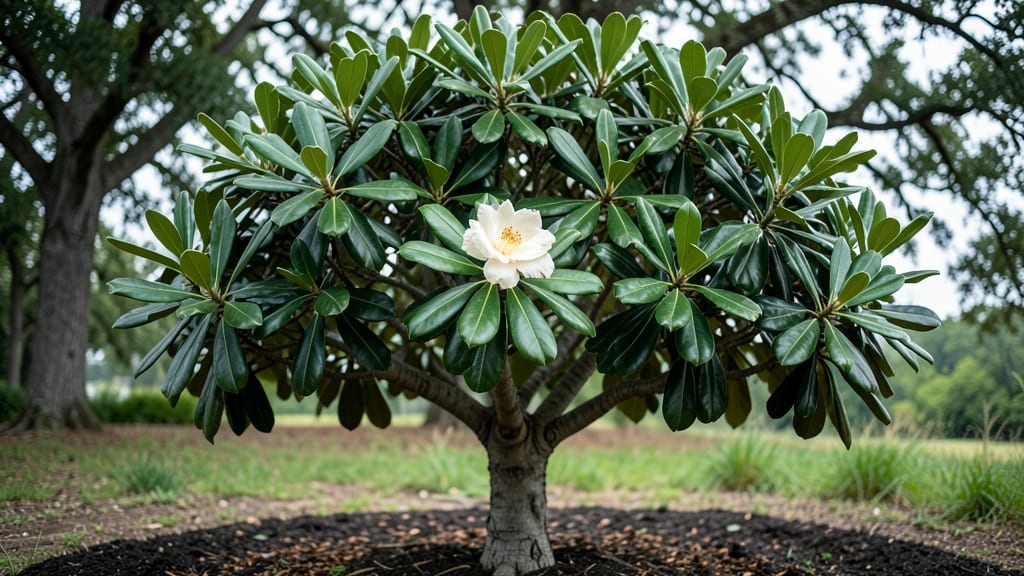
The southern magnolia flower's intoxicating fragrance and glossy evergreen leaves make it the crown jewel of any landscape. 🌿 I planted mine in my front yard last spring, and every summer, the 8-inch creamy blooms perfume the air for blocks.
This isn't just a pretty tree—it's a living statement piece that thrives from the Deep South to coastal California.
You'll need full sun, well-draining soil, and patience—these trees grow slowly but live for centuries. The secret to success is simple: dig a hole twice as wide as the root ball, mix in compost, and water deeply after planting.
Southern magnolias handle heat and humidity beautifully, making them perfect for zones 7-10, though they'll tolerate cooler climates with winter protection.
Expect those first fragrant blooms in 3-5 years, but the show begins much earlier with rich green foliage that stays vibrant year-round. Prune only to shape, never to remove leaves—those glossy evergreen branches are the tree's signature.
With proper care, your magnolia will become the most talked-about feature in your neighborhood.
Whether you're planting in a formal garden bed or as a striking specimen, this tree delivers drama and fragrance for decades. The key is giving it space—these beauties mature at 60-80 feet tall. Ready to grow one that'll make your yard unforgettable?
📚 In This Guide
- What you need
- Instructions
- Tips and common mistakes
- Wrapping up and next steps
What you need
- ● Southern magnolia plant: Choose between: 1–3 nursery-grown saplings (3–5 ft tall, 1–2 gallons in container)
- ● Seeds (fresh or stored; germination takes 1–3 months)
- ● Rooted cuttings (from a mature magnolia, 6–12 inches long)
- ● Well-draining soil: Mix of: 60% topsoil
- ● 30% compost
- ● 10% perlite or sand
- ● Organic mulch: 2–3 inches of pine straw, wood chips, or shredded bark (to retain moisture and regulate temperature)
- ● Slow-release fertilizer: 10-10-10 or balanced organic fertilizer (apply in early spring)
- ● Garden trowel or spade
- ● Pruning shears (sterilized)
- ● Watering can or hose with gentle spray nozzle
- ○ Gloves (optional, but recommended for prickly stems)
- ○ pH testing kit (optional, ideal soil pH: 5.0–6.0)
- ● Epsom salt (for magnesium-rich soil, 1 tbsp per gallon of water)
- ● Fungicide spray (prevents powdery mildew in humid climates)
- ● Drip irrigation system (for consistent moisture)
- ● Sun hat or shade cloth (for young seedlings in hot climates)
Step-by-Step guide to planting and caring for southern magnolias
Here's how to establish these majestic trees for decades of fragrant blooms.
🌱 Step 1: Choose the Perfect Planting Location
Southern magnolias thrive in full sun to partial shade, with at least 6 hours of direct sunlight daily. I always look for spots with morning sun and afternoon shade—this prevents leaf scorch while still encouraging strong blooms. The tree's massive roots need room to spread, so plant at least 20 feet from structures and 30 feet from other trees to avoid root competition.
Check your soil's drainage by digging a 12-inch hole—if water pools after 30 minutes, amend with 2-3 inches of compost mixed into the native soil. Southern magnolias hate soggy roots but tolerate slightly acidic soil (pH 5.0-6.5). Test your soil's pH with a simple kit before planting; if it's too alkaline, add sulfur amendments as directed.
🪴 Step 2: Plant Your Southern Magnolia Properly
Dig a hole twice as wide as the root ball but no deeper—this encourages roots to spread horizontally rather than settling too low. Gently remove the tree from its container and loosen any circling roots with your fingers. Place it in the hole so the top of the root ball sits 1-2 inches above ground level—this prevents rot during heavy rains.
Backfill with the native soil you removed, tamping lightly every 6 inches to eliminate air pockets. Water deeply (5 gallons) to settle the soil, then create a 4-inch-wide berm around the base to direct water away from the trunk. Mulch with 3 inches of pine straw or shredded bark, keeping it 6 inches away from the trunk to prevent moisture buildup.
☀️ Step 3: Water and Fertilize for Strong Establishment
Water your new magnolia twice weekly for the first 6 weeks, providing 10-15 gallons per watering to saturate the root zone. You'll know it's enough when water drains 6 inches deep. After establishment, water only during drought periods—these trees are naturally drought-tolerant once mature. I check soil moisture by sticking my finger 4 inches down; if it feels dry, that's your signal to water.
Fertilize lightly in early spring with a balanced 10-10-10 formula, applying ½ cup per inch of trunk diameter. Avoid high-nitrogen fertilizers—they promote leafy growth at the expense of flowers. Southern magnolias are slow growers, so resist the urge to over-fertilize. Yellowing leaves? That's often a sign of too much nitrogen—cut back and focus on phosphorus for blooms.
✂️ Step 4: Prune Strategically for Health and Blooms
Prune your magnolia immediately after flowering (late spring) to avoid removing next year's buds. Remove only dead, diseased, or crossing branches—never more than 25% of the canopy in one season. I use clean, sharp pruners and make cuts just outside the branch collar to prevent unsightly stubs. For larger branches, use three-cut pruning to avoid tearing the bark.
Never "top" a magnolia—cutting the main trunk encourages weak, leggy growth. Instead, focus on opening the center of the tree to improve airflow and sunlight penetration. Watch for aphids or scale insects on new growth; treat with neem oil spray if you spot sticky residue (honeydew) on leaves. A healthy magnolia rarely needs chemical intervention, but early action prevents infestations.
Tips & tricks for perfect southern magnolia flower planting
Took me years of trial and error to perfect these tips—here's what actually makes the difference with Southern magnolias.
Location Insight: While the instructions mention full sun to partial shade, I've found that morning sun with afternoon shade works best in hot climates. The afternoon shade prevents heat stress on the leaves while still giving them enough light for photosynthesis. If you're in a cooler zone, you can push it to full sun—just watch for signs of stress like yellowing leaves.
Root Ball Preparation: When loosening circling roots in Step 2, I like to add a handful of mycorrhizal fungi to the root ball before planting. This beneficial fungus helps the roots establish faster by forming symbiotic relationships. You can find it at garden centers in powder or granular form—just mix it with water and apply to the roots before planting.
Watering Wisdom: The 6-inch deep watering check in Step 3 is crucial, but I've learned to adjust based on soil type. Sandy soils may need watering more frequently since they drain faster, while clay soils might hold moisture longer. If your soil feels dry at 4 inches (as mentioned), but water drains too quickly, you might need to water again in 3-4 days instead of waiting for the full 6 weeks.
Pruning Precision: When pruning in late spring, I always look for branches that are growing toward the center of the tree—they'll compete with others for sunlight and nutrients. Removing these "water sprouts" early helps maintain an open canopy. And here's a secret: if you accidentally prune too much, don't worry—the magnolia will recover beautifully as long as you don't exceed 25% of the canopy in one season.
Pro Tips for Southern Magnolia Flower
- Took me years of trial and error to perfect these tips—here's what actually makes the difference with Southern magnol...
- Location Insight: While the instructions mention full sun to partial shade, I've found that morning sun with afternoo...
- Root Ball Preparation: When loosening circling roots in Step 2, I like to add a handful of mycorrhizal fungi to the r...
Frequently asked questions
Got questions about growing and caring for southern magnolia flowers? You’re not alone! Here are some of the most common queries—plus straightforward answers to help you cultivate these fragrant beauties with confidence.
When is the best time to plant southern magnolia flowers?
The ideal time to plant southern magnolia trees is in early spring or late fall. This gives roots time to establish before extreme summer heat or winter cold. If you’re in a warmer climate (Zones 7-10), late fall planting works best to avoid drought stress.
Can southern magnolias survive cold winters?
Southern magnolias are hardy to USDA Zones 7-10, meaning they tolerate light freezes (down to ~10°F/-12°C). In colder regions, plant them in sheltered spots or use mulch to protect roots. Young trees may need winter wraps for extra insulation.
Why aren’t my southern magnolia flowers opening?
Several factors can delay blooms: young age (trees take 5–10 years to flower), poor sunlight (they need full sun), or nutrient deficiencies. Check soil pH (slightly acidic, 5.0–6.0) and fertilize lightly in early spring. Patience is key—healthy trees reward you!
Are southern magnolias fragrant? What do they smell like?
Yes! Their flowers release a sweet, creamy, citrusy fragrance—especially at night when pollinators are active. The scent is intoxicating but can be overwhelming in tight spaces. Plant them near patios or windows to enjoy the aroma without overpowering your yard.
What’s a good alternative if I can’t grow southern magnolias?
If your climate is too cold or dry, consider these fragrant evergreens:
- Saucer magnolia (Magnolia × soulangeana) – Early spring blooms, Zone 4–9.
- Sweetbay magnolia (Magnolia virginiana) – Humidity-loving, Zone 5–9.
- Cucumber tree (Magnolia acuminata) – Hardy to Zone 4, large flowers.
Wrapping up and next steps
The southern magnolia flower isn’t just a stunning addition to your garden—it’s a fragrant, low-maintenance evergreen that thrives in nearly any climate! 🌿 With the right soil, sunlight, and care, you’ll enjoy its velvety blooms and intoxicating scent for years.
Whether you’re a beginner or a seasoned gardener, this resilient beauty makes gardening rewarding and effortless.
Ready to transform your outdoor space? Start by selecting the perfect spot and follow our growing tips to nurture your magnolia into a breathtaking centerpiece. Happy planting—your garden (and pollinators!) will thank you! 🌸