
Planting
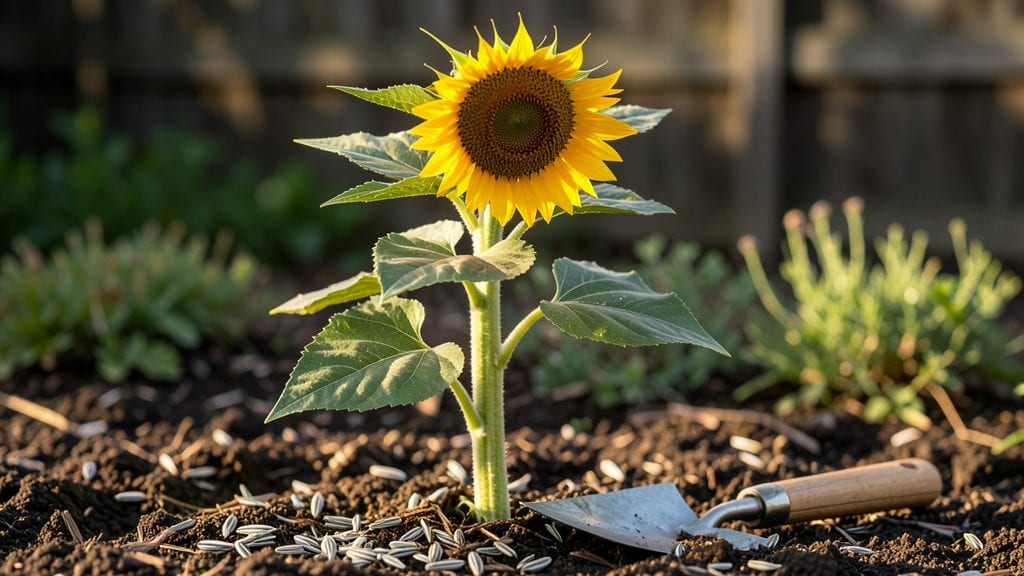
Planting sunflowers the right way means 10-day sprouts and stems that reach for the sky before summer ends. 🌻 I’ve learned that skipping soil prep or crowding seeds leads to weak stems and fewer blooms—so let’s fix that.
The secret isn’t complicated: loose, nutrient-rich soil, proper spacing, and a sunny spot do the heavy lifting.
You’ll need sunflower seeds (save the biggest ones for planting), a trowel, compost, and a sunny patch with at least 6 hours of direct light daily.
Most varieties thrive in well-draining soil, but sunflowers are surprisingly forgiving—even my heavy clay garden produced blooms after adding a handful of compost to each hole.
By day 10, you’ll see those first green shoots pushing through the soil, and by midsummer, you’ll have stems taller than you are. The key is keeping the soil moist (not soggy) and staking taller varieties before they lean.
Trust me, the payoff—bright yellow blooms that attract pollinators and make neighbors stop to admire—is worth every minute.
This method works for all sunflower types, from dwarf varieties for containers to giant Mammoths in the backyard. Whether you’re a first-time gardener or a seasoned pro, these steps guarantee bold, healthy blooms with minimal fuss. Let’s get those seeds in the ground!
📚 In This Guide
- What you need
- Instructions
- Tips and common mistakes
- Wrapping up and next steps
What you need
- ● Sunflower seeds: Choose heirloom or hybrid varieties (e.g., 'Mammoth,' 'Autumn Beauty,' or 'Teddy Bear'). Buy 50–100 seeds for a small garden or 200+ for larger patches.
- ● Garden soil or potting mix: Well-draining, loamy soil with a pH of 6.0–7.5. Amend clay soil with compost or sand for better drainage.
- ○ Planting containers (optional for small spaces): Depth: 12–18 inches
- ● Diameter: 12+ inches (sunflowers need space to stabilize)
- ● Watering can or hose with a gentle spray nozzle (sunflowers hate soggy roots!)
- ○ Fertilizer (optional but helpful): Balanced 10-10-10 or 5-10-10 granular fertilizer
- ● Compost or worm castings (for organic growth)
- ● Plant markers or stakes: Label seeds with biodegradable tags and use 3–4 ft stakes for tall varieties to prevent toppling.
- ● Sunlight: Full sun (6–8+ hours daily)—no compromises!
- ● Spacious planting area: Standard varieties: 12–24 inches apart
- ● Giant varieties: 2–3 feet apart
- ● Warm soil: Wait until after the last frost (soil temp should be 50°F+).
- ● Patience: Sunflowers sprout in 7–14 days—resist the urge to replant!
- ● 🌡️ Pre-soak seeds overnight in warm water to speed up germination.
- ● ✨ Mulch lightly with straw or grass clippings to retain moisture (but avoid smothering stems).
- ● 🎯 Thin seedlings if overcrowded—keep the strongest stems to maximize growth.
Step-by-Step guide to planting sunflowers for fast, stunning growth
Here's how to grow sunflowers that reach their full height in record time—using proven techniques for strong stems and vibrant blooms.
🌱 Step 1: Choose the Right Spot and Prepare Soil
Sunflowers thrive in full sun—select a location that receives at least 6-8 hours of direct sunlight daily. If planting in containers, position them where they’ll get maximum exposure, as sunflowers need intense light to develop those iconic towering stems.
Loosen the soil to a depth of 12-15 inches to encourage deep root growth, which is critical for stability. Amend the soil with 2-3 inches of compost (if using garden soil) to provide nutrients without overwhelming the young plants. Sunflowers are heavy feeders, but too much fertilizer early on can lead to weak stems that topple under their own weight.
🌱 Step 2: Sow Seeds at the Correct Depth and Spacing
Plant sunflower seeds ½ inch deep and 6 inches apart in rows spaced 18-24 inches apart. Press the soil gently around the seeds to ensure good seed-to-soil contact, but avoid compacting it too firmly—sunflower roots need air to grow. For 4 plants, you’ll need about 10-12 seeds (they don’t all germinate perfectly).
Here’s the thing—sunflowers grow fast, but they hate being transplanted. If you’re starting indoors, sow seeds in biodegradable pots so you can move them without disturbing the roots. Water the soil lightly after planting, but don’t soak it—excess moisture can cause seeds to rot before they sprout.
☀️ Step 3: Provide Consistent Water and Light
Keep the soil evenly moist but not soggy for the first 2-3 weeks after germination. Water deeply once a week (or more often in hot, dry climates) to encourage deep root development. Once the plants reach 12 inches tall, reduce watering slightly—sunflowers are surprisingly drought-tolerant once established, and overwatering can weaken stems.
Watch for first true leaves (the second set after the initial cotyledons) as your signal to adjust care. At this stage, ensure they’re getting full sun daily. If you notice stems stretching excessively or leaves turning pale, they’re reaching for more light—move containers closer to a sunny window or supplement with a grow light for 14-16 hours per day. Leggy growth is a red flag that your sunflowers aren’t getting enough light.
✂️ Step 4: Support and Maintain for Towering Blooms
As sunflowers grow, their stems can become top-heavy and prone to snapping. For 4 plants, consider staking the tallest varieties (like ‘Mammoth’ or ‘Russian Giant’) with 3-foot bamboo stakes or a simple cage. Insert stakes 6 inches deep into the soil beside each plant and loosely tie the stems to them as they grow—this prevents damage to the stems.
Remove any side shoots that form at the base of the plant (they’ll compete with the main stem for nutrients). Deadhead spent blooms by cutting the stem just below the flower head to redirect energy into new growth. This keeps your sunflowers producing blooms for weeks, not just a single showy display.
🌿 Step 5: Harvest and Enjoy Your Towering Blooms
Sunflowers are ready for harvest when the back of the flower head turns brown and the petals begin to wilt. Cut the stem at a 45-degree angle about 6 inches below the flower head to encourage water uptake. Hang them upside down in a dry, dark place for 1-2 weeks to fully dry before storing.
Real talk: If you’re growing sunflowers for seeds, leave some heads on the plant until they’re completely dry and the back turns a deep brown. Twist the head off the stem and crack it open to remove the seeds—roast them for a nutty snack or save them for next year’s planting. And if you’re growing for cut flowers, harvest in the early morning when the blooms are at their freshest.
Tips & tricks for perfect sunflower planting
These game-changing techniques will help you grow sunflowers that reach their full height in record time—with fewer common pitfalls.
Light Optimization: Sunflowers need at least 6-8 hours of direct sunlight daily, but don't stop there. If you notice your plants stretching excessively or leaves turning pale, they're reaching for more light. Move containers to a sunnier spot or supplement with a grow light for 14-16 hours per day during early growth. This prevents leggy stems that can't support heavy blooms later.
Soil Preparation Secret: The 12-15 inch deep soil loosening in Step 1 isn't just about roots—it's about aeration. Compacted soil prevents oxygen from reaching the roots, which slows growth. Use a garden fork to break up clumps gently, and consider adding perlite to sandy soils or coconut coir to clay soils for better drainage. This creates the perfect environment for those towering stems.
Watering Wisdom: The first 2-3 weeks after germination are critical for root development, but don't drown your seeds. Water deeply once a week, allowing the top inch of soil to dry between waterings. Overwatering at this stage can cause seed rot, while underwatering creates stress that stunts growth. Once plants reach 12 inches, reduce watering slightly—sunflowers are surprisingly drought-tolerant once established.
Staking Strategy: For those 4 plants you're growing, don't wait until they're already toppling to stake them. Insert 3-foot bamboo stakes 6 inches deep beside each plant when they reach about 18 inches tall. Use soft plant ties or old fabric strips to loosely secure the stems—they'll grow into their support without damage. This prevents that heartbreaking moment when your beautiful blooms snap under their own weight.
Pro Tips for Best Way To Plant Sunflowers
- These game-changing techniques will help you grow sunflowers that reach their full height in record time—with fewer common pitfalls.
- Light Optimization: Sunflowers need at least 6-8 hours of direct sunlight daily, but don't stop there.
- Soil Preparation Secret: The 12-15 inch deep soil loosening in Step 1 isn't just about roots—it's about aeration.
Frequently asked questions
Got questions about growing sunflowers? You’re not alone! Here are answers to the most common queries to help you grow stunning, sun-kissed blooms with ease.
When is the best time to plant sunflowers?
Sunflowers thrive in warm soil and love sunlight! Plant them after the last frost when the ground reaches at least 50°F (10°C). For most U.S. regions, this means late spring to early summer. If you live in a mild climate, you can even plant them in early spring or late summer for a fall harvest.
How long does it take for sunflowers to grow from seed?
Sunflowers are fast growers! From seed to full bloom, expect 80–100 days for most varieties. However, giant varieties can take up to 120 days. With the right conditions (sun, water, and soil), you’ll see sprouts in just 7–10 days and towering stems in weeks!
How often should I water sunflowers?
Water sunflowers deeply 1–2 times per week, especially during dry spells. Young plants need consistent moisture to establish roots, but overwatering can cause rot. Once established, sunflowers are drought-tolerant—just 1–2 inches of water per week (about 1–1.5 gallons per plant) is ideal. Water at the base, not the leaves, to prevent disease.
Can I plant sunflowers in containers or small spaces?
Sunflowers adapt well to containers if given enough room. Choose dwarf or bush varieties (like ‘Teddy Bear’ or ‘Moulin Rouge’) for pots, as they stay under 3–5 feet tall. Use a 5-gallon container or larger with drainage holes and fill it with well-draining potting mix. Place the pot in a sunny spot and water regularly.
What should I do if my sunflower seeds aren’t sprouting?
Don’t panic! Sunflower seeds need warmth, moisture, and light to germinate. If they’re not sprouting after 10–14 days, try these fixes:
- Check soil temperature: Use a seedling heat mat if your soil is too cold (<50°F).
- Ensure moisture: Keep soil damp (not soggy) by covering seeds with ¼ inch of soil and misting daily.
- Test seed viability: Soak a few seeds in water overnight—if they don’t swell, they may be old or damaged.
- Try direct sowing again: Sometimes, transplant shock delays growth. Plant fresh seeds in a new spot.
If all else fails, sunflower seedlings are easy to find at nurseries!
Do sunflowers need fertilizer, and what’s the best type?
Sunflowers aren’t heavy feeders, but a little help boosts growth. Use a balanced, water-soluble fertilizer (10-10-10) or compost when planting. Side-dress with nitrogen-rich fertilizer (like fish emulsion) when plants are 6–8 inches tall. Avoid over-fertilizing—too much can lead to leafy growth with fewer blooms.
Wrapping up and next steps
Planting sunflowers is a rewarding journey that yields stunning blooms and even edible seeds—all in just 10 days! Whether you’re a beginner or a seasoned gardener, the key lies in well-drained soil, proper spacing, and a little patience.
With the right techniques, you’ll soon be enjoying towering stems and cheerful faces brightening your garden. 🌻
Now that you’re armed with the best practices, grab your gloves and get growing! Start small—plant a few seeds in a pot or a sunny patch—and watch your sunflowers thrive.
Ready to turn your green space into a sunflower paradise? Check out our sunflower care guide for ongoing tips to keep them flourishing.