
Pruning
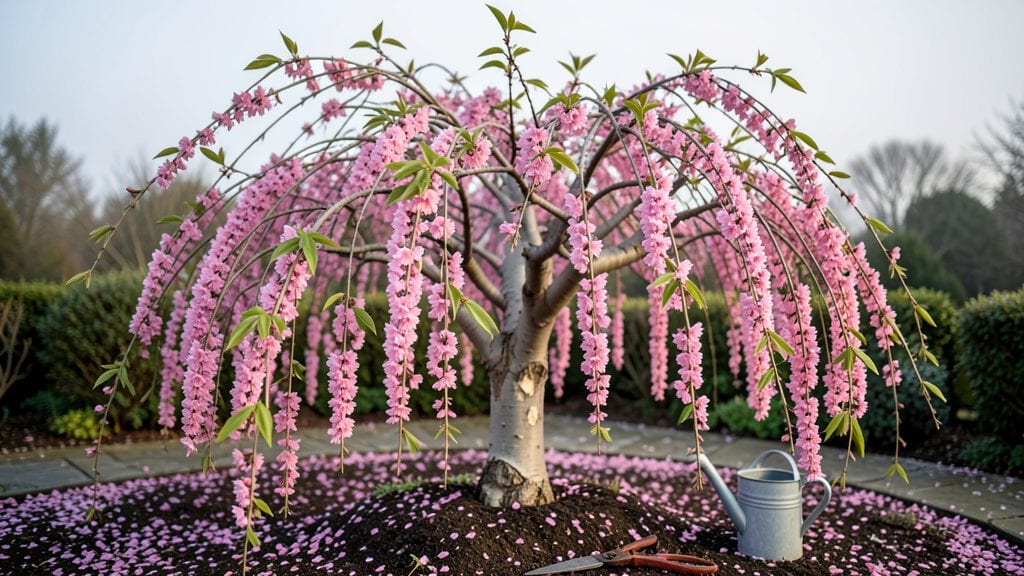
A weeping flower cherry tree transforms any yard into a living waterfall of pink and white blooms. 🌸 I planted mine five years ago, and every spring, it bursts into color like nothing else in the garden—no fuss, no drama, just pure, cascading beauty.
The secret lies in its care: well-drained soil, full sun, and just enough attention to keep it healthy without overcomplicating things.
This tree thrives in zones 5-8, where it handles both summer heat and winter chill with grace. You’ll need about 15-20 feet of space for its graceful spread, and a spot where its branches can arch elegantly without obstruction.
The blooms arrive in early spring, often before the leaves, creating a stunning display that lasts weeks—sometimes even into summer with proper care.
Minimal pruning is part of its charm: just remove dead wood in late winter and shape lightly after flowering. The result? A tree that looks effortlessly elegant year-round, with peeling bark adding winter interest. Your neighbors will ask how you do it—here’s the simple routine that keeps mine thriving.
Perfect for small yards, urban gardens, or as a focal point near patios. Once established, it’s nearly indestructible—just give it space, sunlight, and a little patience. Let’s get yours growing!
📚 In This Guide
- What you need
- Instructions
- Tips and common mistakes
- Wrapping up and next steps
What you need
- ● Pruning shears: Bypass pruners (sharp, clean, and capable of cutting ¼"–½" branches). Pro tip: Sanitize with rubbing alcohol before and after use to prevent disease spread! 💡
- ● Loppers: For thicker branches (½"–1½" diameter). Look for bypass-style loppers for clean cuts.
- ● Hand saw: Pruning saw with a curved blade for branches over 1½" in diameter.
- ● Gloves: Heavy-duty gardening gloves (cut-resistant for safety).
- ● Disposable pruning bags: 2–3 medium-sized bags (10–15 gallon capacity) for collecting debris.
- ● Rag or paper towels: For wiping sap and cleaning tools.
- ○ Ladder (optional but helpful): Extendable or step ladder (6–10 ft tall) if your tree is over 6 ft.
- ● Pruning sealant: For larger cuts (over ½") to prevent disease entry. Note: Skip if using clean, sharp tools—often unnecessary for small cuts! ✨
- ● Marking twine or paint: To tag branches for removal if planning a structured pruning session.
- ● Safety glasses: To protect against debris, especially when using a saw.
- ● Hose with nozzle: For rinsing tools and cleaning sap off branches post-pruning.
- ● Check the weather: Prune on a dry, calm day to avoid spreading sap or disease.
- ● Timing: Best done in late winter or early spring (before buds swell) for weeping cherry trees.
- ● Safety first: Ensure no power lines are near the tree if using a ladder!
How to plant and care for a weeping flower cherry tree
This graceful tree thrives with just a few key steps—here’s my foolproof approach.
🪴 Step 1: Choose the Perfect Planting Spot
Weeping flower cherries need full sun—at least 6 hours daily—for those show-stopping blooms. I always pick a spot with morning sun and afternoon shade if your climate runs hot, especially in zones 5-8. The tree’s cascading branches will look best when planted near a patio or lawn where you can admire the flowers from multiple angles.
Dig a hole twice as wide as the root ball but only as deep as the container’s base. Loosen the roots slightly if they’re circling—this helps them establish faster. Here’s the thing: don’t bury the graft union (the swollen area near the base). It should sit 1-2 inches above soil level to prevent rot.
☀️ Step 2: Plant and Water for Strong Establishment
Backfill the hole with native soil, tapping gently to remove air pockets. Water deeply right after planting—about 5 gallons—to settle the soil and eliminate gaps. You’ll see the water soak in quickly, which is good; it means the roots can spread easily.
Mulch with 3 inches of organic mulch (like shredded bark) around the base, but keep it 6 inches away from the trunk. This protects roots from temperature swings and retains moisture. Water once a week for the first month, then every 10-14 days once established. Overwatering here is the real enemy—yellowing leaves often mean soggy roots.
✂️ Step 3: Prune Only When Necessary
Weeping cherries bloom on old wood, so minimal pruning keeps them happy. I only trim in late winter or early spring before buds swell. Remove dead, crossing, or rubbing branches first—these compete for energy. For shape, lightly thin out 10-15% of the canopy to improve airflow and light penetration.
Watch for suckers (shoots at the base) and water sprouts (vertical growth in the canopy). These steal nutrients from the blooms. Here’s the trick: cut them back to a bud just above a leaf scar. Never leave a stub—it invites disease. Prune on a dry, cloudy day to reduce stress on the tree.
🌿 Step 4: Feed and Protect for Long-Term Health
Apply a balanced 10-10-10 fertilizer in early spring (just as buds break) and again in mid-summer. Use ½ cup per inch of trunk diameter—no need to overdo it. I’ve seen trees burn from too much fertilizer, and that’s a slow recovery. Water deeply after feeding to help nutrients reach the roots.
Watch for powdery mildew (white fuzzy spots) or aphids (sticky residue on leaves). A neem oil spray (mixed per label) solves both without harming bees. If you notice buds dropping before opening, it’s usually a sign of late frost—cover the tree with frost cloth if temps dip below 28°F.
Tips & tricks for perfect weeping flower cherry tree planting
Real talk: The difference between a thriving weeping cherry tree and one that struggles often comes down to these small but critical details. Here's what nobody tells you—
Sunlight Strategy: That "full sun" requirement isn't just about quantity—it's about quality. While 6 hours of sunlight is the minimum, I've seen trees in hot climates actually benefit from morning sun and afternoon shade. If your area gets intense afternoon heat, consider planting near a north-facing wall or under a deciduous tree that provides summer shade but allows winter sun. The key is maintaining those 6 hours during the critical bloom season, typically late spring through early summer.
Planting Depth Secret: The graft union is where the tree's identity lives—literally. I learned this the hard way after burying one too deep and watching it rot. That swollen area should always sit 1-2 inches above soil level. Use a pencil to mark the graft union before planting, then check it after backfilling. Pro tip: If you're planting in heavy clay soil, mix in some compost to improve drainage around that critical area.
Watering Wisdom: Those first 5 gallons after planting aren't just about settling the soil—they're about signaling to the roots that it's safe to spread. I've seen trees with perfectly planted root systems fail because they weren't given this initial drink. After the first month, resist the urge to water on a strict schedule. Instead, check soil moisture by pushing your finger 2 inches into the soil—if it's dry, that's when you water. Overwatering here is the silent killer of these trees.
Pruning Precision: When you're thinning that 10-15% of the canopy, focus on branches that cross or rub against each other. These compete for sunlight and create entry points for disease. I cut at a 45-degree angle just above a leaf scar, using sharp pruners to make clean cuts. The cloudy day recommendation isn't just about visibility—it's about reducing stress on the tree. Pruning on sunny days can cause sap to ooze excessively, which attracts pests and diseases.
Pro Tips for Weeping Flower Cherry Tree
- Real talk: The difference between a thriving weeping cherry tree and one that struggles often comes down to these small but critical details.
- Sunlight Strategy: That "full sun" requirement isn't just about quantity—it's about quality.
- Planting Depth Secret: The graft union is where the tree's identity lives—literally.
Frequently asked questions
Got questions about your weeping flower cherry tree? You’re not alone! Here are some of the most common queries—plus quick, practical answers to keep your tree thriving with minimal fuss.
How often should I prune a weeping flower cherry tree?
Prune your weeping flower cherry once a year, ideally in late winter or early spring (before buds swell). This timing avoids stressing the tree during dormancy and promotes healthy blooms. Skip heavy pruning—focus on removing dead, crossing, or overcrowded branches to maintain its graceful shape. Pro tip: Never prune after flowering, as it can reduce next year’s blossoms!
When does a weeping flower cherry bloom, and how long do the flowers last?
These trees burst into color late spring to early summer (April–May in most U.S. zones), with pink or white flowers that last 2–3 weeks. For year-round interest, choose varieties like ‘Shirotae’ (white blooms) or ‘Kanzan’ (double pink flowers). Bonus: Plant near a window or patio to enjoy the fragrance up close!
Can a weeping flower cherry tree survive cold winters?
Yes! Most varieties are hardy to USDA zones 5–8, but young trees may need winter protection (like burlap wraps) in harsh climates. Avoid planting in low-lying areas where cold air pools. Mulch the base with 3–4 inches of organic matter (wood chips or straw) to insulate roots. Watch for: Frost cracks on bark—seal with pruning sealant if needed.
What’s a good alternative if I can’t grow a weeping flower cherry?
If your climate is too hot (zone 9+) or you want lower maintenance, try:
- Weeping Higan cherry (Prunus subhirtella ‘Pendula’) – Similar blooms, slightly more cold-tolerant.
- Japanese snowbell (Styrax japonicus) – Fragrant white flowers, shade-tolerant.
- Dwarf weeping cherry (Prunus ‘Kiku-shidare-zakura’) – Compact size, great for small yards.
Why aren’t my weeping flower cherry leaves turning green, and what can I fix?
Yellow or pale leaves often signal nutrient deficiencies (especially iron or nitrogen) or overwatering. Try:
- Test soil pH (ideal: 6.0–7.0) and amend with chelated iron if needed.
- Water deeply but infrequently—these trees hate soggy roots.
- Fertilize in early spring with a balanced 10-10-10 formula.
Wrapping up and next steps
The weeping flower cherry tree is a stunning, low-maintenance addition to any garden, offering breathtaking blooms with minimal effort. Its graceful branches and vibrant flowers make it a standout choice, while its resilience ensures year-round beauty.
Whether you're a seasoned gardener or just starting, this tree is a dream to care for—especially when it comes to pruning!
Ready to transform your outdoor space? Start by gathering your tools and following the simple steps above. With a little love and attention, your weeping flower cherry tree will reward you with seasonal splendor for years to come! 🌸✨