
Succulent
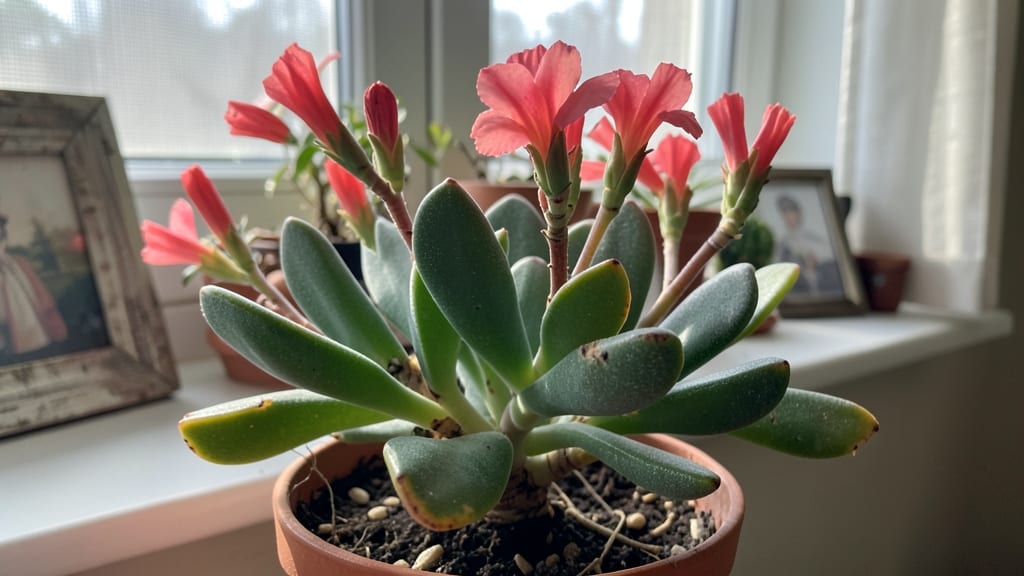
Growing a succulent with red flowers like Echeveria or Kalanchoe feels like bringing a burst of desert sunshine into your space—even when your climate is as gray as the Pacific Northwest. 🌸 I’ve grown these vibrant plants through Seattle winters, and the secret isn’t forcing them to bloom but giving them exactly what they crave: bright light, well-draining soil, and a strict "wait until they’re thirsty" watering schedule.
The right conditions turn these succulents into reliable bloomers year after year. Most people overwater, thinking they’re helping, but the truth is simple: let the soil dry completely between waterings, and you’ll avoid the mushy stems that signal trouble.
A south-facing window or grow light keeps them happy indoors, while outdoor growers in cooler zones can tuck them into containers on patios or against sunny walls.
What you’ll love most is that burst of bright red blooms—often in winter when everything else is dormant. My Kalanchoe has flowered twice in December, and the sight of those star-shaped blossoms against the gray sky is worth every bit of patience.
The plants themselves stay compact and striking, perfect for shelves, windowsills, or mixed in with other drought-tolerant plants.
Whether you’re a beginner or a seasoned grower, these succulents adapt well to indoor spaces and even thrive in small containers. The key is consistency—light, soil, and water—and soon you’ll have a plant that rewards you with color when you least expect it. Let’s get those red blooms growing!
📚 In This Guide
- What you need
- Instructions
- Tips and common mistakes
- Wrapping up and next steps
What you need
- ● Succulent with red flowers: Choose a cold-hardy variety like Echeveria 'Lola,’ Sedum 'Autumn Joy,’ or Kalanchoe blossfeldiana (ensure it’s labeled for zones 7-9). (1 plant)
- ● Well-draining potting mix: Cactus/succulent mix (or blend 50% potting soil + 50% perlite/pumice). (1 10-inch pot or equivalent)
- ● Container: Terracotta pot (for breathability) or fabric grow bag (5-7 inches deep, with drainage holes). (1)
- ● Drainage layer: Pebbles, coarse sand, or broken pottery (1-2 inches).
- ○ Slow-release fertilizer: 5-10-5 or succulent-specific granules (follow package for dosage). (Optional: liquid fertilizer like fish emulsion for blooming)
- ● Watering can with narrow spout: For precise hydration (avoid soggy soil!).
- ● Gloves & small trowel: For handling soil and plants safely.
- ● Frost cloth or mini greenhouse: Protect young plants from light frosts (zones 7-8). (1-2 sheets, 3x4 ft)
- ○ Grow lights (optional): LED bulb (6000K) for indoor growers or winter supplements. (1-2 bulbs, 6-12 hours/day)
- ○ Mulch (optional): Gravel or bark chips to insulate roots in outdoor beds.
- ● 🔍 Test your soil: PNW soil can be dense—amend with compost if planting outdoors.
- ● ❄️ Acclimate gradually: Harden off indoor plants before moving them outside in spring.
- ● 🌡️ Monitor temps: Most red-flowering succulents thrive in 60–75°F; avoid below 40°F.
How to grow a stunning red-flowering succulent in cool climates
Here’s my battle-tested method for coaxing vibrant red blooms from cold-hardy succulents—perfect for Pacific Northwest gardeners.
🌱 Step 1: Select the Right Red-Flowering Succulent Variety
Not all succulents thrive in cooler climates, so choose a proven performer like Sedum ‘Autumn Joy’ or Echeveria ‘Lola’—both produce striking red blooms and tolerate temperatures down to 20°F. Avoid tropical varieties like Kalanchoe blossfeldiana, which need warmth to flower. Check the plant tag for cold-hardiness ratings—look for zones 5-8 or higher.
If starting from seed, use a sterile seed-starting mix and keep trays in a warm spot (70-75°F) until germination (7-14 days). Overwatering at this stage is the fastest way to kill seedlings, so mist lightly and wait until the top inch of soil feels dry before watering again. Here’s the thing—these plants need bright light even indoors, so place them near a south-facing window or under a grow light for 12-14 hours daily.
☀️ Step 2: Position for Maximum Sun and Cool-Climate Success
Red-flowering succulents need full sun (6+ hours daily) to trigger blooming, but in the PNW, afternoon shade helps prevent scorching. I place mine in morning sun with afternoon shade—this balances heat tolerance and vibrant color development. If growing in containers, use a well-draining potting mix (like cactus/succulent blend) and add perlite or pumice for extra aeration.
Watch for leaf puckering—a sign of underwatering—or soft, mushy stems, which means overwatering. In cooler months, reduce watering to every 2-3 weeks, letting the soil dry completely between sessions. The key is mimicking their natural desert environment: dry spells followed by deep soaks. If your succulent starts to stretch toward the light, it’s begging for more intensity—move it closer to the window or supplement with a grow light.
💧 Step 3: Fertilize and Encourage Blooming
Feed your succulent with a balanced, water-soluble fertilizer (10-10-10) diluted to half-strength every 4-6 weeks during the growing season (spring through early fall). Stop fertilizing in late summer to let the plant focus on blooming. I’ve found that fish emulsion (applied every 8 weeks) gives an extra boost of nutrients without burning tender roots. Avoid high-nitrogen fertilizers—they promote leafy growth at the expense of flowers.
To trigger red blooms, your succulent needs long daylight hours (14+ hours). In the PNW’s shorter days, extend light with a grow bulb or move the plant to a sunroom. Once buds form, reduce watering slightly—dry soil encourages stronger stems and brighter blooms. If your plant isn’t flowering after a year, it might need a dormancy period: reduce watering in fall and keep it in cooler temps (50-60°F) until spring. Real talk: Patience is key—some varieties take 2-3 years to bloom reliably.
✂️ Step 4: Prune and Overwinter for Next Year’s Blooms
After flowering, deadhead spent blooms to redirect energy into root and leaf growth. Use clean, sharp scissors to snip stems just above a leaf node—this encourages bushier growth and more flowers next season. If your succulent outgrows its pot, repot in spring using a container 1-2 inches larger than the current one. Overpotting leads to root rot, so choose a pot with drainage holes and fresh cactus mix. Tap the plant gently to loosen roots before transferring.
In winter, move potted succulents to a protected spot (like a garage or under eaves) if temps drop below 25°F. Mulch outdoor plants with 2-3 inches of straw to insulate roots. Resume watering in early spring when new growth appears. Here’s where it gets fun—watch for pink or red buds in late spring as daylight increases. That’s your signal the plant is ready to burst into color.
Tips & tricks for growing vibrant red-flowering succulents in cool climates
Common pitfalls—and how to sidestep every one when cultivating these striking plants in the Pacific Northwest.
Light Management: The 12-14 hours of daily light mentioned in Step 1 is non-negotiable for red blooms, but PNW winters make this tricky. I use a combination of south-facing windows and a simple LED grow bulb on a timer to bridge the gap during shorter days. Position the bulb 6-12 inches above the plant—closer for seedlings, farther for mature succulents. Watch for etiolation (stretched, weak growth), which means your plant is reaching for more light. This is especially critical for indoor plants where natural light is limited.
Soil Science: The well-draining potting mix mentioned in Step 2 deserves extra attention. I mix my cactus/succulent blend with an additional 20% coarse sand or perlite to prevent compaction, which can suffocate roots. For outdoor plantings, amend native soil with 1 part compost to 3 parts native soil—this improves drainage while providing essential nutrients. The key is creating a texture that mimics their desert origins: gritty yet able to hold moisture briefly after watering.
Fertilizer Timing: That half-strength 10-10-10 application every 4-6 weeks in Step 3 works wonders, but I've found the timing can be adjusted slightly based on your succulent's growth stage. For Sedum 'Autumn Joy', I switch to fish emulsion at week 6 of the growing season—this extra phosphorus boost helps develop those iconic red blooms. The critical window is stopping fertilizers by late summer, as you mentioned, to let the plant focus its energy on flower production rather than leaf growth.
Winter Protection: The 25°F threshold mentioned for winter protection is a good starting point, but I take additional precautions when temperatures dip below 20°F. For potted plants, I wrap them in burlap or frost cloth and place them against a south-facing wall where they'll absorb reflected sunlight. Outdoor plants benefit from a double layer of straw mulch (3-4 inches total) around the base. This insulation prevents temperature fluctuations that can stress the plant and reduce next year's blooming potential.
Pro Tips for Succulent With Red Flower
- Common pitfalls—and how to sidestep every one when cultivating these striking plants in the Pacific Northwest.
- Light Management: The 12-14 hours of daily light mentioned in Step 1 is non-negotiable for red blooms, but PNW winters make this tricky.
- Soil Science: The well-draining potting mix mentioned in Step 2 deserves extra attention.
Frequently asked questions
Got questions about growing succulents with stunning red flowers? Here are some of the most common ones—and their answers!
Can I grow a red-flowering succulent indoors?
Many red-flowering succulents like Echeveria 'Lola’ or Kalanchoe blossfeldiana thrive indoors with bright, indirect light (a south-facing window is ideal). Just ensure good airflow and avoid overwatering—these plants prefer dry conditions. A sunny windowsill or a grow light can keep them blooming year-round!
Will my red-flowering succulent survive the Pacific Northwest’s cool, rainy winters?
Yes, but with a few adjustments! Most red-flowering succulents need a dormant period in cooler months (50–60°F). Move potted plants to a sheltered porch or garage, reduce watering, and protect them from heavy rain. Hardy varieties like Sedum ‘Autumn Joy’ can even handle light frost—just mulch the soil to prevent rot.
How often should I water a succulent with red flowers?
Water only when the soil is completely dry—usually every 2–4 weeks, depending on light and humidity. Stick your finger 1–2 inches into the soil; if it’s dry, water thoroughly until it drains from the bottom. Overwatering is the #1 killer of these plants, so less is always better!
Why aren’t my red-flowering succulents blooming?
Red-flowering succulents often need 12+ hours of sunlight daily and a cool, dark period (6–8 weeks) in winter to trigger blooms. If they’re not flowering, check light exposure, reduce fertilizer (too much promotes leaves, not blooms), and mimic seasonal changes. Some varieties, like Kalanchoe, also need mature roots—be patient!
What’s a low-maintenance alternative to red-flowering succulents?
If you want vibrant color with less fuss, try Haworthia ‘Zebra’ (striped leaves) or Sedum ‘Angelina’ (golden foliage). For red blooms, Portulaca grandiflora (moss rose) is a drought-tolerant annual that thrives in PNW summers. Both need minimal care and brighten up containers effortlessly!
Wrapping up and next steps
Growing a succulent with red flowers in the Pacific Northwest is totally doable—even with cooler climates! 🌸 With the right variety (like Kalanchoe blossfeldiana or Echeveria hybrids), proper light exposure, and a little TLC, you’ll enjoy vibrant blooms that brighten up any space.
Remember, patience and consistency are key—your succulent will reward you with stunning color when it’s ready!
Ready to dive in? Start with one or two plants to test your setup, then expand your collection as you gain confidence. Happy growing—your future red-flowered succulents are waiting for you! 🌿✨