
Container Gardens
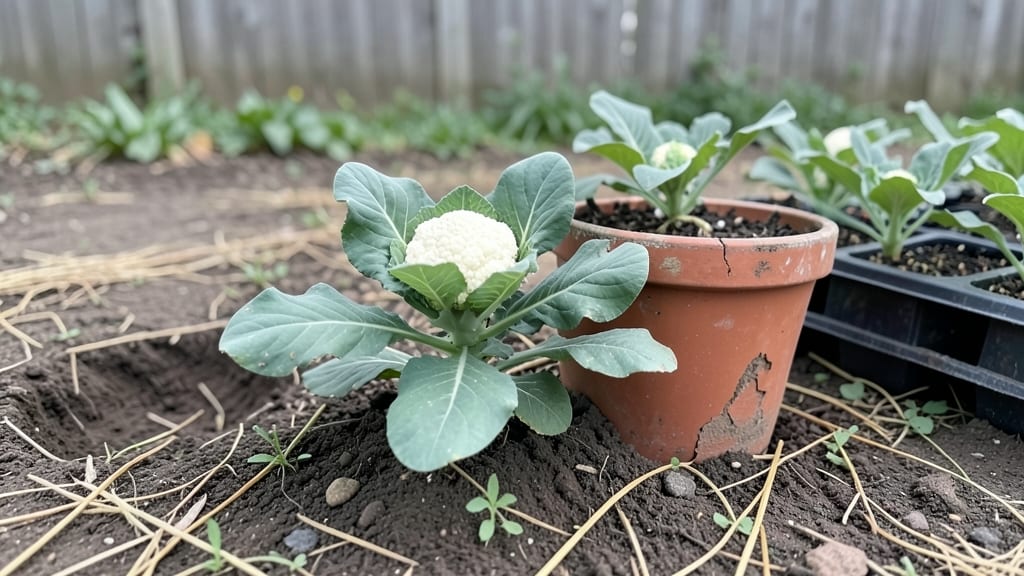
Planting cauliflower in pots lets you grow this cool-weather crop even on a tiny balcony—no yard required. 🌱 I learned the hard way that regular varieties flop in containers, but compact types like 'Purple of Sicily' or 'Snowball Y' thrive in just 5-gallon pots.
The key is matching the plant's needs to the container's limits.
Start with a pot at least 12 inches deep and wide enough for roots to spread without crowding. Drainage holes are non-negotiable—cauliflower hates soggy feet—and a mix of 50% potting soil, 30% compost, and 20% perlite keeps roots happy.
Plant seeds half an inch deep, spacing them 18 inches apart if growing multiple plants.
Your harvest will arrive in 70-90 days, depending on the variety, with heads that stay tight and flavorful. Keep the soil consistently moist (not soaked) and watch for cabbage worms—cover young plants with lightweight row fabric if pests appear.
The best part? You can move the pots to follow the sun as seasons shift.
This method works for any climate—just adjust planting times to avoid summer heat. Even my black thumb grew a football-sized head last year using these exact steps. Ready to try it?
📚 In This Guide
- What you need
- Instructions
- Tips and common mistakes
- Wrapping up and next steps
What you need
- ● Container: At least 5-gallon pot (12–18" deep) for each plant. Use fabric grow bags or glazed ceramic pots for better drainage. Pro tip: Add a drainage hole if your pot doesn’t have one! 🔧
- ● Potting Mix: Sterile, well-draining mix (avoid garden soil). A 50/50 blend of coco coir and perlite or a high-quality container vegetable mix works best.
- ● Cauliflower Seeds or Seedlings: Seeds: Choose compact varieties like ‘Purple of Sicily’ or ‘Snowball Y Improved’ (3–4 seeds per pot).
- ● Seedlings: Buy 4–6 week-old transplants (1 per pot for best results).
- ● Fertilizer: Balanced fertilizer (10-10-10) at planting.
- ● Slow-release granules or liquid seaweed extract for ongoing nutrients.
- ● Mulch: Straw or shredded leaves (1–2 inches) to retain moisture.
- ● Self-watering pot or wicking system for consistent moisture.
- ● Garden twine & stakes (if your variety needs support).
- ● Row covers or shade cloth (30–50% shade) for hot climates.
- ● pH test kit (ideal pH: 6.0–7.0).
- ● Compost tea for a nutrient boost.
Step-by-Step guide to growing cauliflower in containers
Here’s how to coax those perfect, compact cauliflower heads from your pots—no garden required.
🪴 Step 1: Choose the Right Containers and Soil Mix
Cauliflower thrives in 12-18 inch deep pots with at least one gallon of soil per plant—deeper is better for root development. I like fabric grow bags because they prevent root circling, but any container with drainage holes works. Fill the bottom third with coarse perlite or pumice to improve drainage, then add high-quality potting mix enriched with 2-3 cups of compost per gallon.
Press the mix down gently until it’s firm but not compacted—you want roots to push through easily. A loose, airy medium prevents waterlogging, which is cauliflower’s biggest enemy. Moisten the mix until it feels like a wrung-out sponge: damp but not dripping. This ensures the roots start hydrated without sitting in soggy conditions.
🌱 Step 2: Plant Transplants at the Correct Depth
Use 4-6 week old transplants of compact varieties like ‘Purple of Sicily’ or ‘Snowball Y Improved’—these stay manageable in containers. Dig a hole twice as wide as the root ball but no deeper than the plant’s original soil line. Gently loosen the roots if they’re circling, then place the transplant in the hole and fill with soil.
Firm the soil around the base to eliminate air pockets, then water deeply until it drains from the bottom. The key here is gentle handling—cauliflower roots are delicate and bruise easily. If the soil settles after watering, top it up to maintain the original soil level. This prevents stem rot and ensures stability.
☀️ Step 3: Position for Sun and Temperature Control
Cauliflower demands full sun—6+ hours daily—but it’s sensitive to heat over 85°F. Place pots in a south-facing spot where they get morning sun and afternoon shade if your climate runs hot. A 5-gallon bucket of water near the pots helps moderate temperature swings by increasing humidity.
Watch for yellowing leaves—a sign of heat stress or uneven watering. If the soil feels dry 1 inch below the surface, water deeply until it drains. Mulch with 1-2 inches of straw to retain moisture and keep roots cool. Compact varieties like ‘Miniature White’ tolerate containers better but still need consistent care to form heads.
💧 Step 4: Fertilize and Monitor for Head Formation
Feed every 2-3 weeks with a balanced liquid fertilizer (10-10-10) diluted to half strength. When the plant sends up a tight head, switch to a low-nitrogen, high-phosphorus formula to encourage flowering. I like fish emulsion for its organic boost—it’s gentle but effective.
Here’s the trick: Blanch the head when it’s 6-8 inches wide by tying the outer leaves upward with twine. This protects the head from sunburn and keeps it tight. If the head starts to loosen or turn yellow, it’s overripe—harvest immediately. Compact varieties like ‘Romanesco’ stay small but need the same attention to detail.
✂️ Step 5: Harvest and Prepare for Next Season
Cut the head cleanly with a sharp knife, leaving 1-2 inches of stem attached. The plant may send up a small second head—keep it going with light feeding. After harvest, reduce watering and let the plant go dormant. In fall, compost the remains or save seeds from open-pollinated varieties.
Clean pots thoroughly with 10% bleach solution to prevent disease. Store them dry until next season. With the right care, your compact cauliflower will reward you with tender, flavorful heads—proof that even heavy feeders like cauliflower can thrive in containers.
Tips & tricks for perfect container-grown cauliflower
Here's what nobody tells you about growing compact cauliflower in pots—these tricks make all the difference between a scraggly plant and a beautiful harvest.
Soil Prep Secret: In Step 1, when mixing your potting soil with 2-3 cups of compost per gallon, add a handful of worm castings too. This boosts microbial activity without overloading nutrients—cauliflower loves this slow-release food. The key is to mix everything thoroughly so the compost and castings create a uniform, crumbly texture that roots can easily penetrate.
Transplant Handling: Step 2's gentle handling advice is critical, but here's the extra detail: if your transplant roots are especially tangled, soak them in room-temperature water for 10 minutes first. This loosens the root ball without damaging delicate tissues. When replanting, use your fingers to tease apart any remaining tangles—this prevents root constriction that leads to stunted growth.
Heat Stress Rescue: The 85°F temperature limit in Step 3 is non-negotiable, but if you notice wilting or yellowing leaves despite proper shade, try this: place a fan on low speed near the plant to create gentle airflow. This mimics natural wind conditions and helps evaporative cooling. Just avoid direct airflow on the head once it forms—it's sensitive to drying out at that stage.
Fertilizer Timing: When switching to low-nitrogen fertilizer in Step 4 for head formation, apply it right after watering on a cloudy day. This prevents leaf burn from concentrated salts. I also recommend applying it to the soil surface rather than pouring it directly on leaves—it's more effective and less stressful for the plant. The goal is to feed the roots, not shock the foliage.
Pro Tips for Planting Cauliflower In Pots
- Here's what nobody tells you about growing compact cauliflower in pots—these tricks make all the difference between a scraggly plant and a beautiful harvest.
- Soil Prep Secret: In Step 1, when mixing your potting soil with 2-3 cups of compost per gallon, add a handful of worm castings too.
- Transplant Handling: Step 2's gentle handling advice is critical, but here's the extra detail: if your transplant roots are especially tangled, soak them in room-temperature water for 10 minutes first.
Frequently asked questions
Got questions about growing cauliflower in pots? You’re not alone! Here are answers to the most common concerns—from timing to troubleshooting—to help you grow a thriving head of cauliflower in your container garden.
What’s the best cauliflower variety for pots?
Opt for compact, bush-type varieties like Purple of Sicily or Snowball Y Improved. These stay small (12–18 inches tall) and thrive in 12–18 inch deep pots. Avoid large-headed varieties—they’ll overpower your container!
When should I plant cauliflower in pots?
Cauliflower loves cool weather. Start seeds indoors 6–8 weeks before your last frost date, then transplant seedlings into pots when they’re 4–6 inches tall. In warm climates, plant in early autumn for a winter harvest. Pro tip: Use shade cloth if temps hit 85°F+—it hates heat!
How often should I water potted cauliflower?
Keep soil consistently moist but not soggy—cauliflower roots need steady hydration. Water deeply when the top inch of soil feels dry. Pots dry out faster than ground soil, so check daily during hot spells. Mulch with straw to retain moisture and prevent soil splashes on leaves (which can cause rot).
What pests or diseases should I watch for?
Common issues include cabbage worms, aphids, and clubroot. Use row covers to deter pests, and rotate crops if reusing pots. For fungal diseases, improve airflow by spacing plants and avoid overhead watering. A mild soap spray can tackle aphids, while neem oil helps with early-stage fungal spots.
Can I grow cauliflower in pots year-round?
Not in most climates! Cauliflower thrives in cool seasons (50–75°F). In warm areas, grow it in late summer/early fall or winter. In cold regions, use frost blankets for protection. If temps drop below 40°F, move pots to a sheltered spot or greenhouse. Fun fact: Some varieties (like Graffiti) tolerate light frost—perfect for extending your harvest!
Wrapping up and next steps
Growing cauliflower in pots is a rewarding way to enjoy fresh, homegrown veggies—even in small spaces! With the right compact varieties, proper soil, and a little care, you’ll soon be harvesting plump, flavorful heads.
Whether you’re a beginner or a seasoned gardener, this method proves that big harvests don’t need big gardens.
Ready to take the next step? Start with just one pot and experiment with different varieties. Soon, you’ll be sharing your cauliflower bounty with friends—or treating yourself to a delicious, homegrown meal! 🌱