
Companion Plants
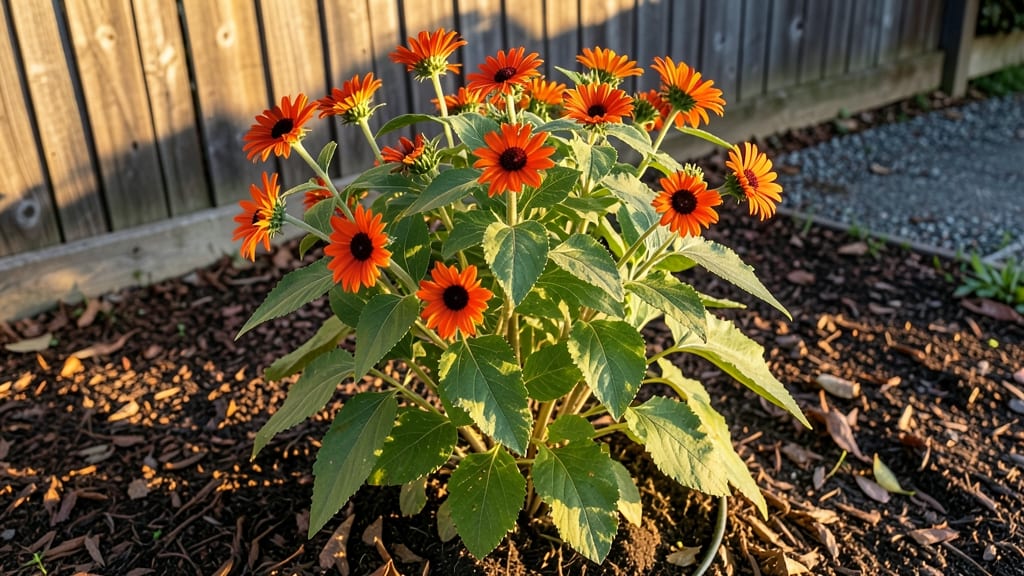
Growing Mexican sunflowers (Tithonia rotundifolia) in the Pacific Northwest means adding bold purple blooms that hum with bees and butterflies from summer through fall. 🌿 These towering beauties aren’t just showstoppers—they’re hardy survivors that thrive in our cooler summers, as long as you give them the right conditions.
I’ve watched mine grow from 6-foot stalks to 8-foot giants in just one season, their fiery blooms drawing pollinators like magnets.
The secret to their success? Well-draining soil, full sun for at least 6 hours, and watering that mimics summer showers—deep but infrequent. They tolerate poor soil better than most sunflowers, but a little compost at planting time ensures those vibrant purple blooms keep coming.
Once established, they’re nearly drought-proof, making them perfect for busy gardeners who want impact without fuss.
You’ll end up with a garden that’s alive with movement—bees, monarchs, and hummingbirds all flock to these flowers, and the seed heads provide winter food for birds. The plants also suppress weeds naturally, so they’re a two-for-one win for pollinators and lazy gardeners alike.
With just a little care, you’ll have a year-round pollinator magnet that outshines anything from a nursery.
Whether you’re planting in containers or directly in the ground, these sunflowers adapt easily. They even handle light frosts, so you can push their season longer than most annuals.
The key is starting seeds indoors 6-8 weeks before your last frost—they germinate fast and grow quickly, so don’t wait until spring to get them going.
📚 In This Guide
- What you need
- Instructions
- Tips and common mistakes
- Wrapping up and next steps
What you need
- ● Seeds or seedlings: 3–5 Tithonia rotundifolia plants (or seeds, if starting from scratch). Look for organic or locally adapted varieties for best results!
- ● Well-draining soil: Amend heavy clay soil (common in PNW) with 2–3 inches of compost or 1 part perlite/sand per 3 parts soil to prevent root rot.
- ● Sunlight access: A full-sun spot (6+ hours/day). Partial shade may stunt growth—this sunflower loves to soak up rays!
- ● Watering can or hose: With a gentle spray nozzle to avoid displacing seedlings.
- ○ Mulch (optional but recommended): 2–3 inches of straw or wood chips to retain moisture and suppress weeds.
- ● Garden trowel or transplanting spade (for digging holes 12–18 inches deep).
- ● Gloves (to protect hands from prickly stems and thorns).
- ● Pruning shears (for deadheading spent blooms and shaping plants).
- ○ pH testing kit (optional): Aim for a slightly acidic to neutral soil (pH 6.0–7.0). PNW soils can be acidic—lime may help if needed.
- ○ Companion plant checklist (optional): Pair with basil, marigolds, or native grasses to boost pollinator activity!
Step-by-step guide to growing Mexican sunflower (Tithonia rotundifolia) in the Pacific Northwest
Here’s how to cultivate this striking pollinator magnet—hardy enough for PNW summers yet dramatic enough to steal the show.
🌱 Step 1: Choose the Perfect Planting Spot
Mexican sunflowers thrive in full sun, so pick a location with at least 6-8 hours of direct sunlight daily. In the Pacific Northwest, where summers can be cool and cloudy, prioritize southern exposures or areas with minimal shade from trees or structures. I’ve found that even a west-facing spot works if it gets unobstructed afternoon sun.
These plants tolerate a range of soil types but prefer well-draining soil—avoid heavy clay unless amended with compost. If your soil is compacted, mix in 2-3 inches of organic matter (like compost or aged manure) before planting. The roots appreciate room to spread, so give each plant 3-4 feet of space to prevent overcrowding.
🌿 Step 2: Plant at the Right Time and Depth
Wait until after the last frost date—typically mid-to-late May in the PNW—before planting. Mexican sunflowers are tender perennials in warmer climates but grow as annuals in our region, so treat them as such. Start seeds indoors 6-8 weeks before transplanting or buy established plants from a nursery.
Dig a hole twice as wide as the root ball but only as deep as the container. Gently loosen the roots if they’re circling and place the plant so the top of the root ball sits just below soil level. Press the soil firmly around the base to eliminate air pockets, then water deeply to settle everything in place.
☀️ Step 3: Water Deeply and Monitor Soil Moisture
These sunflowers are drought-tolerant once established, but young plants need consistent moisture. Water 1-2 inches per week, ensuring the soil stays evenly moist but not soggy. In the PNW’s humid summers, aim for deep watering every 5-7 days rather than frequent light sprinkles. You’ll know it’s right when the top 1-2 inches of soil feel dry to the touch.
Overwatering can lead to root rot, especially in containers or heavy soil. If the leaves start yellowing or wilting despite damp soil, your plant may be struggling with too much moisture. Adjust by letting the soil dry out slightly between waterings.
✂️ Step 4: Prune for Health and Encourage Blooms
Deadhead spent blooms by snipping stems just above a set of healthy leaves to encourage more flowers. This is especially important in the PNW, where cooler temperatures can slow regrowth. I like to prune in the early morning when stems are firm, using clean, sharp shears to avoid damaging the plant.
If your sunflower grows too leggy or top-heavy, trim back the tallest stems by one-third to promote bushier growth. This also prevents stems from snapping in windy PNW conditions. Avoid heavy pruning late in the season, as it may reduce winter hardiness (though these plants rarely survive our winters outdoors).
🪴 Step 5: Protect from Pests and Prepare for Winter
Watch for aphids, spider mites, or Japanese beetles, which may target the vibrant blooms. Spray with neem oil or a soapy water solution if pests appear, focusing on the undersides of leaves where they hide. Mexican sunflowers are generally pest-resistant, but their popularity with pollinators makes them a magnet for hungry insects.
As fall approaches, cut back stems to 6 inches tall and remove any debris from the base. While these plants rarely overwinter in the PNW, cutting them back tidies up the garden and reduces overwintering pests. Add a 2-inch layer of mulch around the base to protect roots from freezing temperatures and retain moisture for next season’s planting.
Tips & tricks for thriving Mexican sunflower in the Pacific Northwest
Between us, these sunflowers are easier to grow than they look—once you know the PNW-specific tricks. Here’s how to avoid common pitfalls and get the most dramatic blooms possible.
Sunlight Strategy: While the instructions call for 6-8 hours of direct sunlight daily, I’ve found that in cloudy PNW summers, you’ll need to prioritize the brightest hours—typically between 10 AM and 4 PM. If your spot gets afternoon shade, consider a reflective surface like a white wall or mulch to bounce extra light onto the plants. This makes all the difference for those deep purple blooms we all love.
Soil Prep Secret: The instructions mention amending compacted soil with 2-3 inches of organic matter, but don’t stop there. For the best drainage in heavy PNW soils, I mix in a handful of perlite or coarse sand to the bottom of the planting hole. This creates a little "drainage layer" that prevents water from pooling around the roots—especially critical during our rainy springs. Just blend it right into the native soil before planting.
Watering Wisdom: Those 1-2 inches per week guidelines work, but here’s the thing: in the PNW’s humid summers, you’ll often need to water less frequently but more deeply. I use the "finger test" method—stick your finger 1-2 inches into the soil in the morning. If it feels dry, water until moisture reaches 6 inches deep. This encourages those deep taproots that make these plants so drought-tolerant once established.
Pruning Pro Tip: When the instructions say to trim back leggy stems by one-third, I recommend making those cuts just above a set of leaves where three or more leaf nodes converge. This creates stronger branching points for future growth. Also, always use sterilized shears—I dip mine in rubbing alcohol between cuts to prevent spreading any fungal spores that might lurk in your garden.
Pro Tips for Mexican Sunflower Tithonia Rotundifolia
- Between us, these sunflowers are easier to grow than they look—once you know the PNW-specific tricks.
- Sunlight Strategy: While the instructions call for 6-8 hours of direct sunlight daily, I’ve found that in cloudy PNW summers, you’ll need to prioritize the brightest hours—typically between 10 AM and 4 PM.
- Soil Prep Secret: The instructions mention amending compacted soil with 2-3 inches of organic matter, but don’t stop there.
Frequently asked questions
Got questions about growing Tithonia rotundifolia in the Pacific Northwest?
You’re not alone! Here are answers to the most common queries from gardeners eager to add this vibrant pollinator magnet to their landscapes.
Is Tithonia rotundifolia frost-tolerant?
Tithonia rotundifolia is a tender perennial that thrives in warm climates but struggles with frost. In the PNW, treat it as an annual—plant after the last frost (late spring) and protect it from chilly nights. If you’re in Zone 8-9, it may survive mild winters with mulch, but expect dieback in colder areas.
How fast does it grow, and when will it bloom?
This sunflower is a fast grower! With consistent water and sun, expect 3–5 feet of height in just 2–3 months. Blooms typically appear 6–8 weeks after planting, with vibrant orange-yellow flowers that last through fall. Pinch back early flowers to encourage bushier growth.
Why aren’t bees visiting my Tithonia?
If pollinators are scarce, check these fixes:
- Timing: Plant in full sun (6+ hours/day)—shady spots reduce blooms.
- Water: Drought stress can limit nectar. Water deeply 1–2x/week.
- Pests: Spider mites or aphids may deter bees. Spray with neem oil if needed.
- Companions: Pair with echinacea or salvia to attract more visitors.
Can I grow Tithonia in containers?
Yes! Choose a large pot (15+ gallons) with drainage holes and use well-draining soil. Place in full sun and fertilize lightly every 4–6 weeks. Containers dry out faster, so monitor soil moisture closely. Dwarf varieties (like ‘Torch’) work best for small spaces.
What can I plant near Tithonia for a pollinator-friendly garden?
Tithonia rotundifolia plays well with others! Try these PNW-friendly companions:
Plant
Why It Works
Echinacea purpurea (Coneflower)
Attracts butterflies and extends bloom season.
Salvia nemorosa (Purple Sage)
Drought-tolerant and blooms when Tithonia starts to fade.
Lavandula (Lavender)
Repels pests and adds fragrance.
Rudbeckia (Black-Eyed Susan)
Provides late-season nectar for bees.
Pro tip: Avoid planting near mint or invasive ground covers—they’ll compete for resources.
Wrapping up and next steps
Incorporating Mexican sunflower (Tithonia rotundifolia) into your Pacific Northwest garden isn’t just about adding vibrant color—it’s a game-changer for pollinators, soil health, and biodiversity! 🌿 With its drought tolerance and low-maintenance nature, this purple powerhouse thrives where others struggle, making it a must-have for sustainable landscapes.
Whether you’re a seasoned gardener or just starting, its resilience and beauty prove that big impact comes in small (but bold) packages.
Ready to transform your garden? Start small—plant a few near your pollinator-friendly perennials or companion veggies—and watch your ecosystem thrive. 🌸 Next up: Grab your seeds and let the Mexican sunflower work its magic!