
Planting
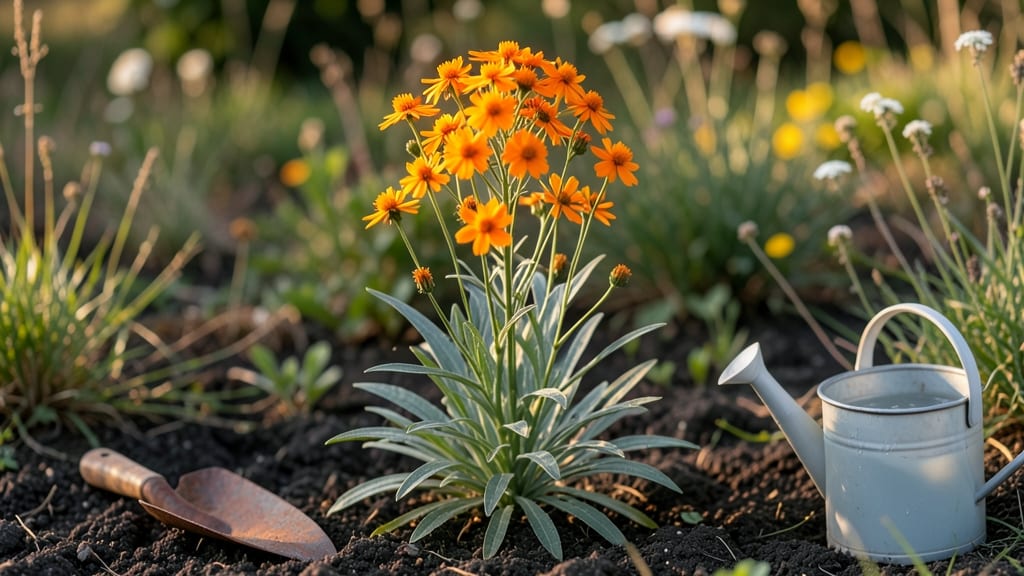
Identifying Michigan wildflowers turns every hike into a treasure hunt—those delicate blooms hiding along trails or popping up in meadows. 🌸 I’ve spent years stumbling over the same common species, only to realize I’d mislabeled them time and again.
The key isn’t memorizing names but learning the subtle clues: leaf shape, bloom timing, and even the scent of crushed foliage.
Start with the basics: a field guide or app like iNaturalist, which lets you snap a photo and get instant ID suggestions. My go-to is the Michigan Native Plant Society’s resources—they highlight ecologically valuable species like wild bergamot and purple coneflower, which support pollinators.
A magnifying glass helps spot tiny details, like the fuzzy stems of common milkweed or the jagged edges of Virginia bluebells leaves.
You’ll quickly spot patterns: goldenrod blooms in late summer, while trillium appears in spring’s damp woodlands. Even common misidentifications—like confusing oxeye daisy with black-eyed Susan—become obvious once you notice the daisy’s white ray flowers vs. the Susan’s yellow petals.
These blooms aren’t just pretty; they’re the backbone of Michigan’s ecosystems.
Once you’ve mastered the basics, dive deeper with local botanical gardens or guided hikes. The more you observe, the more the landscape reveals itself—each wildflower a story of resilience and adaptation. Grab your guide and start exploring; you’ll see Michigan’s meadows in a whole new light.
📚 In This Guide
- What you need
- Instructions
- Tips and common mistakes
- Wrapping up and next steps
What you need
- ● Field Guide or App: A printed guide (e.g., Michigan Wildflowers by Stan Tekiela) or a smartphone app like iNaturalist or PictureThis (free/paid options).
- ● Notebook & Pen: A small, waterproof notebook (e.g., Rite in the Rain) and a fine-tip pen for sketching or jotting notes.
- ● Magnifying Glass: A 2x–4x handheld magnifier (e.g., National Optical) to inspect flower structures, leaves, and stems.
- ● Camera or Smartphone: A basic camera with macro mode (or a smartphone with a 12MP+ camera) for close-up shots. A clip-on lens (e.g., Olloclip) helps for extreme close-ups!
- ● Measuring Tape or Ruler: A 6-inch metal tape measure or a foldable ruler to record plant height and leaf width.
- ○ Gloves (Optional but Recommended): Lightweight, breathable gardening gloves (e.g., Fiskars) to protect hands from thorns or sap.
- ● Pruning Shears: Small, sharp shears (e.g., Felco) for gently harvesting leaves or stems for closer inspection (always take only what you need!).
- ● Plastic Baggies: 1–2 quart-sized, resealable bags to store samples (label with location/date!).
- ● Hand Lens with Light: A 10x loupe (e.g., National Optical) for examining tiny details like stamens or pollen.
- ● GPS Device or Offline Maps: A Garmin GPS or downloaded Google Maps (no service areas can be tricky!).
- ● Weather Check: Plan trips for mild, dry days—rain can ruin photos and make trails slippery! ☔🚫
- ● Permits: If exploring state parks or conservation areas, check for DNR guidelines—some require permits for plant collection.
- ● Safety First: Pack bug spray (DEET or picaridin-based), sunscreen, and water—Michigan’s wildflower trails can be remote!
How to identify Michigan wildflowers in the field
Here's the method I trust to distinguish native blooms with confidence—no botanist degree required.
🌿 Step 1: Observe Leaf Arrangement and Shape First
Wildflower identification starts with leaves, not flowers. Look at how leaves attach to the stem—are they opposite (paired at each node), alternate (spaced singly along the stem), or whorled (3+ leaves at a single point)? Michigan's wild bergamot has opposite leaves with serrated edges, while common milkweed features broad, oval leaves in a milk-sap pattern.
Next, examine leaf edges: smooth, toothed, lobed, or divided? A lobed leaf with deep indentations points to wild geranium, while smooth-edged leaves often belong to trillium species. I always run my finger along the edge—roughness or hairiness can be your first clue.
🌱 Step 2: Study Flower Structure and Growth Habit
Now focus on the bloom itself. Note the flower's symmetry—radial (like a dinner plate) or bilateral (mirror-image halves)? Radial flowers often belong to wild columbine or black-eyed Susan, while bilateral blooms like bee balm have two distinct sides.
Check flower attachment: Do they grow directly from the stem (sessile) or on short stalks (pedicels)? Bloodroot has single white blooms on slender stems, while wild strawberry features tiny white flowers clustered at the tips. I like to gently brush my hand over the plant—hairy stems often indicate lamb's quarters or wild bergamot.
🌸 Step 3: Examine Stem and Root Characteristics
The stem reveals critical clues. Is it hollow (like joe-pye weed), woody (common in wild rose), or herbaceous (soft and green)? Tap it gently—some stems sound hollow when mature.
Look at the base: Does the plant have a bulb (like wild onion), rhizome (horizontal underground stem in wild ginger), or taproot (deep central root in wild carrot)? If you can safely dig up a small section (only in protected areas!), you'll spot these features. I always check for milky sap—a telltale sign of milkweed family members.
✂️ Step 4: Compare with a Field Guide or App
Now cross-reference your observations with a trusted resource. I rely on the Michigan Flora app for instant comparisons—upload a photo and it highlights key features. Pay attention to the bloom time (June-July for wild bergamot, August-September for goldenrod) and habitat preferences (wet meadows for swamp milkweed, dry slopes for wild indigo).
Real talk: Some flowers look alike until you zoom in. Butterfly weed and common milkweed both have orange blooms, but only milkweed has milky sap. Always check for seed pods—milkweed's are clustered and spiky, while butterfly weed's are smooth and elongated.
📸 Step 5: Document and Verify Your Findings
Take clear photos from multiple angles—front, side, and close-ups of leaves, stems, and seed pods. Note the plant's height (measured from the base to the tallest bloom) and any distinctive smells (like the skunky aroma of wild parsnip).
I keep a small notebook in my pocket to jot down location details, soil type, and nearby plants. If you're unsure, share your photos in local gardening groups—Michigan's native plant communities often have experts who can confirm IDs within hours. Remember: Never disturb protected species—admire from a distance and photograph instead.
Tips & tricks for mastering Michigan wildflower identification
These field-tested strategies will sharpen your eye for Michigan's native blooms—no green thumb required.
Leaf Texture Clues: Pay close attention to leaf surfaces in Step 1. Smooth leaves often belong to wild trillium species, while hairy leaves like those on lamb's quarters can be a dead giveaway. Run your finger along the underside—some leaves, like those of wild bergamot, have a slightly rough texture that's easy to miss at first glance. This subtle detail can distinguish similar-looking plants that differ only in leaf texture.
Flower Symmetry Secrets: When examining flower structure in Step 2, remember that radial symmetry (like a dinner plate) is common in wild columbine and black-eyed Susan, while bilateral symmetry (mirror-image halves) often appears in bee balm. I've found that holding a small mirror beside the bloom can help visualize symmetry patterns more clearly—this simple trick has helped me spot the difference between similar-looking flowers in the field.
Root System Shortcuts: For Step 3's root characteristics, focus on what you can observe without digging. The presence of milky sap is your best indicator for milkweed family members—just break a stem and look for white latex. For bulbs, check the base for rounded, onion-like structures. I always carry a small trowel (just for safe, non-protected areas) to gently expose roots when identification hinges on this feature, but I never disturb protected species.
Seasonal Timing: Step 4's bloom time references are your best friend for narrowing down possibilities. Keep a seasonal calendar in your field notebook: wild bergamot typically blooms June-July, while goldenrod appears August-September. This temporal clue can eliminate half your potential matches before you even examine the plant closely. I've saved hours of fieldwork by eliminating species that simply aren't in bloom during my visit.
Pro Tips for Identify Michigan Wildflowers
- These field-tested strategies will sharpen your eye for Michigan's native blooms—no green thumb required.
- Leaf Texture Clues: Pay close attention to leaf surfaces in Step 1.
- I've found that holding a small mirror beside the bloom can help visualize symmetry patterns more clearly—this simple trick has helped me spot the difference between similar-looking flowers in the field.
Frequently asked questions
Got questions about spotting Michigan’s wildflowers? Here are answers to the most common ones—so you can hit the trails with confidence!
When is the best time to see Michigan wildflowers in bloom?
Timing varies by species! Early bloomers like Bloodroot ( March–April) and Spring Beauty ( April–May) lead the show, while late-season stars like Goldenrod ( August–October) keep the color going. Check our field guide’s bloom charts for specifics.
How can I tell the difference between a wildflower and a weed?
Wildflowers often have distinctive petal shapes, vibrant colors, and grow in clusters—unlike weeds, which may have irregular leaves or seed pods. Use our photo guide to compare! If it’s native and pretty, it’s probably a wildflower.
Do I need a special app or book to identify wildflowers?
Nope! Our guide includes high-res photos and descriptions—no extra tools required. For tech lovers, apps like iNaturalist or PictureThis can help cross-check IDs on the go.
What if I find a wildflower but it’s not in your list?
No worries! Michigan has hundreds of native species. Snap a clear photo (include leaves, stems, and habitat) and check Michigan Flora or submit it to citizen science projects like iNaturalist.
Are any Michigan wildflowers toxic to pets or kids?
Yes—Poison Hemlock (look-alike of Queen Anne’s Lace) and Jimsonweed are dangerous. Teach kids to never touch or taste unfamiliar plants. When in doubt, admire from afar!
Wrapping up and next steps
Identifying Michigan’s wildflowers is like unlocking a secret language of nature—each bloom tells a story of the season, soil, and ecosystem. With this guide, you’ve gained the tools to recognize 50 stunning native species, from the bold Black-eyed Susan to the delicate Trillium. 🌸
Now that you’re ready to spot and celebrate these beauties, take the next step: plant a few in your garden! Supporting native wildflowers helps local pollinators and keeps Michigan’s landscapes vibrant. Grab a field notebook, hit the trails, and let the adventure begin!