
Flowers
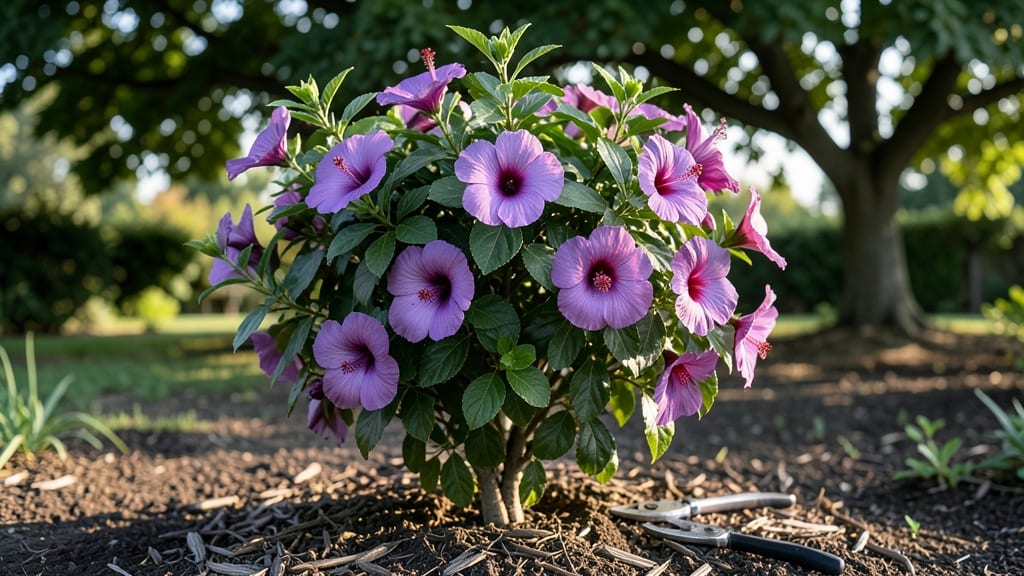
The hibiscus flower purple thrives against all odds in my Pacific Northwest garden—frost-blasted stems still unfurl into bold blooms each spring, defying the odds with stubborn beauty. 🌿 I’ve watched mine push through frost and still burst with color—proof these tropical-looking plants are tougher than they appear.
The secret lies in choosing the right variety and giving them just enough protection to thrive where others fail.
You’ll need full sun (at least 6 hours daily), well-draining soil with a slightly acidic pH, and consistent moisture—think of them as thirsty divas who hate soggy feet.
My go-to variety, Hibiscus moscheutos ‘Lady Baltimore,’ handles our damp winters better than tropical hibiscus, but even it needs winter mulch to keep roots warm. The payoff? Stunning 8-inch blooms from summer through early fall.
Pruning in late winter (before new growth) keeps them compact and encourages more flowers. Deadhead spent blooms to push more production, and watch for aphids—their sticky trails give them away. With these tweaks, your purple hibiscus will outshine store-bought bouquets and become the showstopper of your garden.
Works equally well in containers (for patio displays) or in-ground beds, as long as you mimic their natural wetland roots. Let’s get those purple blooms growing!
📚 In This Guide
- What you need
- Instructions
- Tips and common mistakes
- Wrapping up and next steps
What you need
- ● Purple hibiscus plants (Hibiscus syrius or Hibiscus moscheutos) – Choose cold-hardy varieties like Hibiscus moscheutos (swamp hibiscus) for PNW resilience. Quantity: 1-3 plants (depending on garden size).
- ● Well-draining potting mix – 3-5 gallons per container (if growing in pots). Opt for a blend with 30% perlite or sand for aeration.
- ● Organic compost or aged manure – 5-10 lbs per planting hole to enrich soil fertility.
- ● Slow-release fertilizer (10-10-10 or 5-10-5) – 1 lb per plant at planting time.
- ● Mulch (pine straw or shredded bark) – 2-3 inches to retain moisture and insulate roots.
- ● Garden trowel or spade (for transplanting)
- ● Gloves (to protect hands from thorns)
- ● Watering can or hose with a gentle spray nozzle
- ● Pruning shears (for shaping and deadheading)
- ○ pH test kit (optional but helpful—hibiscus thrives in 6.1-6.5 pH)
- ● Sunlight: Full sun (6+ hours/day)—choose a south-facing spot if possible.
- ● Watering schedule: 1-2 inches per week (more in summer; reduce in winter).
- ● Frost protection: Burlap or frost cloth for young plants (Zone 7+ hardiness).
- ● Space: 3-5 feet apart for in-ground planting; 18-24 inches for containers.
Step-by-Step guide to growing frost-resistant purple hibiscus
Here’s how to cultivate hardy purple hibiscus that thrives in Pacific Northwest’s cooler climate.
🌱 Step 1: Select the Right Variety and Planting Location
Choose a hardy hibiscus variety like Hibiscus moscheutos (swamp hibiscus) or Hibiscus syriacus (rose of Sharon), both of which tolerate USDA Zones 5-9. These varieties handle light frost better than tropical types. Plant in full sun—at least 6-8 hours of direct light daily—but protect from harsh afternoon sun if your garden gets intense heat.
Amend the soil with 2-3 inches of organic compost before planting to improve drainage. Purple hibiscus prefers slightly acidic to neutral soil (pH 6.0-7.0). Test your soil first—amend with sulfur if it’s too alkaline. The key is well-draining soil to prevent root rot, especially in the Pacific Northwest’s damp winters.
☀️ Step 2: Plant at the Right Time and Depth
Plant bare-root hibiscus in early spring (after the last frost) or early fall to establish roots before winter. Dig a hole twice as wide as the root ball but only as deep as the container it came in—planting too deep suffocates the roots. Gently loosen the roots if they’re circling and spread them outward in the hole.
Backfill with native soil mixed with compost, tamping lightly to remove air pockets. Water deeply to settle the soil and encourage root contact. Mulch with 2-3 inches of shredded bark to retain moisture and protect roots from temperature swings. Avoid piling mulch against the stem—keep it 2-3 inches away to prevent rot.
💧 Step 3: Water and Fertilize for Strong Growth
Water deeply once a week during the first growing season, ensuring the soil is moist 6 inches down. Hibiscus roots are deep, so shallow watering encourages weak, surface roots. In the Pacific Northwest’s rainy climate, adjust for excess moisture—hibiscus hates soggy feet. If the soil stays wet for more than 48 hours, improve drainage by adding coarse sand or perlite to the planting hole.
Fertilize twice a year with a balanced, slow-release fertilizer (10-10-10) in early spring (when new growth appears) and mid-summer (after the first flush of blooms). Avoid high-nitrogen fertilizers—they promote leafy growth at the expense of flowers. A handful of bone meal in spring also encourages strong root development.
✂️ Step 4: Prune for Frost Hardiness and Blooms
Prune late winter or early spring (before new growth starts) to shape the plant and remove dead wood. Cut back one-third of the oldest stems to encourage new, vigorous growth. This also helps the plant recover from winter better. Avoid heavy pruning in fall—it reduces the plant’s ability to harden off before frost.
Deadhead spent blooms regularly during the growing season to redirect energy into new flowers. If your hibiscus gets tall and leggy, prune back 1/3 of the height in early summer to promote bushier growth. In the Pacific Northwest, where winters are mild but damp, prune lightly in fall to avoid encouraging tender new growth that might not survive frost.
🌿 Step 5: Protect from Late Frost and Winter Prep
While these varieties are frost-resistant, late spring frosts can damage new growth. Cover young plants with frost cloth if temperatures dip below 28°F after buds form. In fall, mulch heavily (4-6 inches) with straw or leaves to insulate roots. Water deeply before the first hard frost to help the plant store moisture for winter.
In Zone 5, where winters are colder, consider wrapping the base of the plant with burlap or a thick layer of mulch. Remove protective coverings in early spring once the soil thaws to prevent rot. With proper care, your purple hibiscus will reward you with bold blooms from summer through fall—even in the Pacific Northwest’s cooler climate.
Tips & tricks for frost-resistant purple hibiscus success
Real talk: The Pacific Northwest’s climate can be tough on hibiscus—but these tricks will help your purple blooms thrive where others fail.
Variety Matters: While Hibiscus moscheutos and Hibiscus syriacus are your best bets, don’t overlook the Hibiscus coccineus (Texas star hibiscus) for slightly warmer microclimates. These varieties all share one key trait: they develop hardier stems that can handle our region’s occasional light frost. When selecting, look for plants with thick, woody stems—these are your best insurance against winter damage.
Soil Prep Secret: The instructions mention 2-3 inches of compost, but here’s the upgrade: mix in 1/4 cup of perlite or coarse sand per cubic foot of soil to create the perfect drainage balance. In the Pacific Northwest’s damp winters, even well-draining soil can become waterlogged. Test your amended soil by squeezing a handful—it should crumble when dry but hold moisture when damp. This simple adjustment prevents the root rot that often kills hibiscus in our climate.
Watering Wisdom: That "deeply once a week" guideline works, but timing is everything. Water in the early morning to give foliage time to dry before evening—this prevents fungal diseases that thrive in our cool, moist climate. And here’s a pro move: use a soaker hose placed at the base of the plant rather than overhead watering. This delivers moisture exactly where the deep roots need it while protecting the leaves from the damp conditions that encourage mildew.
Pruning Precision: When you’re cutting back one-third of the oldest stems in Step 4, aim to remove branches that are thinner than a pencil. These thin stems are more vulnerable to frost damage and won’t produce strong blooms. Make your cuts just above a leaf node or outward-facing bud—this encourages new growth in the right direction. For leggy plants, prune in stages over the summer rather than all at once; this prevents shock and gives you better control over the plant’s shape.
Pro Tips for Hibiscus Flower Purple
- Real talk: The Pacific Northwest’s climate can be tough on hibiscus—but these tricks will help your purple blooms thrive where others fail.
- Variety Matters: While Hibiscus moscheutos and Hibiscus syriacus are your best bets, don’t overlook the Hibiscus coccineus (Texas star hibiscus) for slightly warmer microclimates.
- Soil Prep Secret: The instructions mention 2-3 inches of compost, but here’s the upgrade: mix in 1/4 cup of perlite or coarse sand per cubic foot of soil to create the perfect drainage balance.
Frequently asked questions
Can purple hibiscus survive Pacific Northwest winters?
Most Hibiscus syriacus (hardy hibiscus) varieties tolerate light frosts down to 10°F (-12°C), making them great for PNW zones 5-9. However, young plants or tropical hibiscus (like Hibiscus rosa-sinensis) need winter protection—mulch heavily, wrap containers, or grow them as annuals. Learn more about winterizing here!
How long does it take for a purple hibiscus to bloom?
Patience pays off! Established plants typically bloom 2–3 years after planting, but you can encourage earlier flowers by pruning in late winter (before buds swell) and fertilizing with low-phosphorus, high-potassium feed. Pro tip: Deadhead spent blooms to prompt more flowers!
What’s the best alternative if my purple hibiscus isn’t thriving?
If your hibiscus struggles with frost, pests, or poor soil, consider these PNW-friendly alternatives:
- Butterfly Bush (Buddleia davidii) – Drought-tolerant, attracts pollinators, and blooms in purple.
- Russian Sage (Perovskia atriplicifolia) – Silvery foliage, lavender-purple spikes, and zero frost issues.
- Crape Myrtle (Lagerstroemia) – Heat-hardy with vibrant purple blooms (zones 6-9).
Why are my hibiscus leaves yellowing or dropping?
Yellow leaves often signal overwatering, nutrient deficiency, or fungal issues. Check these fixes:
Problem
Solution
Yellowing edges
Lack of iron (chelated iron spray) or alkaline soil.
Wilting/dropping leaves
Root rot (reduce watering, improve drainage).
Brown spots
Fungal disease (neem oil spray, prune affected areas).
Pro tip: Hibiscus loves well-draining soil—amend clay soil with compost or sand to prevent soggy roots.
Can I change my hibiscus flower color naturally?
Nope! Flower color is genetic, but you can influence bloom intensity by:
- Using balanced fertilizer (10-10-10) for vibrant hues.
- Avoiding excess nitrogen (it boosts leaves, not flowers).
- Planting in full sun (6+ hours/day) for deeper colors.
Wrapping up and next steps
The purple hibiscus is a stunning, frost-resistant beauty that thrives in the Pacific Northwest’s unique climate—proving that vibrant blooms aren’t just for warmer regions! 🌸 With the right soil, sunlight, and care, these resilient plants can reward you with months of color, attracting pollinators and adding drama to your garden.
Whether you’re a seasoned gardener or a curious beginner, their low-maintenance charm makes them a perfect choice for year-round interest.
Ready to plant your own purple hibiscus? Start by choosing a sunny spot, prepping the soil, and grabbing your cuttings or young plants. Your garden’s next masterpiece could be just a few weeks away! Happy growing! 🌱