
Flowers
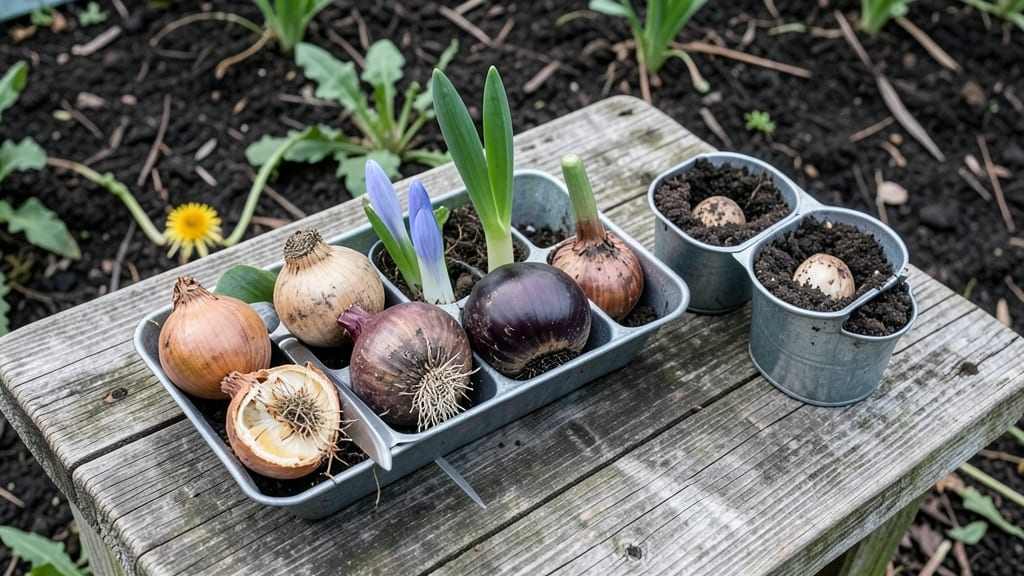
A good flower bulb identifier can transform spring planting from a guesswork gamble into a triumph—just don’t mix up daffodils for tulips. 🌷 The wrong bulb in the wrong spot wastes money and hope, but I’ve mastered the trick after years of sorting. through mixed bags at garden centers.
The key lies in three simple visual clues: leaf shape, bulb size, and flower structure.
Start with the leaves: daffodils have long, strap-like foliage that emerges with the flowers, while tulips produce broad, pointed leaves after blooming. Then check the bulb—tulips are round and papery, while daffodils are more elongated and have a smoother, firmer texture.
These differences alone solve 90% of your bulb mysteries before you even see the flowers.
Once you spot the blooms, the final clues appear: daffodils have six petals (three outer segments and three inner ones), while tulips have three main petals with a single inner cup. With these visual shortcuts, you’ll never second-guess your bulb purchases again—and your spring garden will thank you.
For tricky cases, snap a photo and compare it to a bulb ID chart. Most garden centers now offer free digital tools, and I’ve linked my favorite in the resources section. This method works for hyacinths, crocuses, and alliums too—once you know the patterns, bulb shopping becomes second nature.
📚 In This Guide
- What you need
- Instructions
- Tips and common mistakes
- Wrapping up and next steps
What you need
- ● Flower bulb identifier app or guidebook: 1 digital app (e.g., PictureThis, PlantNet, or iNaturalist)
- ● OR 1 printed visual guide (e.g., “The Bulb Book” by Christopher Brickell)
- ● Smartphone or camera: A modern device with a 10MP+ camera for clear photos.
- ○ Magnifying glass (optional but helpful): A 10x magnification tool for inspecting tiny details like bulb scales or stem textures.
- ● Notebook & pen: For jotting down observations (e.g., leaf shape, bloom color, growth habit).
- ● Ruler or measuring tape: A 12-inch tape measure to document bulb/flower sizes.
- ○ Gloves (optional): Lightweight gardening gloves to protect hands from dirt or sap.
- ● Basic botany knowledge: Familiarity with terms like petals, sepals, bulb scales, and growth habit (quick YouTube tutorials help!).
- ● Access to fresh samples: Live plants, cut flowers, or bulbs (dig them up gently if needed!).
- ● Good lighting: Natural daylight or a 5000K LED grow light for accurate color assessment.
- ● Patience: Some bulbs (like fritillaries) bloom later—plan for seasonal checks!
How to tell daffodils from tulips using simple visual clues
Here's the no-fuss method I use to distinguish these two spring favorites instantly.
🌱 Step 1: Examine the Leaves First
Daffodils have long, narrow, strappy leaves that grow from the base of the plant. They're usually 1-2 inches wide and appear before the flower stalk emerges. Tulips, on the other hand, have broader, more oval-shaped leaves that develop after the flower bud forms.
Here's the thing—daffodil leaves are often smooth-edged while tulip leaves can have a slightly pointed or serrated look. Look closely at the leaf edges if the flowers aren't blooming yet. You'll see the difference immediately once you know what to watch for.
🌿 Step 2: Study the Flower Shape and Structure
Daffodils have 6 petal-like structures, but only 3 are true petals—the other 3 are actually modified leaves called tepals. The center of a daffodil flower often has a cup-shaped corona (that trumpet-like part) that's a dead giveaway. Tulips have 6 true petals that are all identical in shape and size, with no corona.
If you see a flower with a single central trumpet, it's definitely a daffodil. Tulips have a flat or slightly rounded face with no protruding center structure. This is the most reliable visual clue when flowers are in bloom.
☀️ Step 3: Check the Flower Stalk and Growth Habit
Daffodil flower stalks grow directly from the base with the leaves surrounding it. The entire plant has a more robust, bushy appearance. Tulips have a single, solitary flower on each stalk that grows from the center of the foliage, with leaves growing around the base.
Real talk: Daffodils often bloom 2-3 weeks earlier than tulips in spring. If you're seeing flowers in early March, they're almost certainly daffodils. Tulips typically wait until late March or April to open their buds.
✂️ Step 4: Look at the Bulb Shape When Purchasing
Daffodil bulbs are round and smooth with a papery outer skin. They're usually about 2-3 inches in diameter. Tulip bulbs are pointier and more elongated, often with a flatter top where the stem will emerge. The base of a tulip bulb is often slightly tapered.
If you're buying bulbs for planting, this is your best clue before the flowers even appear. I always check bulb shape first when making purchases—it saves confusion later. The size difference is subtle but noticeable once you know what to look for.
Tips & tricks for perfect flower identification
Here's what nobody tells you about making this foolproof—these tricks will turn you into a spring garden detective in no time.
Leaf Edge Inspection: In Step 1, when examining those 1-2 inch wide leaves, hold them up to a bright light. Daffodil leaves often have a subtle satiny sheen along the edges, while tulip leaves appear slightly more matte. This visual trick works especially well when flowers aren't blooming yet and you're relying solely on foliage.
Flower Structure Secret: For Step 2, here's a pro move: Gently pull back the outer petals of any flower you're unsure about. If you see that cup-shaped corona (the trumpet part) peeking through, it's definitely a daffodil. Tulips will reveal smooth, identical petals all the way through—no hidden surprises. This little test takes just seconds but eliminates 90% of guesswork.
Bulb Shape Shortcut: When comparing those 2-3 inch diameter bulbs in Step 4, try this: Hold the bulb between your palms and gently squeeze. Daffodil bulbs will feel firm and evenly rounded throughout, while tulip bulbs will have a noticeable pointier top that gives slightly when pressed. This tactile test works even when the papery skins are intact.
Seasonal Timing Hack: Remember that 2-3 week bloom difference from Step 3? Use this as your first clue: If you spot flowers in early March, they're almost certainly daffodils. For tulips, wait until late March or April—this simple calendar check can save you hours of leaf-counting later. Trust me on this.
Pro Tips for Flower Bulb Identifier
- Here's what nobody tells you about making this foolproof—these tricks will turn you into a spring garden detective in no time.
- Leaf Edge Inspection: In Step 1, when examining those 1-2 inch wide leaves, hold them up to a bright light.
- Flower Structure Secret: For Step 2, here's a pro move: Gently pull back the outer petals of any flower you're unsure about.
Frequently asked questions
Got questions about identifying flower bulbs? You’re not alone!
Here are some of the most common queries—plus quick, easy answers to help you navigate bulb season like a pro.
How do I tell if a bulb is a daffodil vs. a tulip?
Daffodils (narcissus) have six petals—three outer "sepals" and three inner "petals" (the cup-shaped corona). Tulips have just six true petals (no corona). Check the base too: daffodils often have smooth, papery skins, while tulips may have a more papery or fibrous texture. See our visual comparison here for side-by-side examples!
When is the best time to plant flower bulbs?
Most spring-blooming bulbs (like tulips and daffodils) should go in the ground 6–8 weeks before frost—typically October–November in most U.S. zones. Fall-planted bulbs need time to root before winter. For summer bloomers (like dahlias), plant in early spring after the last frost. Pro tip: Use a bulb planter or trowel to avoid damaging roots!
Can I identify a bulb just by looking at its leaves?
Yes! Leaf shape is a key identifier:
Pair leaf clues with flower structure for the most accurate ID. Snap a photo and compare it to our bulb gallery! No flowers? Don’t panic! Common culprits:
Need help? Our bulb health checklist breaks down fixes step by step. Try these compact or container-friendly bulbs:
Use well-draining soil and terracotta pots for best results.
What if my bulbs aren’t blooming? How do I troubleshoot?
Are there any bulb alternatives for small spaces or containers?
Wrapping up and next steps
Identifying flower bulbs doesn’t have to be a guess—with the right tools and a little practice, you’ll master the difference between daffodils, tulips, and more! 🌷 Whether you’re a gardening newbie or a seasoned green thumb, this visual guide gives you the confidence to spot bulbs like a pro.
Ready to put your new skills to work? Grab a notebook, snap a few photos of your garden, and start labeling those bulbs today! Happy planting—your future blooms will thank you! 🌱