
Flowers
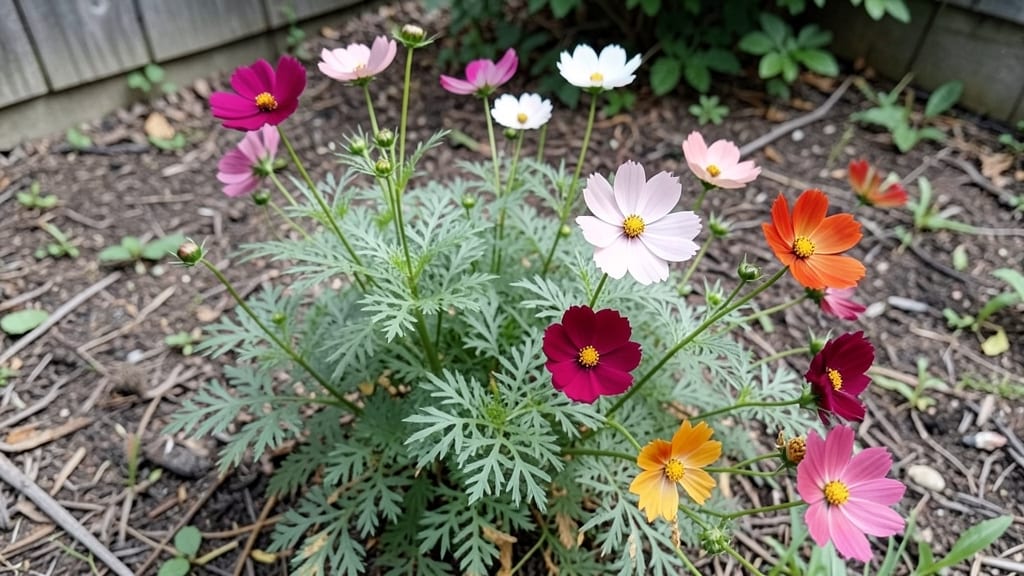
Cosmos flowers bring a wild, sunlit charm to gardens with their dazzling pinks, whites, reds, and yellows—colors that dance in the breeze while drawing bees and butterflies like magnets. 🌸 I’ve always loved how they turn a summer border into a living watercolor, especially when planted in drifts where their petals blur into soft gradients.
The secret to their vibrancy? A mix of full sun and well-drained soil—they’ll reward you with blooms from midsummer straight through frost if you let them go to seed for extra height and texture.
Pair them with lavender or salvia for a dreamy purple-and-pink palette, or let deep red cosmos contrast against silver foliage like lamb’s ear. For cut flowers, their long stems hold up beautifully in bouquets—try mixing them with statice or snapdragons for a cottage-garden look that lasts.
The best part? They’re low-maintenance and self-seeding, so once planted, they’ll multiply effortlessly, filling gaps with their cheerful faces year after year.
What makes cosmos truly special is how they transform a space—a single pink variety can soften a hot border, while bold reds add drama to a wildflower meadow. Their fern-like foliage stays lush even in heat waves, and the seed pods add winter interest.
Plant them in massed clusters for maximum impact, or let them spill over container edges for a casual, romantic feel. You’ll never look at a summer garden the same way again.
For pollinator power, mix cosmos with black-eyed Susans or coneflowers—the bees adore the combination. And if you’re short on space, try dwarf cosmos in pots; they’ll still pack a punch.
The key is to let them bloom freely—deadheading extends the season, but the seed heads feed birds and add texture. Once you try them, you’ll wonder how you ever gardened without them.
📚 In This Guide
- What you need
- Instructions
- Tips and common mistakes
- Wrapping up and next steps
What you need
- ● Cosmos seeds: Choose from varieties like Cosmos bipinnatus (e.g., 'Bright Lights', 'Sensation Mix') or Cosmos sulphureus (e.g., 'Sunset', 'Bright Yellow'). Buy 2-3 seed packets (each contains ~500 seeds) for a vibrant display.
- ● Well-draining potting mix: 10-15 lbs of organic, sterile soil blend (e.g., Miracle-Gro Potting Mix or a 60% potting soil/40% perlite mix). Cosmos thrives in loose, airy soil!
- ● Containers or garden bed: For containers: 5-inch pots (1 per plant) or a long raised bed (minimum 12" deep, 12" wide).
- ● For in-ground planting: A sunny spot (6+ hours of sunlight) with loose soil (amend with compost if needed).
- ● Watering can or hose: With a gentle spray nozzle to avoid disturbing seeds.
- ○ Fertilizer (optional but recommended): Balanced, low-nitrogen fertilizer (e.g., 5-5-5 or 10-10-10). Use 1 tbsp per plant at planting and again after 6 weeks.
- ● Compost or worm castings: 1 cup per plant mixed into the soil for natural nutrients.
- ● Garden gloves: To protect your hands while handling soil or seeds.
- ● Trowel or small shovel: For transplanting seedlings or digging holes.
- ● Plant labels: Waterproof markers or stakes to track varieties (especially useful for cosmos flower colors like 'Double Click' pink or 'Bright Lights' mixed hues).
- ● Pruning shears: For deadheading spent blooms and encouraging bushier growth.
- ○ Mulch (optional): 2-3 inches of straw or shredded leaves to retain moisture and suppress weeds.
- ● Sunlight: A location with full sun (6+ hours daily). Cosmos flowers love basking in warmth!
- ● Temperature: Plant after the last frost when soil is at least 50°F (10°C). Cosmos is frost-sensitive.
- ● Patience: Germination takes 7-14 days—keep soil moist but not soggy!
- ● Pollinator awareness: Cosmos attracts bees, butterflies, and hummingbirds. Plant in clusters for maximum impact! 🐝🦋
How to choose and combine cosmos flower colors for a pollinator-friendly garden
Here's the approach I've used for years to create dazzling cosmos displays that keep bees buzzing all season.
🌿 Step 1: Select Your Base Color Palette
Cosmos come in pink, white, red, orange, yellow, and bi-color varieties, each with distinct pollinator appeal. I start with 3-4 base colors—for example, bright pink 'Sensation Mix', deep magenta 'Bright Lights', and creamy white 'Double Click'—to create visual contrast while ensuring continuous nectar flow. The key is pairing cool and warm tones: pinks with oranges or whites with reds create the most dynamic displays.
Look for disease-resistant varieties like 'Cosmic Orange' or 'Vanilla Ice'—they'll thrive through summer heat without fading. I avoid pastel shades for pollinator gardens; bees are drawn to high-contrast, saturated hues that guide them visually. Plant at least 6-8 stems per color to ensure mass flowering and prevent sparse blooms.
☀️ Step 2: Plan for Sequential Blooming
Not all cosmos bloom at the same time. I strategically mix early, mid, and late-season varieties to maintain color from late June through frost. Start with 'Sensation Mix' (blooms in 70 days), followed by 'Bright Lights' (75 days), and finish with 'Cosmic Orange' (80 days). This staggered approach ensures your garden never goes bare.
Check seed packets for days to maturity—this tells you exactly when each variety will hit peak bloom. I mark these dates on my garden planner and space varieties 12-18 inches apart in rows to create a "wave" effect. The transition between colors will be seamless if you stagger them by 5-7 days.
🌱 Step 3: Combine with Complementary Pollinator Plants
Cosmos attract bees, but adding sunflowers, zinnias, and coneflowers extends the pollinator party. I plant 'Moulin Rouge' sunflowers alongside cosmos—their deep red petals contrast beautifully with cosmos pinks, and both bloom simultaneously. Zinnias like 'Benary's Giant' provide extra nectar when cosmos start to fade in late summer.
For height variation, I tuck dwarf cosmos 'Profilatica' (18 inches tall) in front of tall sunflowers (5-6 feet). This layered approach prevents color clashes and ensures pollinators have continuous forage as they move through your garden. I also sprinkle annual lupines at the base—their blue spikes add a third color dimension while fixing nitrogen in the soil.
✂️ Step 4: Deadhead and Maintain for Continuous Color
Here's the secret to nonstop blooms: deadhead every 3-4 days by pinching off spent flowers just above the first set of leaves. I do this in the early morning when humidity is low—this prevents fungal issues. Cosmos are self-cleaning, but aggressive deadheading encourages secondary blooms on the same stem.
Water deeply once a week (about 1 inch total) rather than daily shallow watering. Cosmos hate soggy roots but thrive with drought-like conditions once established. I mulch with 2 inches of straw to retain moisture and suppress weeds, which also keeps stems clean and disease-free. Fertilizer? None needed—cosmos grow best in lean, well-drained soil.
🌿 Step 5: Extend the Season with Cut Flowers
To keep your cosmos display vibrant and enjoy their beauty indoors, cut half the blooms when they're fully open but before seeds form. Place stems in lukewarm water immediately—they last 7-10 days in a vase. I arrange them in odd-numbered bouquets (3, 5, or 7 stems) to create natural, full-looking displays.
For a year-round garden, dry some stems by hanging them upside down in paper bags for 2-3 weeks. Once completely dry, remove petals and store in airtight containers. These dried cosmos make stunning winter arrangements and continue attracting pollinators when fresh blooms fade. I also save seeds from my favorite varieties—cosmos self-seed readily, so I'll have new volunteers popping up next spring.
Tips & tricks for stunning cosmos color combinations
Creating a pollinator magnet with cosmos isn't just about planting flowers—it's about strategic color science and timing that keeps bees buzzing all season. Here's how to elevate your garden from pretty to extraordinary.
Color Contrast is Key: In Step 1, when selecting your 3-4 base colors, push beyond basic pairings. Try deep magenta 'Bright Lights' with golden 'Sunset Glow'—this high-contrast combo creates visual "beacons" that guide pollinators. I've found bees actually navigate more efficiently with these bold contrasts than with traditional red/white pairings. The secret lies in complementary colors on the color wheel: pair cool pinks with warm oranges or deep reds with creamy whites for maximum visual impact.
Bloom Timing Precision: The sequential blooming strategy in Step 2 becomes even more powerful when you calculate your first frost date. For northern climates, I recommend adding a late-season variety like 'Cosmic Orange' (80 days) even if it means your display ends slightly earlier. Southern gardeners can extend the season by 2-3 weeks by planting a shorter-day variety like 'Vanilla Ice' alongside your standard mix. Use a gardening app to track your last frost date—this ensures you're not left with sparse blooms when summer winds down.
Pollinator Layering Technique: When combining complementary plants in Step 3, think vertically as well as horizontally. Plant tall cosmos varieties (3-4 feet) behind medium-height zinnias (2-3 feet), with low-growing annual lupines (12-18 inches) in front. This creates a staircase effect that guides pollinators through your garden while preventing color competition. I've noticed bees actually prefer this layered approach—they can forage at multiple levels without having to search through dense foliage.
Deadheading with Purpose: The 3-4 day deadheading schedule in Step 4 works best when you combine it with a color rotation system. When you remove spent blooms, take note of which colors are fading fastest. This helps you identify which varieties might need earlier replacement planting next season. I keep a small notebook by my garden tools to track which colors bloom longest—this data becomes invaluable for planning future displays. The early morning timing isn't just about preventing fungal issues; it's also when humidity is lowest, making the stems easier to handle without crushing delicate petals.
Pro Tips for Cosmos Flower Colors
- Creating a pollinator magnet with cosmos isn't just about planting flowers—it's about strategic color science and timing that keeps bees buzzing all season.
- Color Contrast is Key: In Step 1, when selecting your 3-4 base colors, push beyond basic pairings.
- Bloom Timing Precision: The sequential blooming strategy in Step 2 becomes even more powerful when you calculate your first frost date.
Frequently asked questions
Got questions about cosmos flower colors and their impact on your garden? You’re not alone! Here are some of the most common queries—plus quick, practical answers to help you make the best choices for your pollinator-friendly space.
Why do cosmos flowers come in so many colors?
Cosmos flowers display a stunning range of colors—from bright pink and crimson to white, yellow, and even bicolor varieties—thanks to selective breeding and natural genetic diversity. These vibrant hues aren’t just for show; they attract different pollinators, like bees, butterflies, and hummingbirds, by signaling available nectar and pollen. Pro tip: Mixing colors in your garden can boost pollinator activity year-round!
Do cosmos flower colors change as they mature?
Most cosmos flowers retain their color from bud to bloom, but some varieties—like ‘Bright Lights’—may deepen slightly in shade or fade in intense sunlight. White cosmos can develop a slight pinkish tint with age, while deep reds might darken. To preserve vibrancy, plant them in full sun (6+ hours/day) and water consistently during dry spells. Deadhead spent blooms to encourage more uniform color!
Can I grow cosmos in pots, and will the colors stay true?
Cosmos thrive in containers, making them perfect for balconies or small spaces. Colors remain true whether grown in soil or pots, but container-grown cosmos may produce slightly smaller blooms. Choose dwarf varieties (like ‘Sonata’ or ‘Sensation’) for pots and ensure drainage to prevent root rot. Mix in complementary colors (e.g., pink + yellow) for a pop of contrast!
Which cosmos colors attract the most pollinators?
Pollinators are drawn to bright, contrasting colors, especially pink, purple, and white. Bees love yellow and orange cosmos, while butterflies prefer pinks and purples. For hummingbirds, opt for red or magenta varieties. Plant clusters of the same color to create "landing zones" that pollinators can easily spot from a distance.
What if my cosmos flowers aren’t as colorful as expected?
Fading or dull colors in cosmos often stem from nutrient deficiencies (like lack of phosphorus) or overcrowding. Boost blooms by fertilizing lightly with a balanced 10-10-10 formula when buds form. If colors appear washed out, check for pH imbalances (cosmos prefer 6.0–7.0) or shade stress. Thin plants to 12–18 inches apart for better airflow and vibrancy.
Are there cosmos varieties with unique or rare colors?
While classic pink, white, and red cosmos dominate, some heirloom and hybrid varieties offer standout hues. Look for ‘Double Click’ (deep magenta), ‘Cosmic Orange’ (vibrant coral), or ‘Chocolate’ (dark bronze). Bicolor cosmos, like ‘Seashells’, feature white edges with pink centers. Seed swaps or specialty nurseries are great for finding these gems!
Wrapping up and next steps
The cosmos flower’s vibrant colors—from sunny yellows to deep purples—aren’t just a feast for the eyes; they’re a superpower for pollinators and gardeners alike! Whether you’re drawn to bold reds or soft pinks, these blooms bring life, color, and year-round beauty to your space. 🌸
Ready to transform your garden? Start by picking your favorite cosmos hues, then plant them in sunny spots with well-draining soil. Next steps:
- Experiment with color combinations for a stunning visual impact.
- Share your blooming masterpiece with fellow plant lovers!