
Companion Plants
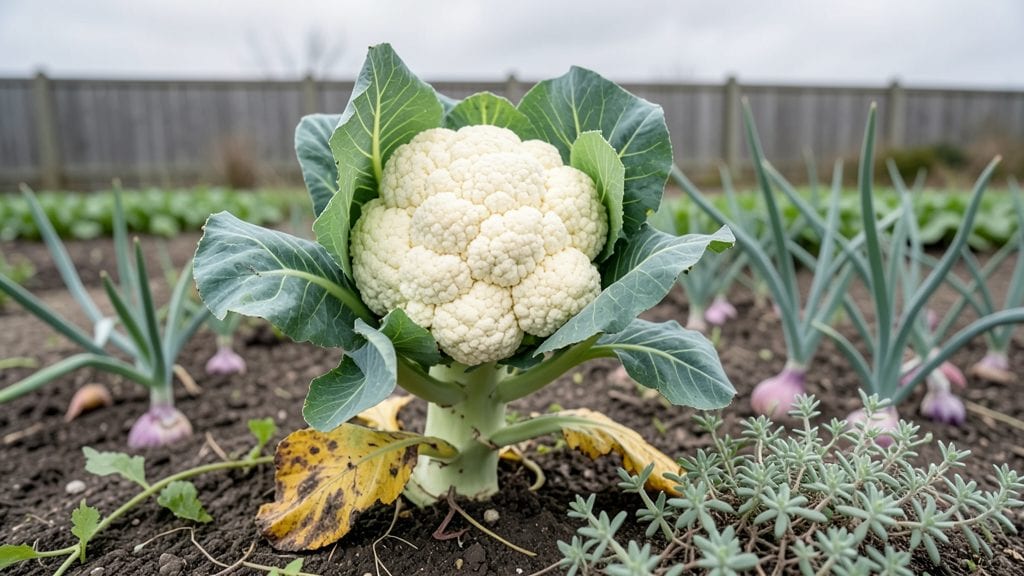
The secret to lush cauliflower companion plants lies in smart pairings—like dill and onions—that shield your crop from pests while enhancing its taste. 🌱 I learned this the hard way after my first cauliflower crop struggled with cabbage moths until I added herbs nearby.
The right companions don’t just deter pests; they improve soil and maximize space in your garden beds.
Herbs like dill, thyme, and chamomile work wonders alongside cauliflower, while onions and garlic keep pests at bay. Avoid planting strawberries or tomatoes nearby—they compete for nutrients and attract the same pests.
A well-planned layout can double your harvest by using vertical space for climbing beans or lettuce at the edges.
You’ll notice healthier plants with fewer holes in the leaves and stronger stems that support heavier heads. The soil stays looser and more fertile, making each season easier than the last. Plus, the fragrant herbs repel cabbage worms naturally, so you skip the harsh sprays.
This strategy works for both in-ground gardens and raised beds, adapting to any space. Whether you’re a beginner or a seasoned gardener, these pairings make cauliflower growing almost foolproof—just arrange them thoughtfully for the best results.
📚 In This Guide
- What you need
- Instructions
- Tips and common mistakes
- Wrapping up and next steps
What you need
- ● Seeds or seedlings: Cauliflower seeds (choose cold-hardy varieties like Snowball or Purple of Sicily)
- ● Companion plant seeds/seedlings (3–5 plants per 10 sq ft): dill, thyme, celery, onions, spinach, or marigolds
- ● Garden space: Full sun (6+ hours/day) or partial shade (for hot climates)
- ● Well-draining, fertile soil (pH 6.0–7.0)
- ● Space: 18–24 inches between cauliflower plants; companions can be interplanted
- ○ Soil amendments (optional but helpful): Compost (1–2 inches mixed into topsoil)
- ● Balanced fertilizer (5-10-10 or organic options like fish emulsion)
- ● Garden trowel or transplanter
- ● Watering can or hose with a gentle spray nozzle
- ● Gloves (to protect your hands from thorns or soil)
- ● Mulch (straw or shredded leaves to retain moisture)
- ○ Optional but handy: Row covers (for frost protection)
- ● Pest deterrents (neem oil spray or companion plant extracts)
- ● Soil pH tester (to monitor acidity levels)
How to design a thriving cauliflower garden layout
Here's how to pair plants for maximum flavor and pest control.
🌱 Step 1: Plant Celery and Onions as the Foundation
Start by placing your celery and onion sets around the perimeter of your cauliflower patch. These two act as natural pest deterrents—their strong aromas mask the scent that attracts cabbage moths, which target both cauliflower and broccoli. Space them 12 inches apart from the cauliflower plants, using the same row spacing as your main crop.
I like to interplant them in a staggered pattern rather than straight rows. This creates a more natural barrier while ensuring all plants get adequate sunlight. The onions also help deter carrot flies, which can become a problem if you're growing root crops nearby.
🌿 Step 2: Add Herbs for Flavor and Protection
Tuck dill, thyme, and sage plants between your cauliflower rows. These herbs don't just enhance flavor when harvested—they repel pests that would otherwise devastate your crop. Dill, in particular, attracts beneficial insects like hoverflies, which prey on aphids that love cauliflower leaves.
Here's the thing—I always plant thyme closest to the cauliflower plants because its strong scent is particularly effective against cabbage worms. Space your herbs 8-10 inches apart so they don't compete with your main crop for nutrients. You'll notice fewer pest problems almost immediately after they establish themselves.
☀️ Step 3: Include Legumes for Soil Improvement
Plant bush beans or peas alongside your cauliflower to fix nitrogen in the soil. These plants have deep roots that don't compete with cauliflower's shallow root system, yet they enrich the soil naturally. The nitrogen boost helps your cauliflower develop tighter, more flavorful heads.
I recommend planting your legumes 3-4 weeks before your cauliflower seedlings go in the ground. By the time your cauliflower is established, the beans will be ready to harvest, and the soil will be primed for your main crop. Watch for when the beans start flowering—this is your signal they're actively fixing nitrogen in the soil.
💧 Step 4: Add Flowers for Pollinators and Pest Control
Scatter nasturtiums and marigolds around the edges of your cauliflower patch. These flowers attract pollinators while their strong scents deter pests like aphids and whiteflies. Nasturtiums, in particular, act as a trap crop—they lure pests away from your cauliflower.
Here's what I do: I plant nasturtiums in a ring around the perimeter of my cauliflower bed, about 18 inches away from the main plants. The bright orange flowers also make it easy to spot pest problems early. You'll see more bees and butterflies visiting your garden, which means better pollination for all your plants.
✂️ Step 5: Maintain the Companion Planting System
Regularly check your companion plants for signs of stress or pest infestations. Remove any diseased leaves immediately to prevent spread to your cauliflower. Water all plants consistently—companion plants need moisture too, especially during dry spells.
I always do a weekly inspection of my companion plants. Look for yellowing leaves on herbs (sign of overwatering) or wilting flowers (sign of underwatering). The goal is to keep everything healthy so your cauliflower thrives. You'll notice your cauliflower heads forming more quickly and staying cleaner when your companion plants are doing well.
Tips & tricks for perfect cauliflower companion planting
These simple strategies will help you maximize your garden's potential while keeping pests at bay.
Spacing Strategy: When planting celery and onions in Step 1, maintain that 12-inch spacing from your cauliflower plants. This distance creates an effective barrier without shading your main crop. I've found that staggering these plants in a checkerboard pattern helps distribute their pest-repelling aromas more evenly throughout the garden bed.
Herb Placement: In Step 2, thyme deserves special attention—plant it closest to your cauliflower since its strong scent is most effective against cabbage worms. The 8-10 inch spacing between herbs allows them to thrive without competing with your cauliflower's shallow roots. Pro tip: Mix thyme with basil for an extra pest-deterring punch while adding flavor to your kitchen.
Legume Timing: The 3-4 week advance planting of legumes in Step 3 is crucial. This timing ensures the soil is nitrogen-rich by the time your cauliflower seedlings arrive. Watch for flowering beans—they're actively fixing nitrogen when their blossoms appear. You'll notice your cauliflower heads forming more quickly when the soil is properly enriched.
Flower Arrangement: For Step 4, create that 18-inch perimeter ring of nasturtiums using biodegradable pots. This gives them space to establish before transplanting while clearly marking your cauliflower's boundaries. The bright orange flowers will also help you spot pest problems early—just look for clusters of aphids on the nasturtium leaves instead of your cauliflower.
Pro Tips for Cauliflower Companion Plants
- These simple strategies will help you maximize your garden's potential while keeping pests at bay.
- Spacing Strategy: When planting celery and onions in Step 1, maintain that 12-inch spacing from your cauliflower plants.
- Herb Placement: In Step 2, thyme deserves special attention—plant it closest to your cauliflower since its strong scent is most effective against cabbage worms.
Frequently asked questions
Got questions about growing cauliflower with the best companion plants?
Here are answers to the most common ones—so you can garden with confidence!
What are the best cauliflower companion plants for small gardens?
If space is limited, prioritize onion family plants (like chives or garlic), leafy greens (spinach, lettuce), or herbs (dill, thyme). These thrive in tight quarters while repelling pests. Avoid overcrowding—give cauliflower at least 18–24 inches of space between companions.
When should I plant companion plants with cauliflower?
Plant companions at the same time as cauliflower or slightly earlier (like onions or peas) to maximize pest control. Herbs (e.g., basil, marigolds) can be added after germination once cauliflower seedlings are 2–3 inches tall. Always check your last frost date—cauliflower needs cool soil!
What plants should I avoid planting near cauliflower?
Steer clear of:
- Beans and peas (compete for nutrients, stunt growth).
- Tomatoes (share diseases like blight).
- Strawberries (attract similar pests, like slugs).
Can I use companion plants to fix cauliflower’s nutrient needs?
Yes! Plant legumes like peas or beans nearby to add nitrogen to the soil naturally. For phosphorus, interplant with comfrey (chop-and-drop it!). Just avoid planting legumes too close—cauliflower needs space to form its head.
My cauliflower leaves are yellowing—could companions be the issue?
Yellowing leaves often signal overcrowding or nutrient competition. Check if nearby plants (like beans) are stealing resources. Solution: Thin companions, add compost, or move aggressive growers (e.g., corn) farther away. Pests? Marigolds or thyme nearby can deter aphids—common culprits!
Wrapping up and next steps
Planting cauliflower with the right companions isn’t just smart—it’s a game-changer for your garden! 🌱 From boosting flavor to keeping pests at bay, these partnerships make growing cauliflower easier and more rewarding.
Whether you’re a seasoned gardener or just starting out, start small—pick 1-2 companions to test this season and watch your harvest thrive.
Next step: Grab your seeds, sketch a simple garden layout, and pair your cauliflower with its best buddies. Happy planting—your future meals will thank you! 🥬✨