
Blooming
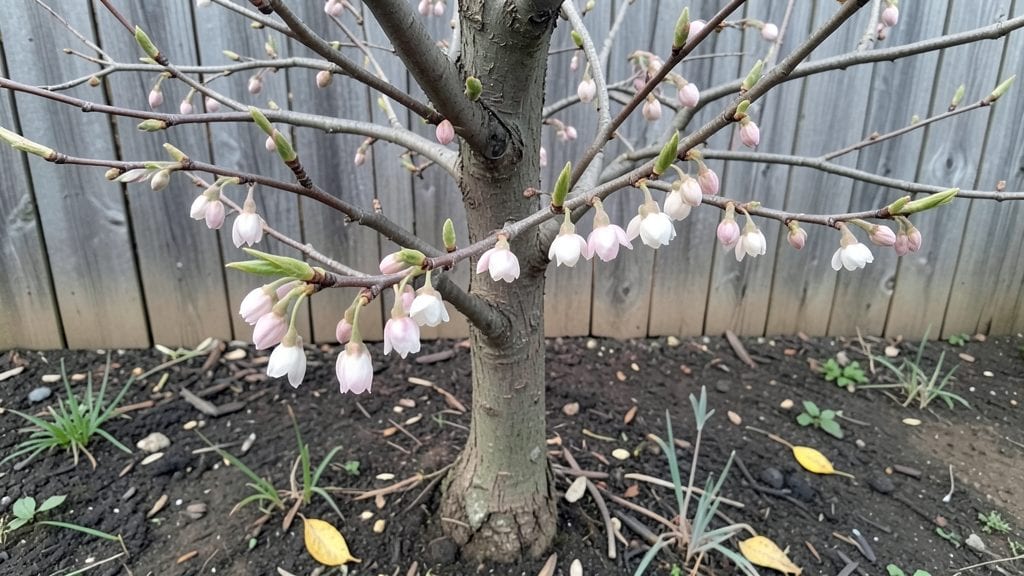
The delicate beauty of an almond blossom flower in full bloom—pale pink and white against spring’s green—still makes my heart race, especially when I’m the one who coaxed it from a stubborn sapling in western Oregon’s damp chill. and location make all the difference.
The Pacific Northwest’s unpredictable frost means choosing the right variety and planting window can mean the difference between a spectacular show and a sad, browned mess.
You’ll need a frost-resistant variety like ‘Nonpareil’ or ‘Butte,’ well-draining soil, and a sunny spot protected from late frosts. The secret? Plant in late winter or early spring when soil is workable but air temperatures are still cool—this gives roots time to establish before blooms appear.
Water deeply after planting, then keep soil consistently moist but never soggy during the first growing season.
By spring, you’ll be rewarded with clouds of fragrant blossoms that attract bees and hummingbirds while adding drama to your landscape. Prune lightly in late winter to open the canopy for better air circulation, and watch as your tree matures into a stunning ornamental feature.
The key to long-term success? Mulch heavily in fall to insulate roots from winter cold—this is how I’ve kept mine thriving for years.
This method works for both edible varieties and ornamental almonds, whether you’re growing in a backyard or larger landscape. The blooms may be fleeting, but their impact lasts all season—and with the right care, your tree will reward you for decades. Ready to get started?
📚 In This Guide
- What you need
- Instructions
- Tips and common mistakes
- Wrapping up and next steps
What you need
- ● Almond tree saplings: Choose Prunus dulcis varieties resistant to cold (e.g., 'Nonpareil' or 'Fritz'). Quantity: 1–2 trees (for cross-pollination).
- ● Well-draining soil: Mix of 60% native soil, 30% compost, and 10% coarse sand (pH 6.0–7.5).
- ● Organic mulch: Wood chips or straw (3–4 inches) to retain moisture and insulate roots.
- ● Drip irrigation system: 1–2 emitters per tree (adjust for 1–2 gallons/hour).
- ● Pruning shears: Bypass pruners (sharp, sterilized) for shaping.
- ● Frost cloth: 1–2 sheets (50% shade cloth) for late frosts (PNW-specific!).
- ● Slow-release fertilizer: 10-10-10 NPK (apply 2 lbs per 100 sq ft in early spring).
- ● Soil test kit: Verify nutrient levels before planting.
- ● Tree guards: Wire mesh (3–4 ft tall) to protect young saplings from deer.
- ● Compost tea: Boost microbial activity with 1 gallon/week during blooming season.
- ● Pollinator-friendly plants: Lavender or bee balm nearby to attract bees for pollination.
- ● Thermometer: Monitor soil temps (ideal: 60–75°F for root growth).
Step-by-Step guide for planting frost-resistant almond blossoms in the Pacific Northwest
Here's how to time your planting for maximum bloom success in our cool, damp climate.
Choose the Right Variety for Cold Hardiness
Look for Pacific Northwest-specific almond cultivars like 'Nonpareil' or 'Peerless,' which tolerate 15-25°F without damage. These varieties handle our wet springs better than standard almonds. I always check the USDA hardiness zone map—PNW falls in Zones 6-9, but microclimates matter. Plant near south-facing walls or slopes where cold air drains away.
Young trees need 3-5 years to establish strong root systems before they reliably bloom. If you want flowers sooner, consider dwarf varieties grafted onto peach rootstock—they fruit faster in our climate. Just avoid planting in low-lying areas where frost pockets linger.
Time Planting for Frost-Free Soil
Wait until mid-April to early May when soil temperatures reach 55°F at 4-inch depth. Use a soil thermometer for accuracy—our Pacific Northwest springs are unpredictable. Plant too early, and roots won't establish before fall frosts return. Too late, and trees won't develop enough roots before winter.
Here's my foolproof test: Press your finger into the soil. If it feels cool but not frozen, and you can see moisture but no standing water, it's ready. I always plant after our last average frost date (around May 10 in most PNW areas), but I check the Western Regional Climate Center for local adjustments.
Prepare the Planting Site for Winter Resilience
Dig a hole twice as wide as the root ball but only as deep. The top of the root ball should sit 1-2 inches above ground level—this prevents water from pooling around the trunk. Amend the native soil with 2-3 inches of compost mixed into the bottom and sides of the hole. Our clay-heavy soils benefit from this drainage boost.
Mulch heavily with 4-6 inches of wood chips (not fresh wood), keeping it 6 inches away from the trunk. This insulates roots during winter and retains moisture during our dry summers. Water deeply after planting—10 gallons per tree—to settle the soil and eliminate air pockets around roots.
Protect New Trees During Critical Frost Periods
For the first two winters, wrap young trees in burlap or frost cloth during 20-30°F nights—our PNW can have sudden cold snaps even in mild winters. I use tree guards to prevent rodent damage to bark, which is especially vulnerable when young. Avoid plastic wraps—they trap moisture and cause rot.
Prune lightly in late winter (February) to remove any frost-damaged branches. You'll recognize damaged wood by its brown, mushy texture when cut. Healthy branches snap cleanly. Never prune in fall—new growth won't harden off before winter.
Support Consistent Blooming Through Seasonal Care
Almond trees need full sun (6+ hours daily) for best flowering, but our PNW summers can be intense. Provide afternoon shade during heatwaves to prevent stress. I've seen trees bloom beautifully with 50% afternoon shade—the key is maintaining consistent moisture without soggy roots.
Fertilize in early spring with 10-10-10 at ½ pound per inch of trunk diameter. Our acidic soils often need lime too—test your soil first. Water deeply once weekly during dry spells, aiming for 1-2 inches of water per week. Drip irrigation works best to keep foliage dry and prevent fungal issues.
Tips & tricks for perfect almond blossom planting in the Pacific Northwest
Here's what I've learned after years of planting almond blossoms in our unpredictable climate—these tricks will help you avoid common pitfalls and set your trees up for success.
Variety Selection Matters: When choosing between 'Nonpareil' and 'Peerless' for Step 1, consider your specific microclimate. If you're in Zone 6, 'Peerless' handles colder nights better, while 'Nonpareil' thrives in milder Zone 7-8 areas. I've found that dwarf varieties grafted onto peach rootstock (mentioned in Step 1) bloom 1-2 years sooner in our climate—worth considering if you're eager for flowers. Just remember, these dwarf varieties may produce smaller blossoms.
Soil Temperature Testing: For Step 2's critical 55°F soil temperature check, I recommend testing at both 4-inch and 8-inch depths—our clay soils warm unevenly. If the 8-inch depth is still below 55°F while the top layer has reached it, wait another week. I've planted too early when only the surface warmed, and the roots struggled through our late spring frosts. A simple soil thermometer from your garden center solves this problem.
Mulching Technique: When applying the 4-6 inches of wood chips in Step 3, create a "mulch volcano" by piling slightly higher around the trunk's base. This helps direct water toward the roots during our dry summers. I've seen trees with uneven mulching develop fungal issues because moisture pooled against the trunk. Also, avoid fresh wood chips—they can draw nitrogen from the soil as they decompose, stressing young trees.
Frost Protection Strategy: For Step 4's critical 20-30°F nights, I've found that wrapping trees in burlap during the day (not just at night) provides better insulation. The fabric absorbs daytime heat and releases it slowly. I also use tree guards with built-in vents—this prevents rodent damage while allowing air circulation. One year, I forgot to remove the guards in spring, and they trapped too much heat, causing bark damage.
Pro Tips for Almond Blossom Flower
- Here's what I've learned after years of planting almond blossoms in our unpredictable climate—these tricks will help you avoid common pitfalls and set your trees up for success.
- Variety Selection Matters: When choosing between 'Nonpareil' and 'Peerless' for Step 1, consider your specific microclimate.
- Soil Temperature Testing: For Step 2's critical 55°F soil temperature check, I recommend testing at both 4-inch and 8-inch depths—our clay soils warm unevenly.
Frequently asked questions
Got questions about growing almond blossom flowers in the Pacific Northwest? You’re not alone! Here are some of the most common queries—and their answers—to help you navigate planting, care, and troubleshooting like a pro.
When is the best time to plant almond blossom trees in my region?
The ideal window for planting almond blossom trees (like Prunus dulcis) in the PNW is late fall to early winter (November–January) or early spring (February–March), once the soil is workable but before buds swell. This timing minimizes transplant shock and aligns with natural dormancy cycles. Pro tip: Avoid planting in summer heat—roots need cool, moist conditions to establish!
How do I protect almond blossoms from late frosts in the PNW?
Late frosts (common in March–April) can damage delicate blossoms. Use frost cloths or row covers during critical bloom periods, or install smoke pots (if allowed) to create a microclimate. Water trees evenly before frost—wet soil retains heat better. Prunus species like ‘Nonpareil’ are slightly more frost-tolerant but still benefit from these precautions.
Can I grow almond blossom flowers in containers, or do they need a garden bed?
While almond trees thrive in deep, well-draining soil (like USDA Zones 5–9), dwarf varieties (e.g., ‘Texas’ or ‘Price’) can work in large containers (20+ gallons) with fast-draining mix (60% soil, 30% compost, 10% perlite). Containers must be moved indoors if temps drop below 15°F. Warning: Root-bound trees bloom poorly—upgrade pots every 2–3 years!
Why aren’t my almond blossom flowers producing fruit (or nuts)?
Blossoms need pollinators (bees!) and compatible varieties to set fruit. If you’re growing a single tree, plant a second variety within 50–100 feet (e.g., ‘Nonpareil’ + ‘Butte’). Other culprits: poor soil (low nitrogen/phosphorus), drought stress, or pest damage (aphids, mites). Fix: Hand-pollinate with a soft brush if bees are scarce, or fertilize with 10-10-10 in early spring.
What’s a good alternative if almond blossoms don’t thrive in my PNW microclimate?
If frosts or soil conditions are too harsh, try these frost-resistant, ornamental blossom trees:
- Chokecherry (Prunus virginiana) – Thrives in Zones 2–6, edible berries, early spring blooms.
- Flowering Almond (Prunus triloba) – Non-bearing, cold-hardy to Zone 4, stunning pink blossoms.
- Serviceberry (Amelanchier) – Edible fruit, white blooms, tolerates wet soil.
Wrapping up and next steps
The almond blossom flower is a stunning addition to the Pacific Northwest’s landscape, offering both beauty and resilience against frost. By following this frost-resistant planting calendar, you’ll set your trees up for success—whether you’re a seasoned gardener or just starting out. 🌸
Now that you’re armed with the right materials, timing, and tips, it’s time to roll up your sleeves and get planting! Start by marking your calendar for late winter or early spring and watch your garden transform with delicate pink and white blooms. Happy growing!