Flowers
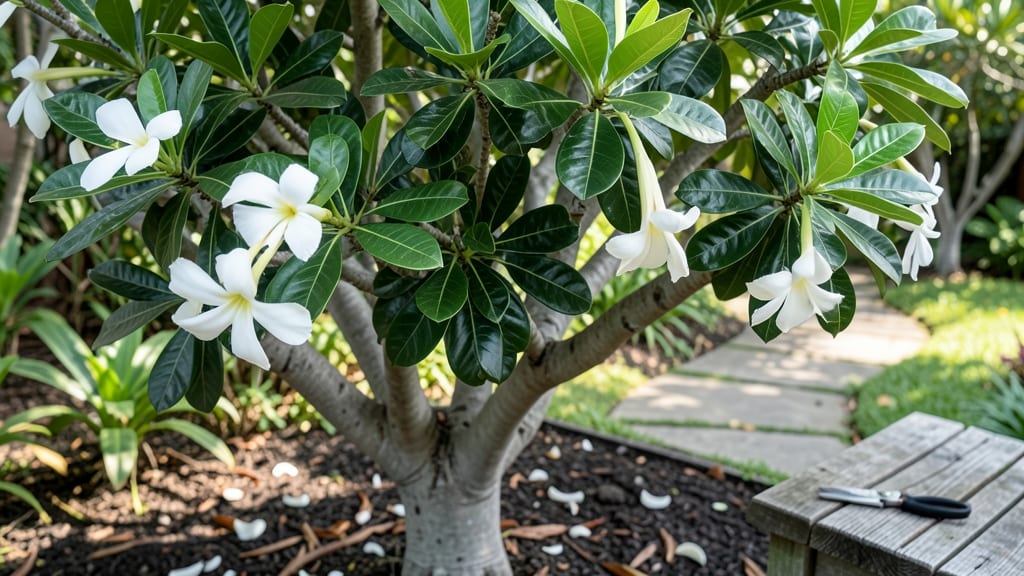
The white frangipani flower transforms any garden into a fragrant oasis, its waxy petals and intoxicating scent drawing in pollinators while adding Mediterranean drama. I still remember the first time I walked past a neighbor’s yard and caught that sweet, citrusy aroma—it stopped me in my tracks.
These flowers aren’t just beautiful; they’re a sensory experience that turns a simple garden into a tropical escape.
Pairing them with lavender, bougainvillea, or citrus trees creates a pollinator magnet that thrives in warm climates. Their creamy-white blooms contrast beautifully against deep greens or purples, making them a standout in borders, containers, or as a focal point near patios.
Even in small spaces, a single frangipani bush becomes a conversation starter with its glossy leaves and delicate, star-shaped flowers.
You’ll love how they attract butterflies and bees while filling the air with their signature perfume at dusk. The care is straightforward—full sun, well-draining soil, and occasional pruning keeps them lush and blooming.
In just a few months, your garden will feel like a hidden paradise, all thanks to these elegant, fragrant stars.
Perfect for Mediterranean-style gardens, coastal landscapes, or even large containers on balconies. Once established, they’re drought-tolerant and low-maintenance, making them a dream for gardeners who want beauty without the fuss. Let’s bring that tropical allure to your outdoor space!
📚 In This Guide
- What you need
- Instructions
- Tips and common mistakes
- Wrapping up and next steps
What you need
- ● White frangipani plant: 1 healthy nursery-grown cutting or potted plant (3–6 inches tall for best results)
- ○ Optional: Seeds (if propagating from scratch—requires more patience!)
- ● Well-draining soil: 1 bag (1–2 cubic feet) of cactus/succulent mix (or regular potting soil amended with 50% perlite or coarse sand)
- ● Container or garden bed: Container: 1–2 gallon pot with drainage holes (terracotta or fabric pots work best)
- ● Garden bed: Full sun location (6+ hours of direct light daily) with sandy, well-draining soil
- ● Fertilizer: 1 bottle of balanced liquid fertilizer (10-10-10 or 20-20-20, diluted to half-strength)
- ○ Optional: Slow-release granular fertilizer for convenience
- ● Pruning shears or sharp knife (for trimming dead blooms or shaping the plant)
- ● Watering can with a narrow spout (to avoid disturbing the soil)
- ○ Glove (optional—frangipani sap can irritate sensitive skin)
- ○ Mulch (optional): 1 bag of gravel or pine bark (to improve drainage and suppress weeds)
- ● Climate considerations: Hardiness zones 10–12 (or container-grown plants in cooler zones with winter care)
- ● No frost tolerance—bring indoors or protect from cold snaps
How to cultivate white frangipani for pollinator-friendly gardens
This tropical beauty thrives with patience and precision—here’s how to grow it successfully.
Select the Right Site and Prepare the Soil
White frangipani (Plumeria alba) demands full sun exposure—at least 6-8 hours daily—to produce its signature fragrant blooms. Choose a location sheltered from strong winds, as the delicate branches can snap easily. If your climate dips below 50°F, plant in a container so you can move it indoors during cold snaps.
Frangipani roots thrive in well-draining, slightly acidic soil with a pH between 6.0 and 7.0. Amend heavy clay soil with 2-3 inches of coarse sand or perlite to prevent root rot. I like to mix in a handful of orchid bark for aeration—this mimics its natural tropical habitat. Avoid garden soil alone; it compacts and suffocates roots.
Plant with Care to Ensure Stability
Dig a hole twice as wide as the root ball but only as deep as the container it came in. Frangipani roots are shallow and sensitive to burial too deep. Gently remove the plant from its nursery pot and loosen any circling roots with your fingers—this encourages outward growth. Place it in the hole so the top of the root ball sits just below soil level (never buried).
Backfill with the amended soil, pressing lightly to eliminate air pockets. Water deeply right after planting to settle the soil, but avoid oversaturating—frangipani hates soggy roots. Mulch the base with 1-2 inches of organic mulch (like pine bark) to retain moisture and regulate temperature. Keep mulch 2-3 inches away from the trunk to prevent rot.
Water and Fertilize for Optimal Growth
Established frangipani plants are drought-tolerant once rooted, but young specimens need consistent moisture during their first year. Water deeply every 7-10 days, allowing the top 2-3 inches of soil to dry out between waterings. Overwatering is the fastest way to kill this plant—yellowing leaves or mushy stems signal root rot. Always water at the base, never overhead, to protect blooms and foliage from fungal issues.
Feed lightly but regularly with a balanced, water-soluble fertilizer (10-10-10) diluted to half-strength every 4-6 weeks during the growing season (spring through fall). Frangipani responds poorly to heavy feeding—too much nitrogen produces lush leaves but few flowers. In late summer, switch to a low-nitrogen, high-phosphorus fertilizer (like 5-10-10) to encourage blooming.
Prune and Shape for Health and Blooms
Prune frangipani after flowering (late winter or early spring) to remove dead, crossing, or weak branches. Use clean, sharp pruners to make cuts just above a leaf node or bud. Avoid heavy pruning—this tropical plant blooms on new wood, so aggressive cuts reduce next year’s flowers. I like to shape mine into a rounded form for better air circulation, which prevents mildew.
Watch for leggy growth—a sign of insufficient light. If branches stretch toward the sun, trim them back by one-third to encourage bushier, more compact growth. Never prune in fall or winter, as the plant needs its energy to store nutrients for spring blooms. After pruning, apply a copper fungicide spray to prevent infections through fresh cuts.
Protect and Encourage Pollinators
Frangipani’s intoxicating fragrance attracts bees, butterflies, and hummingbirds, making it a pollinator magnet. To maximize visits, plant near other native pollinator-friendly species like lantana or butterfly bush. Avoid pesticides—even "organic" sprays can harm beneficial insects. If aphids appear (they love new growth), blast them off with a strong stream of water or use neem oil as a last resort.
In colder climates, container-grown frangipani can overwinter indoors near a south-facing window with supplemental grow lights (12-14 hours daily). Reduce watering to every 2-3 weeks once growth slows in fall. Resume normal care in spring when buds begin to swell. With patience, your plant will reward you with scented blooms by late spring or early summer—worth every effort!
Tips & tricks for perfect white frangipani cultivation
A few subtle adjustments can transform your frangipani from struggling survivor to thriving pollinator magnet. The devil is in the details when working with this finicky tropical beauty.
Sunlight Strategy: While the instructions call for 6-8 hours of full sun daily, I've found that morning sun paired with afternoon shade works best in hotter climates. The delicate blooms can scorch under relentless midday rays, especially in zones above 90°F. Position your plant where it receives gentle afternoon shade—this preserves those intoxicating white blossoms while still fueling growth. Monitor leaf color: pale green indicates insufficient light, while yellowing suggests too much intensity.
Soil Science: Testing your soil's pH before planting is worth the investment—frangipani roots are particularly sensitive to alkalinity. If your soil tests above 7.0, amend with sulfur or peat moss to lower the pH gradually. I've seen plants in slightly acidic soil (6.0-6.5) produce twice as many blooms compared to those in neutral or alkaline conditions. The 2-3 inches of coarse sand or perlite mentioned in Step 1 isn't just for drainage—it also prevents that dreaded compaction that suffocates roots.
Watering Wisdom: The 7-10 day watering schedule works beautifully once established, but young plants need more frequent moisture. I've learned this the hard way—after letting a new transplant dry out completely, it took months to recover. For the first year, check soil moisture every 3-4 days by inserting your finger 2 inches deep. If it feels dry, water deeply until it runs through the drainage holes. This mimics tropical rainfall patterns better than rigid schedules.
Pruning Precision: Timing your prune after flowering (late winter/early spring) is critical, but what's often overlooked is the angle of your cuts. Always make pruning cuts at a 45-degree angle just above a leaf node or bud. This creates a larger surface area for water absorption and prevents moisture from pooling on the cut, which can lead to rot. I also recommend sterilizing your pruners with rubbing alcohol between cuts—this tropical plant is particularly vulnerable to fungal infections through fresh wounds.
Pro Tips for White Frangipani Flower
- A few subtle adjustments can transform your frangipani from struggling survivor to thriving pollinator magnet.
- Sunlight Strategy: While the instructions call for 6-8 hours of full sun daily, I've found that morning sun paired with afternoon shade works best in hotter climates.
- Soil Science: Testing your soil's pH before planting is worth the investment—frangipani roots are particularly sensitive to alkalinity.
Frequently asked questions
Got questions about white frangipani flowers?
You’re not alone! Here are answers to the most common queries—whether you’re dreaming of planting one or troubleshooting a tricky grow.
How fast does a white frangipani flower grow?
White frangipani (Plumeria alba) grows at a moderate pace, typically adding 12–24 inches per year under ideal conditions. In tropical climates with full sun and well-draining soil, you might see faster growth. Patience is key—full blooms can take 2–3 years from seed!
Can white frangipani survive cold weather?
Unfortunately, no! These tropical beauties are frost-sensitive and thrive only in USDA Zones 10–12 (or as houseplants indoors). If you live in colder areas, grow them in containers and bring them inside before temperatures drop below 40°F (4°C). A sunny windowsill or greenhouse works wonders!
Are white frangipani flowers good for pollinators?
Their fragrant blooms attract butterflies, bees, and hummingbirds—especially in warm afternoons. For a pollinator garden, pair them with native plants like milkweed or salvia to create a buzzing ecosystem. Just avoid pesticides near flowering stages!
How do I encourage more blooms on my frangipani?
Prune spent flowers and trim leggy growth in early spring to redirect energy. Ensure they get 6+ hours of sunlight daily and well-draining soil (sandy or cactus mix). A light fertilizer (like 10-10-10) in spring and summer can boost blooms—but never overwater!
What’s the difference between white frangipani and regular frangipani?
White frangipani (Plumeria alba) has pure white petals and a sweeter, more delicate fragrance than pink or yellow varieties. While all frangipani share tropical charm, white types are often prized for weddings and formal gardens. Pro tip: Some hybrids (like ‘Ice Cream’) blend white with creamy tones!
Why aren’t my frangipani leaves turning green?
Yellowing or pale leaves usually signal overwatering, nutrient deficiency, or too much shade. Check your soil—it should dry out between waterings. If leaves are crispy, you’re underwatering; if soft and mushy, cut back and improve drainage. A balanced fertilizer can revive dull foliage!
Wrapping up and next steps
The white frangipani flower isn’t just a stunner—it’s a pollinator’s dream and a gardener’s delight! With its intoxicating fragrance and tropical charm, it brings life, beauty, and a touch of paradise to any garden.
Whether you’re a seasoned gardener or just starting, these blooms are a game-changer for attracting bees, butterflies, and hummingbirds while adding elegance to your outdoor space.
Ready to transform your garden? Start small—plant a single frangipani, experiment with companion plants, or even propagate cuttings to share with fellow plant lovers! 🌸 Your pollinator friends (and your neighbors!) will thank you.