
Flowers
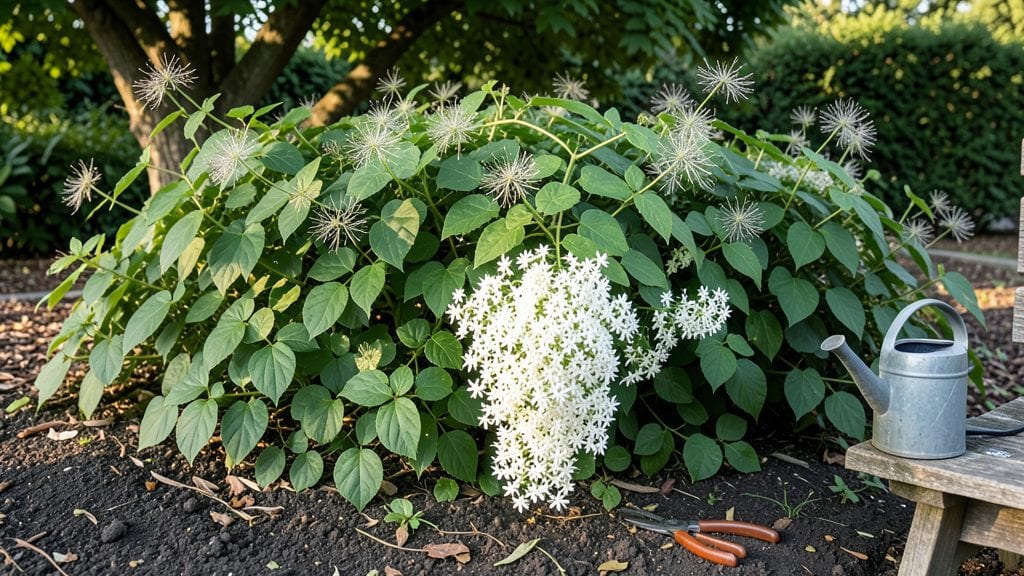
Sweet autumn clematis transforms any fence or trellis into a fragrant, hummingbird-filled paradise—without the fuss of deadheading. 🌿 I planted mine last spring, and by summer, the vine was already heavy with clusters of tiny white flowers that smelled like honey and kept bees buzzing for hours.
The secret to its effortless growth lies in three things: full sun, well-draining soil, and a sturdy support structure. Unlike fussy clematis varieties, this one thrives in USDA Zones 4-9 and doesn’t need coddling.
Just give it space to climb—it can reach 15-20 feet—and watch it spread like wildfire, smothering trellises in fragrant blooms from late summer through frost.
By late fall, you’ll have a vine so lush it looks like someone draped a cloud over your patio. The flowers stay fresh for weeks, their sweet scent lingering even after they fade, and hummingbirds will visit daily.
No pruning required unless you want to control its size—just let it grow wild and enjoy the show.
Perfect for vertical gardens, arbors, or even training along a chain-link fence. Here’s how to get started without the usual clematis headaches—because this one’s practically foolproof.
📚 In This Guide
- What you need
- Instructions
- Tips and common mistakes
- Wrapping up and next steps
What you need
- ● Sweet Autumn Clematis Vine: 1-2 healthy nursery-grown vines (choose a Clematis terniflora cultivar)
- ● Ensure roots are moist but not soggy (plant ASAP if bare-root)
- ● Growing Medium: Well-draining potting mix (50% garden soil + 50% compost or coconut coir)
- ○ Optional: Perlite or vermiculite (1 part per 5 parts soil for aeration)
- ● Container or Garden Space: Container: 15+ gallon pot with drainage holes (diameter ≥12 inches)
- ● Garden: Sunlit area with 6+ hours of light; trellis or arbor (8+ ft tall)
- ● Digging Tools: Trowel (for containers) or spade (for gardens)
- ○ Garden gloves (optional but recommended!)
- ● Support Structures: Trellis, fence, or obelisk (metal or wood; ½” mesh for climbing)
- ● Soft ties (jute or Velcro strips to avoid vine damage)
- ● Watering Supplies: Watering can or hose with adjustable nozzle
- ○ Drip irrigation kit (optional for automated care)
- ● Fertilizer: Balanced fertilizer (10-10-10 or 20-20-20; 1 tbsp per vine monthly)
- ● Bone meal or compost tea (for phosphorus-rich blooms)
- ● Mulch (2-3 inches of shredded bark or straw to retain moisture)
- ● Pruning shears (sterilized; for shaping in early spring)
- ● Hummingbird feeder (place near vines for extra pollinator appeal!)
- ● Pest control: Neem oil or insecticidal soap (if aphids appear)
Step-by-step instructions for planting and cultivating sweet autumn clematis
This vigorous vine thrives with minimal fuss—just follow these proven steps.
🌱 Step 1: Select and Prepare the Planting Site
Sweet autumn clematis loves space and sun, so choose a location with at least 6 hours of direct sunlight daily. I always pick a spot where the vine can climb 10-15 feet—a sturdy trellis, fence, or arbor works perfectly. The soil should drain well but retain moisture, so amend heavy clay with 2-3 inches of compost before planting.
Here's the thing—this vine's roots spread aggressively, so avoid planting near sidewalks or foundations. Dig a hole twice as wide as the root ball but only as deep as the container it came in. The crown (where stems meet roots) should sit just below soil level—burying it too deep suffocates the plant.
🪴 Step 2: Plant and Stake for Support
Remove the clematis from its container and loosen the roots gently if they're circling. Place it in the hole so the crown sits 1-2 inches below soil level—this prevents rot while encouraging strong growth. Backfill with native soil mixed with the 2-3 inches of compost you prepared earlier, tamping lightly as you go.
Install a 5-foot support stake or trellis immediately beside the plant. Tie the main stems loosely to the stake with soft plant ties—this prevents wind damage while allowing natural flexibility. Water deeply right after planting to settle the soil and eliminate air pockets around the roots.
☀️ Step 3: Water and Fertilize for Vigorous Growth
Keep the soil evenly moist for the first 4-6 weeks—water when the top 2 inches feel dry to the touch. Overwatering is the biggest mistake here; soggy roots lead to root rot. Once established, this vine tolerates drought surprisingly well, but young plants need consistent moisture to develop strong roots.
Apply a balanced 10-10-10 fertilizer at planting time, then again in early spring. I swear by slow-release granules—they feed the plant steadily without burning the roots. After the first year, switch to a low-phosphorus fertilizer (like 10-5-10) to encourage more blooms. Stop fertilizing after mid-summer to let the plant harden off for winter.
✂️ Step 4: Prune Strategically for Maximum Blooms
Here's where it gets fun—sweet autumn clematis doesn't need deadheading, but pruning keeps it healthy and blooming. In early spring, cut back last year's growth to 2-3 feet tall, leaving 3-5 strong stems. This encourages new growth from the base, which produces the most flowers.
Remove any dead or crossing branches with clean pruners—sterilize them with rubbing alcohol between cuts to prevent disease. Never prune in fall; the plant needs all its foliage to store energy for next year's blooms. The goal is to maintain an open structure that lets sunlight reach all the stems.
Tips & tricks for perfect sweet autumn clematis cultivation
Took me years of trial and error to master these essential tricks—don't make my mistakes with this hardy but particular vine.
Sunlight Strategy: While the instructions call for at least 6 hours of sunlight, I've found that positioning your clematis to catch the morning sun and afternoon shade in hot climates produces more vibrant blooms. The vine tolerates partial shade, but full sun yields the most dramatic flowers—just avoid the harsh afternoon rays in zones with intense summer heat.
Support System: That 5-foot stake might seem adequate, but I recommend installing a 10-15 foot trellis immediately at planting—this vine grows fast! Use a sturdy metal or wooden lattice rather than flimsy plastic, as the weight of flowers and vines can snap weaker supports. The goal is to create a "highway" for the vine to climb vertically, which prevents sprawling and makes maintenance easier.
Watering Wisdom: The critical 4-6 week watering window is non-negotiable, but here's the secret: water deeply every other day rather than daily shallow watering. This encourages deep root growth. I use a soaker hose buried 2 inches below soil level to deliver moisture directly to the roots without wetting the foliage—this prevents fungal diseases that often plague clematis. The top 2 inches test is foolproof, but I also check the soil 6 inches down to ensure moisture reaches the roots.
Pruning Precision: When cutting back to 2-3 feet in early spring, focus on removing last year's dead stems while preserving the 3-5 strongest new growth points from the base. These new shoots will produce the most flowers. I mark the cut line with a white paint dot before pruning—this helps me visualize where to cut without guessing. The open structure you're aiming for isn't just about looks; it allows sunlight to penetrate to lower branches, which produces more blooms throughout the vine.
Pro Tips for Sweet Autumn Clematis Flower
- Took me years of trial and error to master these essential tricks—don't make my mistakes with this hardy but particular vine.
- Sunlight Strategy: While the instructions call for at least 6 hours of sunlight, I've found that positioning your clematis to catch the morning sun and afternoon shade in hot climates produces more vibrant blooms.
- Support System: That 5-foot stake might seem adequate, but I recommend installing a 10-15 foot trellis immediately at planting—this vine grows fast!
Frequently asked questions
Got questions about growing Sweet Autumn Clematis? You’re not alone!
Here are the most common queries—plus simple answers to help your hummingbird-friendly vine thrive with minimal fuss.
How fast does Sweet Autumn Clematis grow?
Sweet Autumn Clematis is a fast grower—expect 6 to 12 feet per season if given the right conditions! With proper support (like a trellis or arbor) and regular watering, it can climb even faster in its first year. Pro tip: Prune lightly in early spring to encourage bushier growth and more blooms later.
When is the best time to plant Sweet Autumn Clematis?
The ideal planting window is early spring or early fall when soil temps are cool (50–70°F). This gives roots time to establish before extreme heat or cold. Avoid planting in summer—the heat stresses young vines. If you must plant in summer, water deeply 2–3 times per week to keep soil moist.
Why aren’t hummingbirds visiting my Sweet Autumn Clematis?
Hummingbirds love this vine, but a few factors might keep them away:
- Lack of blooms: Ensure your plant gets full sun (6+ hours/day) and rich, well-draining soil.
- No water source: Add a shallow birdbath nearby—hummingbirds need water as much as nectar!
- Timing: Peak blooming is late summer to fall (August–October). If it’s early spring, blooms may be sparse.
Do I really need to deadhead Sweet Autumn Clematis?
Nope! Unlike many clematis varieties, Sweet Autumn is a self-cleaning champion. Its seed heads don’t require deadheading—they’ll naturally drop or fade after blooming. Focus on pruning instead: Cut back old wood in early spring to encourage new growth and more flowers.
What if my Sweet Autumn Clematis isn’t blooming?
Common reasons for sparse blooms:
- Too much shade: Move to a sunnier spot (at least 6 hours of direct sun).
- Over-fertilizing: Too much nitrogen = leafy growth, fewer flowers. Use a balanced fertilizer (10-10-10) or one high in phosphorus.
- Poor pruning: If you prune after blooming, you’ll cut off next year’s flowers. Prune in early spring (before buds swell).
- Age: Young vines (under 2 years) may bloom lightly. Be patient!
Wrapping up and next steps
Transforming your garden into a buzzing haven for hummingbirds has never been easier—or more rewarding! The Sweet Autumn Clematis is your effortless ally, offering stunning blooms and minimal upkeep. With its zero deadheading needs and irresistible fragrance, this vine is a dream for both beginners and seasoned gardeners alike.
Ready to invite nature’s tiny acrobats into your space? Grab your gloves, pick a sunny spot, and plant your clematis today! 🌿🐦 Your future hummingbird hotspot awaits—let’s make it bloom!