
Blooming
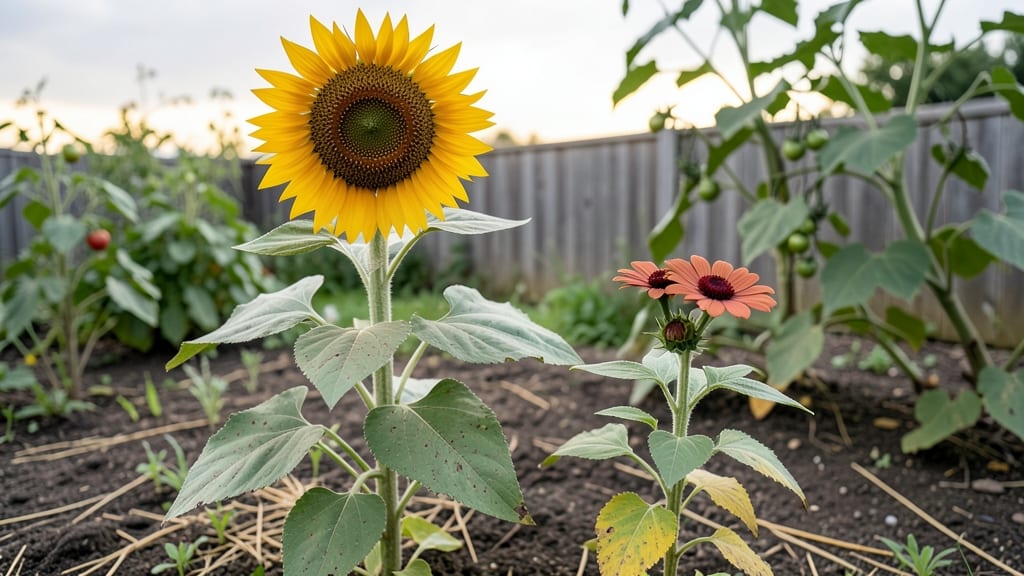
Sunflowers and zinnias together create a garden showstopper that turns heads every summer. 🌻 I learned this the hard way after planting them separately—my sunflowers towered over everything, while zinnias got lost in the shadows.
The secret is their height contrast: sunflowers act as living trellises while zinnias spill color at their base, creating drama from top to bottom.
These two thrive under the same conditions: full sun and well-draining soil. Sunflowers need space (12–18 inches apart), while zinnias pack in tighter (6–12 inches). The key is planting zinnias in front or around sunflowers to frame their bold stems.
Together, they attract pollinators like crazy—bees and butterflies can't resist their double appeal.
You'll end up with a textured, layered display that blooms from early summer until frost. Sunflowers' golden faces pop against zinnias' jewel-toned petals, while their foliage—deep green and feathery—adds contrast. The best part? They don't compete for nutrients, so your plants stay healthy and vibrant all season.
Works in garden beds or containers—just adjust spacing for pots. For extra drama, mix in purple or orange zinnias with sunflowers for a fiery contrast. Now let's make your garden the talk of the neighborhood!
📚 In This Guide
- What you need
- Instructions
- Tips and common mistakes
- Wrapping up and next steps
What you need
- ● Sunflower seeds or seedlings: 6–10 plants (tall varieties like ‘Moulin Rouge’ or ‘Russian Giant’ for height contrast)
- ● Direct-sown seeds (if starting from scratch) or 4–6-inch seedlings (for faster blooms)
- ● Zinnia seeds or seedlings: 12–15 plants (compact or mid-height varieties like ‘Profusion Series’ or ‘Crystal Series’ for texture)
- ● Direct-sown seeds (thin to 12–18 inches apart) or 3–4-inch seedlings
- ● Well-draining potting mix or garden soil: 1–2 cubic yards (amend with compost for nutrient-rich soil)
- ● Organic fertilizer (balanced 10-10-10 or slow-release): 1–2 lbs per 10 sq ft
- ● Garden trowel or transplanting spade
- ● Watering can or hose with a gentle spray nozzle
- ● Gloves (for handling soil and seeds)
- ○ Optional but helpful: Mulch (straw or shredded bark) to retain moisture
- ● Stakes or cages (for taller sunflowers if needed)
- ● Decorative garden markers (to label varieties)
- ● Full sun location (6+ hours of direct sunlight daily)
- ● Spacious planting area (sunflowers need 12–24 inches apart; zinnias 12–18 inches)
- ● Warm soil (at least 50°F/10°C for direct sowing)
- ● Pro tip: 💡 Test soil pH (ideal range: 6.0–7.0 for both plants). Adjust with lime or sulfur if needed!
How to pair sunflowers and zinnias for maximum visual impact
This pairing turns any garden into a living canvas—tall sunflowers anchor the scene while zinnias add vibrant bursts of color.
🌱 Step 1: Plan Your Layout for Height and Balance
Sunflowers grow 6-12 feet tall, while zinnias typically reach 1-3 feet. Place the tallest sunflower varieties at the back or center of your bed to create a natural focal point. I like to arrange them in a loose 3-5 foot circle so they frame the zinnias like a living sculpture.
Zinnias thrive in the front or mid-ground, where their bright blooms spill over edges. Space them 12-18 inches apart to allow airflow and prevent mildew. If using dwarf sunflowers (3-4 feet tall), interplant them with zinnias in a staggered pattern for a layered effect.
🪴 Step 2: Prepare the Soil for Both Plants’ Needs
Sunflowers tolerate poor soil but grow best in well-draining, nutrient-rich beds with a pH of 6.0-7.5. Work in 2-3 inches of compost before planting to ensure strong root development. Zinnias, however, prefer lighter, sandy soil that drains quickly—amend heavy clay with 1 part perlite to 3 parts garden soil.
Here’s the trick: Mix the two soil types in equal parts where they’ll overlap. This hybrid approach gives sunflowers enough depth while keeping zinnias from sitting in soggy conditions. Test drainage by pressing a handful of soil—if water beads on the surface, add more perlite.
☀️ Step 3: Plant for Sun and Airflow
Both sunflowers and zinnias demand full sun (6+ hours daily), but their foliage habits differ. Sunflowers cast wide, dense shade, so place zinnias on the north or east side of taller varieties to maximize light exposure. If planting in rows, stagger sunflowers and zinnias so neither type blocks the other completely.
Dig holes twice as wide as the root ball but only as deep. Sunflowers have deep taproots, so handle seedlings carefully—don’t disturb the roots more than necessary. Zinnias, with their shallow fibrous roots, can be planted slightly deeper if needed, but never bury the stem above the soil line.
💧 Step 4: Water Strategically to Prevent Disease
Sunflowers are drought-tolerant once established, but zinnias need consistent moisture to prevent powdery mildew. Water deeply at the base every 2-3 days until both plants are 2 feet tall, then taper to once weekly with 1 inch of water per session. Use a soaker hose to avoid wetting foliage, which spreads fungal spores.
Here’s the key: Water sunflowers first, then zinnias. This ensures zinnias get moisture without sunflowers stealing it all. Mulch with 2 inches of straw to retain moisture and suppress weeds—just keep it 3 inches away from stems to prevent rot.
✂️ Step 5: Prune and Deadhead for Longer Blooms
Sunflowers don’t need pruning, but pinch back leggy stems when they’re 6 inches tall to encourage bushier growth. For zinnias, deadhead spent blooms weekly to redirect energy into new flowers. I use clean, sharp scissors and cut just above a set of leaves to avoid leaving stubs that attract pests.
Watch for yellowing leaves—this signals overwatering in zinnias or nutrient deficiency in sunflowers. If zinnias flop under their own weight, stake tall varieties with bamboo stakes tied loosely to avoid damaging stems. Sunflowers rarely need support unless grown in windy conditions, where a single stake at planting prevents toppling.
Tips & tricks for perfect sunflower-zinnia pairings
Transforming your garden into a vibrant masterpiece starts with these strategic insights that elevate every step of the process.
Design Secret: For a truly dynamic display, consider adding 3-5 zinnias per sunflower in a loose cluster around the base. This creates a natural "halo" effect that draws the eye upward while maintaining visual balance. In Step 1, when arranging your 3-5 foot sunflower circle, place the most vibrant zinnias (like 'Benary's Giant' or 'Profusion') closest to the center where they'll get the most attention from passersby.
Soil Blending Technique: The equal-parts soil mix in Step 2 deserves special attention. After combining your 2-3 inches of compost with the hybrid soil, press down firmly to eliminate air pockets. This creates a solid foundation where sunflowers can anchor deeply while zinnias get their preferred loose texture. Pro tip: Add a handful of worm castings (optional) to this mix—they boost microbial activity that both plants love.
Sun Exposure Strategy: In Step 3, when positioning zinnias on the north or east side of sunflowers, remember that west-facing zinnias will receive the most intense afternoon light. If you notice leaves turning yellow or crisping by late afternoon, move those zinnias slightly eastward. Sunflowers' broad leaves act like natural umbrellas—this positioning prevents scorching while still giving zinnias their required 6+ hours of sun.
Watering Precision: The 2-3 day watering schedule in Step 4 works best when you water zinnias first, then sunflowers. This ensures zinnias get their full 1 inch of water without competition. For container gardening, use individual saucers under each plant—sunflowers' deep roots need more water volume than zinnias' shallow systems. A 1-gallon watering can with a narrow spout gives you perfect control for this delicate balance.
Pro Tips for Sunflowers And Zinnias Together
- Transforming your garden into a vibrant masterpiece starts with these strategic insights that elevate every step of the process.
- Design Secret: For a truly dynamic display, consider adding 3-5 zinnias per sunflower in a loose cluster around the base.
- Soil Blending Technique: The equal-parts soil mix in Step 2 deserves special attention.
Frequently asked questions
Got questions about pairing sunflowers and zinnias?
You’re not alone! Here are answers to the most common ones—from planting tips to troubleshooting—so your garden drama stays flawless.
Can sunflowers and zinnias grow together in the same pot?
Yes, but with caution! Sunflowers need deep roots and more space, while zinnias thrive in shallower containers. Use a large pot (12"+ diameter) with well-draining soil and place zinnias in the front for a layered look. Avoid overcrowding—sunflowers can outcompete zinnias for nutrients.
How long does it take for sunflowers and zinnias to bloom together?
Timing varies! Sunflowers typically bloom in 60–90 days after planting, while zinnias often flower in 45–60 days. For synchronized blooms, start zinnias 2–3 weeks earlier than sunflowers. Succession planting (adding new zinnias every 2–3 weeks) ensures continuous color.
Will sunflowers and zinnias attract too many pests?
Both plants are pollinator magnets (bees, butterflies, hummingbirds love them!), but they’re generally pest-resistant. Watch for aphids or spider mites in dry heat—spray zinnias with water to deter pests. Sunflowers may attract bird damage (squirrels love the seeds!), so consider netting if needed.
What if my zinnias look leggy or floppy near sunflowers?
Zinnias need 6+ hours of sunlight daily—if they’re stretching, they’re not getting enough light. Thin out sunflowers slightly to reduce shade competition. Deadhead spent zinnias regularly to encourage bushier growth. A balanced fertilizer (10-10-10) can also help if soil is poor.
Can I replace zinnias with another flower for height contrast?
Try cosmos, marigolds, or rudbeckias—they’re sun-loving, low-maintenance, and pair beautifully with sunflowers. For color drama, pair sunflowers with tall snapdragons or hollyhocks. Just ensure your replacements have similar watering needs to avoid stressing the sunflowers.
Wrapping up and next steps
Pairing sunflowers and zinnias together is a game-changer for your garden—it’s all about height, color, and drama! 🌻✨ These bold companions create eye-catching contrast, whether you’re filling a border, brightening a patio, or adding flair to a cut-flower arrangement.
The key? Play with placement, colors, and care to let their natural chemistry shine.
Ready to dive in? Start small—try a single sunflower with a cluster of zinnias in a pot or a corner of your yard. Watch your garden transform into a vibrant, low-maintenance masterpiece! 🌸💛