
Propagation
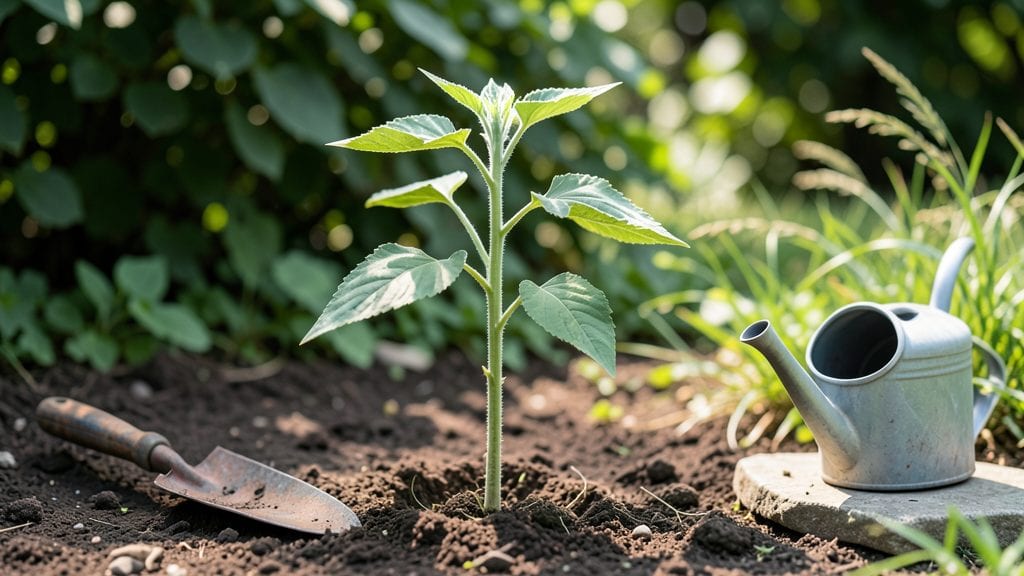
Sunflower seedlings start with those first tiny leaves—harvesting them the right way boosts your plants' stamina before they reach for the sky. 🌱 I learned this trick after watching my first batch struggle through leggy, weak stems, and now I swear by it.
Those lower leaves aren't just decoration; they're energy reserves your sunflower will thank you for later.
Here's the secret: pinch or snip off the first two sets of leaves when they're about 2 inches tall, leaving the top growth intact. This forces the plant to focus its energy upward instead of spreading sideways, resulting in a thicker, stronger stem that supports those massive blooms later.
Just avoid taking more than a third of the foliage at once—sunflowers are tough, but not that tough.
📚 In This Guide
- What you need
- Instructions
- Tips and common mistakes
- Wrapping up and next steps
What you need
- ● Sunflower seeds: Choose heirloom or hybrid varieties suited for your climate (e.g., Mammoth, Russian Giant, or Teddy Bear). Buy 5–10 seeds to ensure success.
- ● Seed-starting trays or biodegradable pots: 6–12 cell packs (2–3 inches deep) or 4-inch pots for better root growth.
- ● High-quality seed-starting mix: A lightweight, well-draining blend (e.g., 50% peat moss, 30% perlite, 20% vermiculite). Avoid garden soil—it’s too dense!
- ● Grow lights or sunny windowsill: Sunflower seedlings need 12–16 hours of light daily. A full-spectrum LED grow light (e.g., 20–30W) works best if natural light is limited.
- ● Spray bottle with water: For gentle hydration without disturbing seedlings.
- ● Small hand trowel or spoon: For transplanting delicate seedlings later.
- ● Seedling heat mat: Keeps soil 70–80°F for faster germination (great for cool climates!).
- ● Fertilizer (balanced or organic): A 5-10-5 or 3-4-6 NPK ratio diluted to half-strength to avoid burning young leaves.
- ● Humidity dome or plastic wrap: Retains moisture while seeds germinate (remove once sprouts appear!).
- ● Pest control (neem oil or diatomaceous earth): Preemptive measure against aphids or fungus gnats.
- ● Labeling tags: Mark trays with seed variety and date planted to track growth.
How to prune sunflower seedling leaves for healthier growth
Sunflowers grow fast, but those early leaves can drain energy. Here's how to trim them right.
🌱 Step 1: Wait for True Leaves to Appear
Harvesting too early stresses seedlings. Wait until your sunflower seedlings show their second set of true leaves—these are the larger, more mature leaves that appear after the initial cotyledons (the tiny seed leaves). You'll know they're ready when the first pair of true leaves unfurl fully and stand upright.
This usually happens about 10-14 days after germination, depending on warmth and light. If your seedlings are in a cooler spot (below 65°F), they may take a few extra days. Don't rush—waiting ensures the plant has stored enough energy to bounce back after pruning.
✂️ Step 2: Remove Only the Bottom Set of Leaves
Use clean, sharp scissors or your fingers to gently pinch off just the lowest pair of true leaves. Leave the top leaves untouched—they're doing the heavy lifting with photosynthesis. You're not defoliating the plant; you're just removing the oldest leaves that are now competing for nutrients.
Here's the thing—sunflowers grow quickly, and those bottom leaves often shade the stem. Removing them improves airflow and reduces disease risk. If you see any yellowing or browning on the lowest leaves, that's your cue they're ready to go. Just don't take more than one pair at a time.
💧 Step 3: Water and Fertilize After Pruning
After trimming, give your seedlings a light watering to help them recover. Focus on the soil around the base, not the leaves, to prevent fungal issues. You'll know it's enough when the top inch of soil feels damp but not soggy. Overwatering now can lead to damping-off, which kills seedlings overnight.
Add a balanced, water-soluble fertilizer (like 10-10-10) at half strength to replenish nutrients. Sunflowers are heavy feeders, and pruning removes some of their energy reserves. Mix the fertilizer with water and apply it directly to the soil, not the leaves. Watch for new growth in the next 3-5 days—that's your sign the plant is thriving.
☀️ Step 4: Monitor Light and Space for Recovery
Move your seedlings to the brightest spot available after pruning. Sunflowers need 6-8 hours of direct sunlight daily to recover quickly. If you're using grow lights, keep them 4-6 inches above the seedlings and adjust as they grow. Leggy growth (long, thin stems) means they're stretching for light—raise the lights immediately.
Give your seedlings some breathing room too. If they're crowded, thin them to 6 inches apart so they don't compete for nutrients. You'll see stronger stems and bushier growth within a week. This is the moment that matters: proper light and space help the plant redirect energy to the main stem and future flower buds.
Tips & tricks for pruning sunflower seedlings
Real talk: pruning young sunflowers feels counterintuitive, but these small tweaks make all the difference.
Timing Secret: Those 10-14 days after germination are critical—wait until you see the second set of true leaves fully unfurled and standing upright. I learned this the hard way after snipping too early and stunting growth. The cotyledons (those tiny seed leaves) are different from true leaves, so don't confuse the two. The true leaves should be noticeably larger and more mature, with visible veins running through them.
Leaf Selection Tip: Only remove the absolute bottom pair of true leaves—never more. I see people getting carried away and taking too many leaves, which stresses the plant. Think of it like giving your sunflower a haircut: you want to shape it, not shave it. The top leaves are the powerhouses for photosynthesis, so leave them untouched. If you're unsure which leaves to remove, look for the oldest pair at the very base that might be yellowing or browning at the edges.
Recovery Strategy: After pruning, the 3-5 day recovery window is your chance to see real results. That's when you'll notice new growth appearing—stronger stems and bushier foliage. To speed things up, move your seedlings to the brightest spot possible (south-facing window or grow lights 4-6 inches away). I've seen seedlings that were lagging behind catch up dramatically within just 4-5 days when given proper light. The key is consistency: 6-8 hours of direct sunlight daily during this recovery period makes all the difference.
Tool Wisdom: While fingers work fine for small batches, invest in a pair of clean, sharp scissors for larger gardens. Dull tools can crush stems and create entry points for disease. I sterilize my scissors with rubbing alcohol between plants to prevent spreading any potential pathogens. And here's a pro move: pinch the leaves at their base rather than cutting through the stem to minimize damage and encourage faster healing.
Pro Tips for Sunflower Seedling Leaves
- Real talk: pruning young sunflowers feels counterintuitive, but these small tweaks make all the difference.
- Timing Secret: Those 10-14 days after germination are critical—wait until you see the second set of true leaves fully unfurled and standing upright.
- Leaf Selection Tip: Only remove the absolute bottom pair of true leaves—never more.
Frequently asked questions
Got questions about sunflower seedling leaves?
Here are some of the most common ones—plus quick, actionable answers to keep your seedlings thriving!
Why should I harvest sunflower seedling leaves?
Harvesting the first few leaves (usually the cotyledons or first true leaves) redirects the plant’s energy toward root and stem growth. This helps produce stronger, more resilient seedlings ready for transplanting. Think of it as giving your sunflower a "growth boost" before it reaches for the sky!
When is the best time to harvest sunflower seedling leaves?
The ideal time is when the seedlings have 2–4 true leaves (not the initial cotyledons) and are about 2–3 inches tall. Avoid harvesting if leaves are yellowing or diseased—this could stress the plant further. Early morning harvests (when leaves are turgid) work best for minimal damage.
How do I harvest sunflower seedling leaves without hurting the plant?
Use clean, sharp scissors or pruning shears to snip leaves just above a leaf node (where new growth emerges). Avoid tearing leaves—this can introduce pathogens. Leave at least half the leaf surface on the seedling to maintain photosynthesis. Pro tip: Rotate leaves if harvesting multiple times to balance growth.
Can I use harvested sunflower leaves as compost or fertilizer?
Sunflower leaves are nitrogen-rich and decompose quickly. Chop them into small pieces and mix them into compost, or steep them in water (1:3 leaf-to-water ratio) for a nutrient-rich "leaf tea" to fertilize other plants. Just avoid diseased leaves—compost them separately or discard them.
What if my sunflower seedlings look weak after harvesting leaves?
Weakness is normal if you’ve harvested too much or too early. Revive seedlings by:
- Placing them in bright, indirect light (avoid harsh sun).
- Watering gently at the base (not the leaves) to prevent rot.
- Adding a balanced fertilizer (like 10-10-10) after 1–2 weeks.
Wrapping up and next steps
Growing sunflower seedlings with healthy leaves is all about patience, proper care, and a little know-how! 🌱 By following the right techniques—like thinning, pruning, and ensuring adequate light—you’ll set your sunflowers up for a strong, vibrant start that leads to stunning blooms.
Whether you’re a seasoned gardener or just beginning, every small step makes a difference.
Ready to take the next step? Plant those seedlings with confidence and watch them thrive! For even better results, experiment with companion planting or try growing sunflowers from seed indoors before transplanting. Happy gardening! 🌻