
Pruning
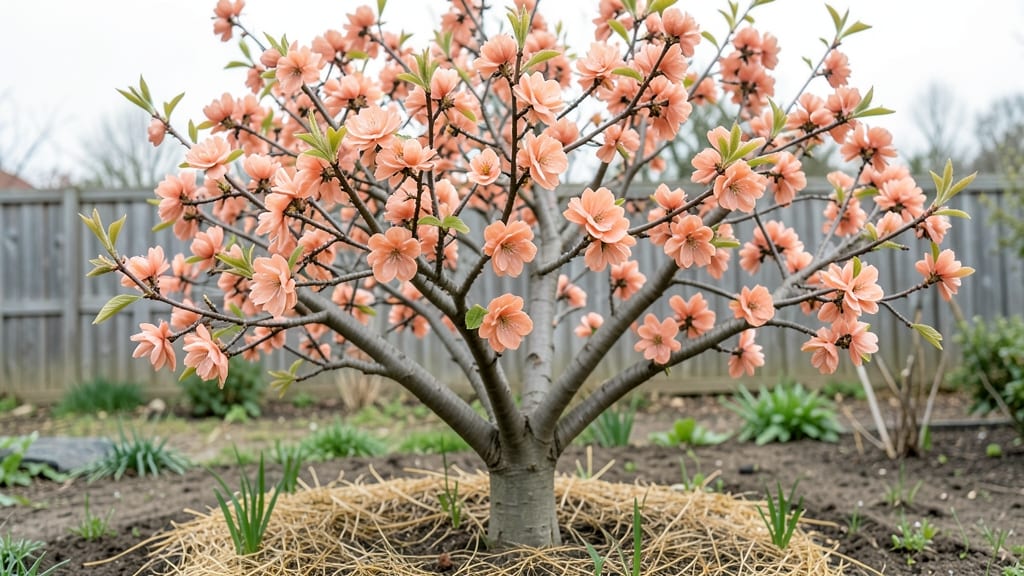
A peach-colored flowering tree turns your Pacific Northwest garden into a soft-focus masterpiece—especially when you prune it right for our chilly winters. 🌸 I’ve watched my Cercis canadensis (eastern redbud) bloom earlier each spring after learning the frost-resistant pruning tricks that keep branches sturdy through freeze-thaw cycles.
The key? Timing cuts for late winter dormancy and shaping for wind resistance.
These trees—like Prunus serrulata (Japanese cherry) or Lagerstroemia (crape myrtle)—thrive in zones 5-9, but their peachy blooms need strategic pruning to survive our damp, cool summers and icy winters. You’ll need sharp bypass pruners, a ladder for taller branches, and a clear day to avoid sap splatter.
The payoff? Longer vase-shaped canopies that burst with color from late winter to early summer.
After pruning, your tree will reward you with disease-resistant branches and prolonged blooms, even in partial shade. Pair it with lavender or silver foliage plants to make those peach blossoms pop against cooler greens.
The best part? These trees handle our region’s unpredictable weather better than most—once you master the cuts.
Whether you’re shaping a young sapling or rejuvenating an older tree, the same principles apply. Start with 30% of the oldest growth in late winter, then fine-tune in early spring. Your garden will thank you with years of reliable color, even through our famously gray skies.
📚 In This Guide
- What you need
- Instructions
- Tips and common mistakes
- Wrapping up and next steps
What you need
- ● Pruning shears: Bypass pruners (sharp, clean, and sterilized with rubbing alcohol). Pro tip: 💡 Invest in a felco 2 or gonic brand for precision!
- ○ Loppers: 1 pair (8–10" reach) for thicker branches (½"–1.5" diameter). Optional: Ratcheting loppers for extra leverage.
- ● Pruning saw: 1 curved-tooth saw (for branches >1.5" thick). Brand rec: Fiskars or Bahco.
- ● Gloves: 1 pair of cut-resistant, breathable gloves (e.g., Felco or Wolverine).
- ● Disinfectant: 70% isopropyl alcohol or bleach solution (1 part bleach : 9 parts water) to sterilize tools between cuts.
- ○ Pruning sealant: 1 small tube of tree wound paint (e.g., Tanglefoot Tree Wound Pruning Sealant) for large cuts (optional but helpful for frost-prone areas).
- ● Ladder: Extendable or step ladder (if tree exceeds 8 ft tall). Safety first: 🔥 Use a non-slip ladder with a stabilizer.
- ● Heavy-duty trash bags: 2–3 bags (13-gallon size) for debris disposal.
- ● Frost cloth: 1 roll of lightweight frost fabric (for protecting newly pruned branches if late frosts are forecasted).
- ● Thermal blanket: 1–2 tree wrap blankets (e.g., Agribon) to shield tender branches during unexpected cold snaps.
- ● Moisture meter: 1 soil moisture meter (to check hydration levels post-pruning).
- ● Know your tree: Confirm it’s a peach-colored flowering tree (e.g., Prunus persica ‘Bonanza,’ Cercis canadensis ‘Forest Pansy,’ or Chaenomeles speciosa). Pro tip: 🌡️ Research its chill hours and hardiness zone (USDA 5–8 for PNW).
- ● Timing: Prune during dormant season (late winter/early spring, before buds swell). Avoid pruning after first bloom to preserve flowers!
- ● Weather check: Plan for a dry, calm day (no rain/frost in the forecast for 24–48 hours post-pruning).
How to prune frost-resistant peach-colored flowering trees for Pacific Northwest beauty
Here’s the method I’ve used for years to keep these stunning trees thriving through PNW winters.
✂️ Step 1: Time Your Pruning for Dormancy
Prune in late winter or early spring, just as buds begin to swell but before new growth starts. This timing ensures you remove dead wood while avoiding the risk of frost damage to fresh cuts. In the Pacific Northwest, aim for February to March when daytime temperatures hover around 45-55°F—cool enough to keep the tree dormant but warm enough to work comfortably.
I always check the forecast first. If a hard freeze is predicted within 48 hours of pruning, wait. Fresh cuts are more vulnerable to cold damage, and you don’t want to invite disease by creating open wounds in freezing conditions. A quick way to confirm dormancy is to look for tight, unopened buds—they’ll feel firm to the touch, not swollen or sticky.
🌿 Step 2: Remove Dead, Diseased, and Crossing Branches
Start by cutting out any dead or diseased branches first—they’re the easiest to spot and the most critical to remove. Use clean, sharp bypass pruners to make cuts just outside the branch collar (the swollen area where the branch meets the trunk). This ensures the tree can seal the wound properly and reduces the risk of infection.
Next, look for branches that cross or rub against each other. These create wounds that invite pests and disease. If two branches are growing in the same direction, remove the weaker one—it’s usually the smaller or more shaded branch. I like to step back every few cuts to visualize the tree’s shape. The goal is to open up the center for better airflow and sunlight penetration, which is especially important in the damp PNW climate.
☀️ Step 3: Thin Out for Light and Airflow
Peach-colored flowering trees like Prunus serrulata ‘Kwanzo’ or Prunus ‘Fashionably Late’ need good airflow to prevent fungal issues. Focus on thinning branches to create an open, vase-like shape. Remove up to 25% of the tree’s canopy if it’s overly dense. Prioritize branches that are growing inward or downward—they’ll compete with others for light and resources.
When thinning, make cuts at the branch collar, not mid-branch. Avoid leaving stubs, as they can rot and attract pests. If you’re unsure which branch to remove, ask yourself: Does this branch contribute to the tree’s overall structure, or is it just taking up space? I often use a 3-cut method for larger branches: Undercut slightly, then make the final cut just outside the collar. This prevents tearing the bark.
⏰ Step 4: Shape for Winter Hardiness
In the Pacific Northwest, where winters can be wet and chilly, shaping your tree properly helps it withstand frost. Avoid heavy pruning that removes too many leaves at once—this can stress the tree and make it more susceptible to cold damage. Instead, focus on lightening the canopy by removing only the necessary branches.
Pay special attention to the tree’s scaffold branches (the main structural limbs). These should be spaced 8-12 inches apart along the trunk and angled outward. If a scaffold branch is too low or growing straight up, prune it back to a lateral bud that’s facing outward. This encourages stronger, more frost-resistant growth. After pruning, I always give the tree a light watering if the ground isn’t frozen—this helps it recover faster.
🌱 Step 5: Clean Up and Monitor for Recovery
Once you’ve finished pruning, rake up all the debris and dispose of it properly. Leaving branches on the ground can harbor pests and diseases, which is especially risky in the damp PNW. Sterilize your pruners with rubbing alcohol or a 10% bleach solution before storing them to prevent cross-contamination.
Watch the tree closely in the weeks following pruning. Healthy new growth should appear within 4-6 weeks, depending on the weather. If you notice yellowing leaves, wilting, or oozing sap at the pruning sites, the cuts may have been too severe or made in dirty conditions. In that case, apply a wound dressing (like pruning sealant) to larger cuts over 2 inches in diameter to protect them from disease.
Tips & tricks for pruning frost-resistant flowering trees
These essential insights will help you master the art of pruning while preserving your tree's natural beauty and resilience.
Timing Secret: The February to March window is ideal because it aligns with the tree's natural dormancy cycle. In the Pacific Northwest, when daytime temperatures consistently stay between 45-55°F, the tree is better equipped to handle the stress of pruning. I've learned the hard way that cutting too early can leave fresh wounds vulnerable to late-season frosts, while waiting too long risks encouraging new growth that could be damaged by unexpected cold snaps.
Visual Cue for Dormancy: Look for tight, unopened buds that feel firm to the touch—these are your clearest indicators of dormancy. I always press a bud gently; if it springs back immediately, you're good to go. If buds feel swollen or sticky, wait a few more days. This simple test has saved me from making cuts during borderline conditions, which can stress the tree unnecessarily.
Branch Selection Strategy: When deciding which branches to remove in Step 2, prioritize those growing directly toward the center of the tree. These branches create dense clusters that trap moisture and reduce airflow, which is particularly problematic in our damp climate. I find it helpful to step back every 5-10 cuts to visualize the tree's overall shape—this prevents over-pruning and maintains that beautiful vase-like silhouette these trees are known for.
Scaffold Branch Technique: For scaffold branches in Step 4, aim to space them 8-12 inches apart along the trunk. When pruning these structural limbs, always cut back to a lateral bud facing outward—this encourages stronger growth patterns that can better withstand winter winds. I've noticed that branches pruned to outward-facing buds develop more robust bark over time, which is crucial for frost resistance.
Pro Tips for Peach Colored Flowering Tree
- These essential insights will help you master the art of pruning while preserving your tree's natural beauty and resilience.
- Timing Secret: The February to March window is ideal because it aligns with the tree's natural dormancy cycle.
- Visual Cue for Dormancy: Look for tight, unopened buds that feel firm to the touch—these are your clearest indicators of dormancy.
Frequently asked questions
Got questions about nurturing your peach-colored flowering tree in the Pacific Northwest? Here are some common ones—and their answers!
When is the best time to prune my peach-colored flowering tree?
Prune your tree after it blooms in late spring or early summer. This ensures you don’t cut off next year’s flowers. Avoid heavy pruning in fall or winter, as it can stress the tree and leave it vulnerable to frost damage. Light shaping in late winter (before buds swell) is fine, but focus on removing dead or crossing branches.
How cold can my peach-colored flowering tree tolerate?
Most peach-colored flowering trees (like Prunus serrulata varieties) are frost-resistant and can handle temperatures down to 10–15°F (-12 to -9°C). However, young trees or newly planted specimens may need winter protection (like burlap wraps) if your area dips below 0°F (-18°C). Mulch the base to insulate roots!
Can I prune too much? What are the signs?
Yes! Over-pruning weakens the tree, reduces flowering, and invites pests. Signs include yellowing leaves, stunted growth, or fewer blooms the next season. Stick to removing no more than 25% of the canopy in one session. If you’ve already pruned too much, fertilize lightly and water deeply to help recovery.
What if my tree isn’t flowering as much as expected?
Poor flowering often stems from over-pruning, nutrient deficiencies, or stress. Try these fixes:
- Apply a balanced fertilizer (10-10-10) in early spring.
- Ensure it gets 6+ hours of sunlight daily.
- Check for pests (aphids, spider mites) or disease (powdery mildew).
- Avoid heavy pruning in fall—save it for post-bloom!
Are there frost-resistant alternatives if peach-colored trees don’t thrive?
Consider these PNW-friendly flowering trees:
Tree
Color
Frost Hardiness
Amelanchier alnifolia (Serviceberry)
White/pink blooms, peach-like fall fruit
Zone 2–7 (-40°F / -40°C)
Cercis canadensis (Eastern Redbud)
Pink-purple flowers
Zone 4–9 (-30°F / -34°C)
Magnolia × soulangeana (Saucer Magnolia)
Pink/purple blooms
Zone 4–9 (-30°F / -34°C)
Wrapping up and next steps
Transforming your Pacific Northwest garden with a stunning peach-colored flowering tree is a rewarding project that combines beauty and resilience. By mastering frost-resistant pruning techniques, you’ll ensure your tree thrives for years to come—adding vibrant color and charm to your outdoor space. 🌸
Ready to take the next step? Start by observing your tree’s unique growth patterns and schedule your first pruning session during its dormant season. With patience and practice, you’ll cultivate a breathtaking centerpiece that brings joy every spring!
Happy pruning!