
Flowers
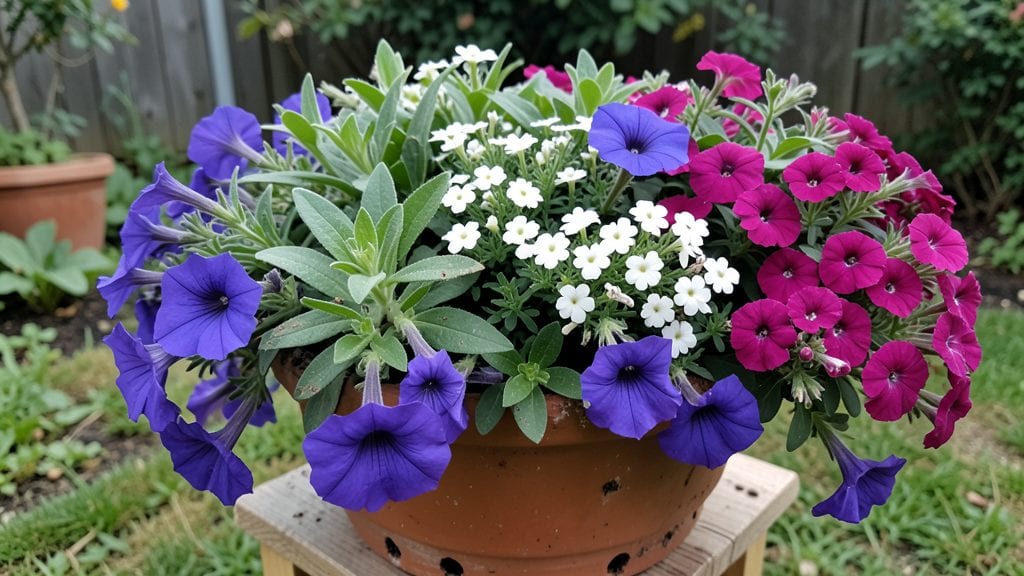
Creating mixed flower planters that burst with layered color and last all season is easier than you think—no green thumb required. 🌸 I’ve designed planters that start with bold spring blooms and fade into soft autumn tones, all while keeping maintenance simple.
The trick lies in balancing sun lovers with shade-tolerant plants and choosing varieties that bloom at different times.
You’ll need containers with good drainage, a mix of annuals and perennials for continuity, and a color palette that complements your space. My go-to combo includes salvia for vertical height, petunias for cascading color, and heuchera for lush foliage texture.
This trio thrives in 5-gallon planters and needs watering just twice a week once established.
By late summer, your planters will look like they’ve been professionally staged—deep purples blending into warm oranges, all framed by velvety green leaves. The best part? Swap out a few plants in fall for mums or ornamental kale to extend the show until frost. No dead zones, just nonstop color.
Works for balconies, patios, or even your front porch. Start with one planter this season, and you’ll be hooked on the layered look that keeps evolving with the weather. Ready to mix it up?
📚 In This Guide
- What you need
- Instructions
- Tips and common mistakes
- Wrapping up and next steps
What you need
- ● Planters: 1-3 containers (terracotta, ceramic, or fiberglass) – choose sizes based on your space (e.g., 12"–18" diameter for small planters, 20"+ for larger displays). Ensure they have drainage holes!
- ● Potting soil: 1–2 bags (high-quality, well-draining mix labeled for flowers or containers). Aim for at least 5 gallons per planter.
- ● Mixed flowers: A variety of annuals or perennials (e.g., petunias, geraniums, snapdragons, or marigolds). Pick 3–5 types for visual interest, ensuring complementary colors and bloom times.
- ● Slow-release fertilizer: 1–2 packets (12–16 weeks) to nourish roots without extra effort.
- ● Gloves (1 pair) – to protect your hands from soil and thorns.
- ● Trowel (1) – for digging and planting with precision.
- ● Watering can (1) – with a gentle spray nozzle for even hydration.
- ○ Mulch (optional): 1 bag (e.g., bark or gravel) to retain moisture and enhance aesthetics.
- ○ Decorative stones or gravel (optional): For a polished, finished look.
How to create stunning mixed flower planters with season-long color
Here's my foolproof method for designing vibrant, layered containers that bloom from spring through fall.
🪴 Step 1: Choose the Right Containers and Drainage
Select containers with at least 12-15 inches of depth to accommodate layered plant heights. I prefer ceramic or fiberglass pots because they retain moisture better than plastic while still allowing roots to breathe. Always check for drainage holes—if they're missing, drill 2-3 additional holes near the bottom to prevent root rot.
Place a 2-inch layer of gravel or expanded shale at the bottom of each container. This creates a reservoir for excess water while keeping roots healthy. The gravel should occupy about 10-15% of the container's total volume. For a 15-gallon pot, that means roughly 1.5-2 gallons of gravel.
🌱 Step 2: Build the Planting Layers for Height and Texture
Start with your tallest plants at the back or center of the container. Choose varieties like snake plant (Dracaena) or black mondo grass for structural interest. These should be planted first, with their root balls just below the rim of the container. I like to use 3-4 plants of each tall variety to create a full look.
Next, add mid-height plants like coleus, heuchera, or salvia around the tall plants. These should be spaced 6-8 inches apart to allow for air circulation. The goal is to create a natural, cascading effect where each layer complements the one above it. For a 15-gallon container, I typically use 5-6 mid-height plants per layer.
Finally, fill the front and edges with trailing or low-growing plants like sweet potato vine or creeping thyme. These will spill over the sides, adding softness and texture. Plant these 4-6 inches apart to ensure they fill in quickly. Water gently after planting to settle the soil around the roots.
☀️ Step 3: Position for Optimal Light and Seasonal Care
Place your mixed flower planters in a location that receives 6-8 hours of sunlight daily. Most flowering plants thrive in full sun to partial shade, but varieties like impatiens or begonia will appreciate afternoon shade in hot climates. If you're using sun-loving plants like petunias or geraniums, position them where they'll get the most direct light.
Here's the thing—watering needs change with the seasons. In spring and fall, water when the top 1-2 inches of soil feel dry. During summer, you may need to water daily, especially in containers, as they dry out faster than in-ground plantings. Always water at the base of the plants to avoid wetting the foliage, which can lead to fungal diseases.
Fertilize every 4-6 weeks during the growing season with a balanced, water-soluble fertilizer. I like to use a 10-10-10 or 20-20-20 mix, but avoid over-fertilizing, as this can lead to excessive foliage growth at the expense of flowers. In late summer, switch to a low-phosphorus fertilizer to encourage blooming rather than leafy growth.
✂️ Step 4: Maintain and Deadhead for Continuous Blooms
Deadheading spent blooms is the secret to keeping your mixed flower planters looking fresh. Use clean, sharp pruners to snip off faded flowers just above a set of healthy leaves. This encourages the plant to produce more blooms and keeps the container looking tidy. I like to do this in the morning when the plants are well-hydrated and the air is cool.
Prune leggy or overgrown plants to maintain the layered look. Cut back stems by about one-third to encourage bushier growth. For trailing plants, gently weave them back into the container if they start to look too sparse. This keeps the design balanced and prevents any one plant from dominating the space.
Watch for pests like aphids or spider mites, especially on new growth. If you spot any, treat with a mild insecticidal soap or neem oil. I like to spray in the early evening to avoid harming beneficial insects like ladybugs or lacewings, which help control pests naturally.
⏰ Step 5: Prepare for Winter and Renew for Next Season
In late fall, reduce watering as the plants enter dormancy. Stop fertilizing entirely once temperatures drop below 50°F. If you're in a cold climate, move containers to a sheltered location or wrap them in burlap to protect them from freezing temperatures. For tender plants, bring them indoors or discard them and start fresh in spring.
In early spring, refresh your mixed flower planters by removing any dead or damaged foliage. Add a 1-2 inch layer of fresh potting mix to the surface to replenish nutrients. This is also a great time to divide and replace any overgrown or woody plants with new ones. A little spring cleanup goes a long way in keeping your planters vibrant and healthy.
Tips & tricks for perfect mixed flower planters
Creating stunning mixed flower planters isn't just about throwing plants together—it's about thoughtful layering and seasonal adaptation. Here's what I've learned from years of trial and error to keep your containers thriving all season long.
Container Material Matters: While ceramic and fiberglass pots are ideal for moisture retention, don't overlook the benefits of terracotta for sun-loving plants. Terracotta breathes better, preventing root rot in hot climates, but you'll need to water more frequently. For containers without drainage holes, consider using self-watering planters with built-in reservoirs—just be sure to empty them after each watering to prevent stagnant water.
Layering Secret: In Step 2, when arranging your plants, create a visual "triangle" effect by placing the tallest plants slightly off-center. This draws the eye upward and creates more visual interest than symmetrical arrangements. For the trailing plants, leave about 3-4 inches of space at the edges to allow them to cascade naturally without crowding.
Seasonal Light Adjustments: The 6-8 hours of sunlight recommendation works best during peak growing seasons, but in winter, you might need to supplement with grow lights for 4-6 hours daily. Watch your plants closely—if leaves yellow or growth stalls, they're likely not getting enough light. Rotate your containers weekly to ensure even exposure from all directions.
Fertilizer Strategy: When switching to low-phosphorus fertilizer in late summer, look for products labeled "bloom boosters" with higher potassium content. This encourages flowering rather than leafy growth. I've found that using a slow-release fertilizer pellet in the bottom layer during planting eliminates the need for mid-season fertilizing entirely.
Pro Tips for Mixed Flower Planters
- Creating stunning mixed flower planters isn't just about throwing plants together—it's about thoughtful layering and seasonal adaptation.
- Container Material Matters: While ceramic and fiberglass pots are ideal for moisture retention, don't overlook the benefits of terracotta for sun-loving plants.
- Layering Secret: In Step 2, when arranging your plants, create a visual "triangle" effect by placing the tallest plants slightly off-center.
Frequently asked questions
Got questions about mixed flower planters?
You’re not alone! Here are answers to the most common queries to help you create a vibrant, low-maintenance display that blooms all season.
What’s the best soil mix for mixed flower planters?
Use a well-draining, nutrient-rich blend like 60% potting soil, 30% perlite or coarse sand, and 10% compost. This combo prevents waterlogging while feeding roots. For containers, add a layer of gravel at the bottom to improve drainage.
How often should I water mixed flower planters?
Water when the top inch of soil feels dry—usually every 2–3 days in summer and once a week in cooler months. Check moisture levels in the morning to avoid overwatering. Grouping planters together can help retain humidity.
Can I use annuals and perennials together in one planter?
Pair fast-growing annuals (like petunias or marigolds) with perennials (e.g., lavender or sedum) for year-round color. Annuals fill gaps quickly, while perennials provide structure. Just ensure their light and water needs align.
How do I keep pests away from my mixed flower planters?
Prevent pests with neem oil sprays or companion planting (e.g., marigolds deter aphids). Remove yellowing leaves promptly and avoid overwatering. For severe infestations, introduce beneficial insects like ladybugs.
What can I do if my mixed flower planters look leggy or sparse?
Leggy growth often means too little light. Move planters to a sunnier spot (6+ hours of light daily). Prune back overgrown stems and fertilize lightly with a balanced bloom booster. Deadhead spent blooms to encourage bushier growth.
Pro Tip:
Rotate your planters quarter-turn every few weeks to ensure even sunlight exposure—this keeps flowers lush and prevents one-sided growth!
Wrapping up and next steps
Mixed flower planters are a game-changer for adding vibrant, low-maintenance beauty to any space—whether it’s a cozy balcony, a sunny patio, or a lush garden. By blending hardy perennials, cheerful annuals, and fragrant fillers, you create a year-round display that thrives with minimal effort.
The key? Layering for height, color, and texture while ensuring each plant gets the right care.
Now that you’re armed with the best materials and answers to common questions, it’s time to roll up your sleeves! Start small—pick a sunny spot, gather your favorites, and let your creativity bloom. Check out our step-by-step planting guide to turn your vision into a thriving, colorful masterpiece.
Happy gardening! 🌸✨