Planting
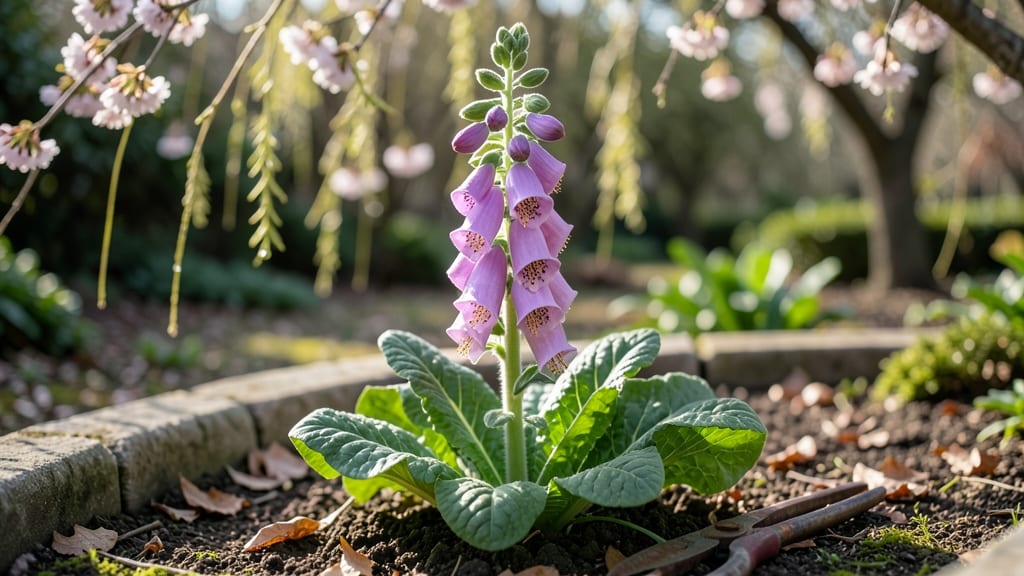
The foxglove flower plant brings bold, bell-shaped elegance to your garden—just keep curious fingers (and pets) away from its leaves. 🌿 These cold-hardy biennials thrive where many perennials falter, bursting into striking spikes of purple, pink, or white in their second year. or white.
I’ve grown them in partial shade under maples, and they still put on a show that makes neighbors ask, "What is that?"
The secret to success is patience and the right conditions: well-draining soil, consistent moisture, and a spot where they won’t get crowded. Plant seeds ½ inch deep in early fall or spring, spacing them 12-18 inches apart—they’ll self-seed if you let them.
Most beginners rush the watering or forget they’re biennials, but once established, they’re nearly foolproof. Just avoid rich soil, or they’ll grow leaves instead of flowers.
By summer of their second year, you’ll have 3-5 foot spikes of dangling bells that hum with bees and attract hummingbirds. The foliage has a slightly fuzzy texture, and the scent—when you’re close enough—is subtly sweet.
Deadhead spent blooms to encourage more flowers, but leave some seed pods for next year’s volunteers. They’ll naturalize beautifully in shady borders or woodland gardens.
Foxglove’s biennial lifecycle means you’ll need to replant every few years, but the payoff is worth it. They’re USDA zones 3-9 hardy, so they’ll survive winters that would kill tender perennials.
Just watch for slugs on young seedlings and avoid planting where children or pets might nibble—they’re toxic if ingested. With the right care, these giants will become your garden’s most talked-about feature.
📚 In This Guide
- What you need
- Instructions
- Tips and common mistakes
- Wrapping up and next steps
What you need
- ● Foxglove seeds or seedlings: Choose Digitalis purpurea (common foxglove) or other varieties. Start with 5–10 seeds (or 2–3 seedlings) for a small garden display.
- ● Well-draining potting mix: A blend of 50% peat moss or coco coir, 30% perlite or vermiculite, and 20% compost (for seedlings). For in-ground planting, amend soil with organic matter (e.g., compost or aged manure).
- ○ Containers (optional for seedlings): 3–4 inch pots (1–2 per seedling) with drainage holes.
- ● Slow-release fertilizer (10-10-10 or 5-10-10): 1–2 tablespoons mixed into soil at planting.
- ○ Mulch (optional): 2–3 inches of shredded bark or straw to retain moisture and suppress weeds.
- ● Garden trowel or transplanting spade (for digging and moving seedlings).
- ● Watering can or hose with a gentle spray nozzle (foxgloves dislike soggy roots!).
- ● Pruning shears (for deadheading spent blooms or shaping plants).
- ● Gloves (foxglove leaves contain digitalis, which is toxic—handle with care!).
- ● Measuring tape or ruler (foxgloves can grow 3–5 feet tall; space them accordingly!).
- ● Sunlight: Partial shade to full sun (morning sun + afternoon shade works best in hot climates).
- ● Soil pH: 6.0–7.0 (slightly acidic to neutral). Test your soil if unsure!
- ● Watering routine: Keep soil consistently moist but not waterlogged (especially during germination).
- ● Patience: Foxgloves grow slowly—first blooms may take 1–2 years from seed!
How to grow foxglove flowers for striking vertical drama
Here's how I transform my garden with these towering biennials—tall, elegant, and full of character.
🌱 Step 1: Choose the Perfect Planting Location
Foxglove thrives in partial shade to full sun but with afternoon protection in hot climates. I always pick spots with dappled sunlight—think under deciduous trees or along north-facing foundations. The key is avoiding intense afternoon heat, which causes flowers to scorch before opening fully.
Test your site by observing how much light the area gets between 10 AM and 3 PM. If leaves start wilting by early afternoon, that's your foxglove's ideal home. The soil should drain well but retain moisture—foxglove roots hate soggy conditions. Amend heavy clay with 2-3 inches of compost to improve aeration and water retention.
🌿 Step 2: Prepare the Soil for Optimal Growth
Foxglove prefers well-draining, slightly acidic to neutral soil (pH 6.0-7.0). I always work in 2-3 inches of organic matter—like the compost or well-rotted manure—mixed into the top 12 inches of soil. This creates the loose, fertile environment foxglove craves.
For container growing, use a mix of 50% potting soil, 30% perlite, and 20% compost. The perlite prevents compaction while the compost provides slow-release nutrients. Foxglove's deep taproot means containers need to be at least 12 inches deep to support healthy growth.
⏰ Step 3: Plant Seeds or Transplants at the Right Time
For direct sowing, plant seeds outdoors in early fall (6-8 weeks before first frost) or early spring (as soon as soil is workable). Seeds need light to germinate, so don't bury them—just press them ¼ inch deep into the soil. Keep the surface moist with a fine mist until germination, which takes 2-4 weeks at 60-70°F.
If using transplants, set them out in early spring after the last frost when soil temperatures reach 50°F. Space plants 18-24 inches apart—they'll grow 3-5 feet tall with 2-3 foot spreads. Water deeply at planting to eliminate air pockets around the roots, then maintain 1 inch of water per week (more in extreme heat).
☀️ Step 4: Maintain Through the Growing Season
Foxglove's dramatic height makes it prone to flopping in wind or rain. I always stake tall varieties (like 'Excelsior') with soft garden ties attached to 4-5 foot stakes inserted 3-4 inches deep. This prevents stems from bending permanently and keeps the flowers upright for maximum impact.
Deadhead spent blooms regularly to encourage continuous flowering through summer. Cut back 1/3 of the oldest stems in early fall to rejuvenate growth for next year's display. Foxglove is cold-hardy to USDA Zone 3, so winter care is minimal—just a 2-3 inch layer of mulch to protect roots from extreme cold snaps.
✂️ Step 5: Harvest and Preserve for Long-Lasting Beauty
Harvest foxglove flowers in the early morning when blooms are fully open but dew has dried. Cut stems at a 45-degree angle just above a leaf node to encourage bushier growth. Arrange in cool water immediately—foxglove stems absorb water quickly, so recut every 2-3 days for maximum vase life.
For drying, hang inverted stems in a dark, well-ventilated space for 1-2 weeks. The flowers will retain their bell shape beautifully. I always wear gloves when handling foxglove—all parts contain cardiac glycosides that can cause nausea if ingested. Keep out of reach of pets and children.
Tips & tricks for perfect foxglove planting
Here's what nobody tells you about growing foxglove—these details make all the difference between a garden center plant and a showstopping vertical statement.
Light Observation Secret: The 10 AM to 3 PM test in Step 1 is your best friend. I've seen foxglove leaves crisp in full sun by early afternoon—if that happens, move your plants to a spot with more shade. For containers, rotate them daily to ensure even light exposure on all sides, preventing lopsided growth. The goal is that delicate balance of light and protection.
Soil Science: In Step 2, don't just amend the top 2-3 inches of soil—dig down to that full 12 inches. Foxglove's deep taproot needs loose, fertile soil all the way down. I mix in a handful of bones meal (optional) at planting time for extra phosphorus to support those towering stems. This is especially important for container plants where root space is limited.
Staking Strategy: When you're staking in Step 4, use three stakes per plant arranged in a triangle rather than just one. This creates a more stable structure that won't topple in wind or rain. Insert the stakes at a 45-degree angle and tie them to the main stem just below the flower clusters. This keeps the flowers upright while allowing natural movement.
Harvesting Hack: In Step 5, when harvesting for drying, leave a 2-inch stem segment above each leaf node. This encourages new growth from those nodes, giving you more flowers next season. And always harvest with clean, sharp shears—ragged cuts can introduce disease. I wear gloves during all handling, not just for safety but to prevent oils from my skin affecting the delicate flowers.
Pro Tips for Foxglove Flower Plant
- Here's what nobody tells you about growing foxglove—these details make all the difference between a garden center pla...
- Light Observation Secret: The 10 AM to 3 PM test in Step 1 is your best friend. I've seen foxglove leaves crisp in fu...
- Soil Science: In Step 2, don't just amend the top 2-3 inches of soil—dig down to that full 12 inches. Foxglove's deep...
Frequently asked questions
Got questions about growing foxglove flowers?
Here are the most common ones—plus quick answers to help you cultivate these stunning plants with confidence!
Are foxglove flowers toxic to humans and pets?
Yes, all parts of the foxglove plant—leaves, flowers, and seeds—contain digitalis, a compound that can cause nausea, irregular heartbeat, or worse if ingested. Keep them away from children and pets, and wear gloves when handling.
How long does it take for foxglove to grow from seed?
Foxglove seeds are slow to germinate! Expect 12–24 months from planting to flowering. Start seeds indoors 8–10 weeks before your last frost, and be patient—these plants reward you with height and drama over time.
Can foxglove survive winter in cold climates?
Foxglove is USDA hardy zones 3–9, meaning it thrives in cold winters. Once established, the roots survive frost, and new growth emerges in spring. Just avoid cutting back dead foliage until late winter to protect the crown.
What can I plant with foxglove for a stunning garden combo?
Pair foxglove with low-growing perennials like lavender, salvia, or ajuga to highlight its towering spikes. For a cottage-garden look, try delphiniums, columbines, or hollyhocks. Just avoid aggressive spreaders—the foxglove’s roots need space!
Why aren’t my foxglove flowers blooming?
Common culprits: overcrowding (thin plants), poor soil (amend with compost), or not enough sun (they need 4–6 hours daily). Deadhead spent blooms to encourage reblooming, but never fertilize heavily—foxglove prefers lean soil.
Wrapping up and next steps
Growing foxglove flowers is a rewarding journey that brings dramatic height and ethereal beauty to any garden—even in colder climates! 🌿 Their striking blooms and ease of care make them a must-have for both novice and seasoned gardeners.
Whether you’re drawn to their whimsical charm or their resilience, foxgloves prove that nature’s best gifts often come in the most unexpected packages.
Ready to transform your garden? Start small—plant a few seeds or seedlings this season and watch your space bloom with magic! 🌟 For even more inspiration, explore companion plants or creative ways to showcase their towering elegance in your outdoor haven.