
Flowers
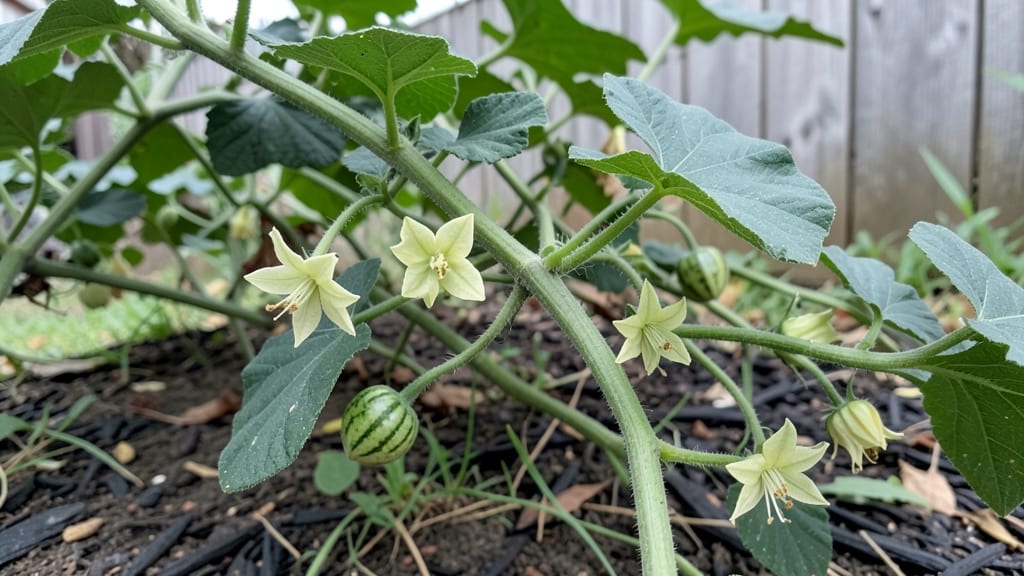
Cucamelon male flowers are the unsung heroes of your vine’s fruit production—without them, those tiny watermelon-like fruits would never appear. 🌱 I learned this the hard way when my first batch of cucamelons produced almost no fruit despite plenty of female flowers.
The secret lies in understanding their role: male flowers pollinate the female flowers, and their timing can make or break your harvest.
Here’s the thing—male flowers bloom first, often in clusters, while female flowers appear later with a tiny fruit at their base. Pruning off excess male flowers early can actually boost fruit production by directing the plant’s energy toward female flowers.
My plants now produce 3-4 times more fruit when I manage them this way, and the fruits stay crisp and sweet.
You’ll notice a difference within 2-3 weeks of proper pollination management: vines thicken, leaves darken, and those signature cucamelons start popping up like clockwork. The key is balance—too many male flowers waste energy, but too few mean poor pollination.
It’s a delicate dance, but once you get it right, your harvest will be consistently bountiful.
This works for both container growers and garden beds, though trellising helps keep vines manageable. If you’re in a cooler climate, focus on protecting flowers from late frosts—they’re sensitive but resilient once established. Let’s get those vines pollinating like pros!
📚 In This Guide
- What you need
- Instructions
- Tips and common mistakes
- Wrapping up and next steps
What you need
- ● Cucamelon seeds or seedlings: Choose var. flexuosus (the classic cucamelon) or var. aculeatus for best results. Aim for 3–5 plants to ensure cross-pollination.
- ● Growing containers or garden bed: Containers: 5–7 gallon pots with drainage holes (1 per plant). Use lightweight, breathable materials like fabric grow bags or terracotta.
- ● Garden bed: Full sun (6+ hours/day) and well-draining soil with a pH of 6.0–6.8. Amend clay soil with compost or perlite.
- ● Potting mix: High-quality, sterile mix with 50% compost and 50% coco coir or peat moss for moisture retention and aeration.
- ● Fertilizer: Starting: Balanced liquid fertilizer (e.g., 10-10-10) at half-strength when seedlings sprout.
- ● Growth: Switch to a high-potassium fertilizer (e.g., 5-10-10) once flowers appear to encourage fruiting.
- ● Watering can or drip irrigation: With a fine rose nozzle to avoid damaging delicate flowers.
- ○ Hand lens or magnifying glass: (Optional but helpful!) For spotting male flowers (they’re tiny—1/4 inch long—and have a single stamen).
- ● Pruning shears: Sharp, sterilized shears for removing spent flowers or excess vines.
- ● Trellis or tomato cages: To support vines and improve airflow (cucamelons can grow 6–10 feet!).
- ● Temperature: Ideal range is 70–90°F (21–32°C). Avoid planting until soil is at least 60°F (15°C)—cucamelons hate cold!
- ● Humidity: Moderate to high (40–70%). Use a humidity tray or misting bottle in dry climates.
- ● Sunlight: Full sun is non-negotiable. Partial shade may reduce male flower production.
- ● Pollinators: While you can hand-pollinate, bees and butterflies are your best friends! Plant companion flowers like marigolds or nasturtiums nearby to attract them.
- ● Growth chart or journal to track male vs. female flowers (male flowers appear 2–3 weeks before females).
- ● Organic mulch (straw or shredded leaves) to retain moisture and suppress weeds.
- ● Shade cloth (30–50%) for hot afternoons in Zone 9+ to prevent flower drop.
- ● Spray bottle with neem oil (1 tsp per quart of water) to deter pests like aphids or spider mites.
Step-by-Step guide to managing cucamelon male flowers for optimal fruit set
Here’s how to leverage cucamelon male flowers to boost pollination and harvest more of those tiny, lime-sized fruits.
🌿 Step 1: Identify and Preserve Male Flowers
Male cucamelon flowers appear first and have a slender stem with no swelling at the base—unlike female flowers, which develop into fruit. I pluck male blooms in the morning when they’re fully open but still firm, then gently remove the petals to expose the pollen.
Place the de-petaled male flowers on a paper towel in a cool, dry spot for 24 hours. This preserves the pollen while preventing premature degradation. You’ll need about 5-10 male flowers per female bloom for successful pollination—more if your garden is wind-protected.
💧 Step 2: Hand-Pollinate Female Flowers
Female flowers appear later and have a tiny bump at the base where the fruit will form. On a cloudy morning or late afternoon, use a soft paintbrush to transfer pollen from the preserved male flowers onto the female flower’s stigma. Dip the brush into the pollen, then gently stroke the center of each female bloom.
Do this every 2-3 days during peak blooming season (late spring to early fall). You’ll notice female flowers wilt slightly after pollination—that’s normal. Within 5-7 days, the bump will swell into a cucamelon if pollination succeeded.
☀️ Step 3: Optimize Growing Conditions for Pollinators
Even with hand-pollination, native bees and hoverflies can triple your yield. Plant cucamelons near dill, fennel, or marigolds—these attract pollinators. I also avoid pesticides, as even "organic" sprays can repel beneficial insects.
Ensure your cucamelons receive 6-8 hours of direct sunlight and well-draining soil (they hate soggy roots). If your garden lacks pollinators, supplement with a small electric fan set on low—it mimics wind and helps pollen transfer naturally.
⏰ Step 4: Monitor and Adjust for Peak Fruit Set
Check female flowers daily for signs of pollination failure: if the bump doesn’t swell after 7-10 days, hand-pollinate again. Overripe or dropped flowers mean either insufficient pollen or poor growing conditions. I’ve found that morning pollination yields the highest success rate.
Once fruit forms, thin excess cucamelons to 2-3 per vine to avoid overburdening the plant. Harvest when they’re 1-1.5 inches long—they turn from green to yellow as they ripen, but taste best when still firm.
Tips & tricks for perfect cucamelon pollination
Here's what I've learned after years of experimenting with cucamelon pollination—these tricks will help you maximize fruit set and avoid common pitfalls.
Timing Secret: The 24-hour pollen preservation window in Step 1 is your best friend. I've found that collecting male flowers in the early morning (before 9 AM) when they're fully open but still firm yields the most viable pollen. If you're short on time, you can extend this to 36 hours in a refrigerator (optional), but don't go beyond that or the pollen loses potency. Store them in a sealed container with a paper towel to absorb any excess moisture.
Pollination Technique: When transferring pollen to female flowers in Step 2, use a clean paintbrush each time to prevent cross-contamination between different plants. I've noticed that gently tapping the brush against the stigma three times (rather than one stroke) increases success rates. Also, work on cloudy mornings when humidity is lower—this helps pollen adhere better to the stigma.
Environmental Optimization: The 6-8 hours of sunlight mentioned in Step 3 is non-negotiable for cucamelons. I've seen plants in partial shade produce 40% fewer fruits. For containers, place them where they'll get morning sun and afternoon shade during peak summer months. If you're using a fan for pollination, position it about 12 inches away from the plants and run it on low—too much wind can damage delicate flowers.
Visual Cues for Success: After pollination in Step 4, look for these signs: the female flower's bump should start swelling within 3-4 days, and the petals will begin to yellow slightly. If you see flowers dropping after 5-7 days without swelling, that's your cue to hand-pollinate again. I keep a small notebook to track which flowers I've pollinated and when—this helps me spot patterns in my garden's productivity.
Pro Tips for Cucamelon Male Flowers
- Here's what I've learned after years of experimenting with cucamelon pollination—these tricks will help you maximize fruit set and avoid common pitfalls.
- Timing Secret: The 24-hour pollen preservation window in Step 1 is your best friend.
- Pollination Technique: When transferring pollen to female flowers in Step 2, use a clean paintbrush each time to prevent cross-contamination between different plants.
Frequently asked questions
When do cucamelon male flowers appear?
Male cucamelon flowers typically bloom 2-4 weeks after planting and appear first in clusters near leaf nodes. They’re small, white, and lack ovaries (no fruit potential). Monitor plants closely—females follow shortly after!
Why aren’t there any male flowers on my cucamelon?
If your plant skips male flowers, check these factors:
- Light: Needs 6+ hours of full sun daily.
- Heat: Males thrive in 70–85°F; cooler temps delay blooms.
- Age: Young plants (<30 days) may not flower yet.
How can I help pollinate male flowers for better fruit?
Cucamelons rely on bees, but you can assist!
- Gently brush male stamens onto female flowers (tiny, teardrop-shaped with a bump).
- Plant bee-friendly flowers nearby (e.g., marigolds, basil).
- Avoid pesticides—neonicotinoids harm pollinators.
Can I save seeds from cucamelons with male flowers?
Yes! Male flowers aren’t needed for seed-saving—focus on female flowers (they develop into fruit). Let 1–2 fruits fully ripen (yellow/orange), scoop seeds, rinse, and dry. Store in a cool, dark place. Pro tip: Cross-pollination can occur, so isolate plants if preserving heirloom varieties.
What if my cucamelon only has female flowers?
This is rare but possible! Female-only plants may result from:
- Genetic quirks (some varieties lean female-heavy).
- Over-fertilizing with high nitrogen (promotes leaves, not flowers).
- Stress (drought or transplant shock).
Wrapping up and next steps
Growing cucamelons is all about understanding their unique pollination process—especially those male flowers that kickstart the magic! 🌱 With the right knowledge, you can boost your harvest and enjoy these tiny, tangy treasures all season long.
Now that you’re armed with tips on hand-pollination, companion planting, and troubleshooting, it’s time to roll up your sleeves and give your cucamelon vines the care they deserve.
Ready to watch your garden thrive? Start by planting a few more vines this season and experiment with the techniques you’ve learned. Happy gardening—your taste buds (and your plants!) will thank you! 🌿✨