
Pruning
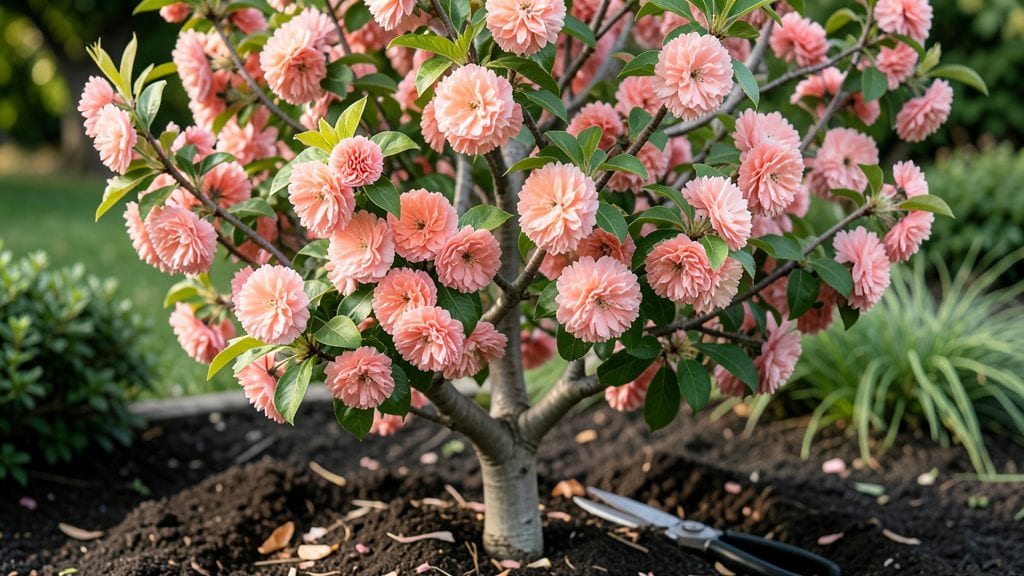
Growing a Corinthian Pink Double Flowering Peach Tree in the Pacific Northwest means waking up to clouds of blush-pink blossoms that last for weeks—not just days. 🌸 I planted mine last spring, and the way the petals stack in layers like confetti caught me off guard.
This isn’t your average peach tree; it’s a showstopper that doubles as an edible landscape, though the fruit stays small and tart.
The secret to those dramatic blooms starts with the right spot—full sun for at least 6 hours daily, even in cloudy PNW summers. Your soil needs to drain like a sieve (amend heavy clay with compost), and a sheltered location protects the delicate flowers from wind.
Pruning in late winter shapes the tree while encouraging next year’s blooms—think of it as sculpting a living chandelier.
By summer, you’ll have a tree covered in rosy-pink layers that hum with pollinators, followed by clusters of tiny peaches that birds adore. The trade-off? This tree prioritizes flowers over fruit, but the visual payoff is unmatched. Even in rainy seasons, the blooms hold their own with proper care.
For PNW gardeners, timing is everything—plant in early spring or fall when roots can establish before winter’s chill. Mulch heavily to protect roots, and watch how the branches arch under the weight of blossoms. It’s not just a tree; it’s a seasonal masterpiece that turns your yard into a postcard.
📚 In This Guide
- What you need
- Instructions
- Tips and common mistakes
- Wrapping up and next steps
What you need
- ● Pruning Shears: Bypass pruners (sharp, clean, and sterilized with rubbing alcohol to prevent disease spread). Quantity: 1 pair
- ● Loppers: For thicker branches (16–24" cutting capacity). Quantity: 1 pair
- ● Pruning Saw: For branches >2" in diameter (avoid bolt-cutters—they crush wood!). Quantity: 1
- ● Gloves: Heavy-duty, cut-resistant gloves (protects from thorns and sap). Quantity: 1 pair
- ● Disposable Pruning Bags: 3–5 gallon capacity (for debris collection). Quantity: 2–3 bags
- ● Rubbing Alcohol (70%+) or Bleach Solution: 1 part bleach to 9 parts water (for sterilizing tools). Quantity: Small bottle or spray bottle
- ○ Sealing Wax or Pruning Paint: Optional but highly recommended for large cuts (>½") to prevent disease. Quantity: Small tube
- ○ Extension Pole: 6–10 ft (for high branches). Quantity: 1 (optional)
- ● Work Apron or Pouch: For tool organization (keeps hands free!). Quantity: 1
- ● Weather: Prune on a dry, overcast day (avoid wind or rain to reduce stress on the tree).
- ● Timing: Best for late winter/early spring (before buds swell) or summer (post-flowering, if needed).
- ○ Safety Gear: Safety glasses (optional but smart for debris).
- ● Tree Health Check: Inspect for pests/disease before pruning (treat if needed).
- ● Local Regulations: Check if your area requires permits for large tree work.
How to cultivate a thriving corinthian pink double flowering peach tree
Here’s how to nurture this stunning Pacific Northwest showstopper—step by step.
🌱 Step 1: Select the Perfect Planting Site
The Corinthian Pink Double blooms best in full sun (at least 6-8 hours daily), but in the Pacific Northwest, you’ll need to balance sun exposure with afternoon shade to prevent leaf scorch. Choose a spot with well-draining soil—these trees hate soggy roots. I dig a hole twice as wide as the root ball but only as deep, then loosen the native soil around it to encourage root spread.
If your yard has heavy clay, mix in 3-4 inches of compost into the bottom of the hole. This tree thrives in USDA Zones 5-8, so if you’re in a cooler microclimate, plant it against a south-facing wall for extra warmth. The first year is critical—watch for new shoots emerging from the graft union (about 12-18 inches above ground). These indicate strong root establishment.
☀️ Step 2: Plant and Stake for Stability
Remove the tree from its container and gently tease the roots outward if they’re circling. Place it in the hole so the graft union sits 2-3 inches above soil level—this prevents soil from smothering it later. Backfill with native soil, firming lightly as you go to eliminate air pockets. Water deeply to settle everything, then add 2 inches of mulch (keeping it 6 inches away from the trunk to avoid rot).
Stake the tree only if needed—these trees grow 6-10 feet tall and can flop in windy Pacific Northwest gardens. If staking, use two stakes on opposite sides, tied loosely with soft tree ties (not wire). Prune only to remove any broken branches or suckers at the base. The first year, focus on watering deeply every 7-10 days (until the top 6 inches of soil feel dry). Overwatering here leads to root rot faster than you’d think.
💧 Step 3: Water and Fertilize for Peak Bloom
In the first two growing seasons, water once a week during dry spells, aiming for 1-1.5 gallons per watering. After that, reduce to every 10-14 days unless your area sees prolonged heatwaves. The Corinthian Pink Double rewards consistency—deep, infrequent watering encourages strong root growth and vibrant blooms. I always check soil moisture by hand: if the top 2 inches feel dry, it’s time to water.
Feed lightly in early spring with a balanced 10-10-10 fertilizer (about ½ cup per tree), then switch to a low-nitrogen, high-phosphorus formula (like 5-10-10) in late winter to boost flowering. Avoid high-nitrogen fertilizers—they’ll give you leaves, not those layered pink blossoms. Prune spent flowers in early summer to encourage repeat blooming through fall. Here’s the thing—this tree’s beauty comes from its double blooms, so resist the urge to prune heavily.
✂️ Step 4: Prune for Structure and Health
Prune only in late winter or early spring (before buds swell) to avoid spreading disease. Remove dead, crossing, or inward-growing branches first—these compete for energy and weaken the tree. Thin out 10-15% of the canopy each year to improve airflow, which is crucial in humid Pacific Northwest summers. I always use clean, sharp pruners and sterilize them with rubbing alcohol between cuts.
Watch for suckers (shoots growing from the base or below the graft) and remove them immediately—they drain energy from the main tree. The goal is to shape a balanced, open center that lets light reach all branches. After pruning, apply a copper fungicide spray as a preventive measure against peach leaf curl, a common fungal issue in wet climates. You’ll see new growth within 4-6 weeks—that’s your signal the tree is recovering well.
🪴 Step 5: Protect and Maintain for Long-Term Beauty
In the Pacific Northwest, winter chilling hours (below 45°F) are essential for this tree to bloom reliably. If you’re in a mild microclimate, consider lightweight frost cloth on young trees during unexpected freezes. Mulch annually in late fall, adding 1-2 inches to insulate roots. The Corinthian Pink Double’s double flowers make it a standout, but they’re also heavy—stake young branches if they droop under bloom weight.
Monitor for aphids or peach tree borers, common pests in the region. A strong hose spray usually dislodges aphids, while borers require manual removal of infested branches. This tree’s layered blooms are its signature—don’t let pests or poor care dull its impact. With the right site and attention, it’ll reward you with months of color, from spring through fall. Real talk: the first year is the hardest, but once established, it’s low-maintenance and stunning.
Tips & tricks for perfect corinthian pink double flowering peach tree cultivation
Here's what I've learned from years of growing these showstopping trees in Pacific Northwest gardens.
Site Selection Secret: The 6-8 hours of sun requirement is non-negotiable for vibrant blooms, but I've found the afternoon shade is just as critical. In my experience, positioning the tree where it gets morning sun and afternoon shade prevents leaf scorch while still encouraging those signature double blooms. Look for spots where the sun hits before 2 PM—this balance is what makes the difference between a struggling tree and one that thrives.
Root Establishment Check: Those new shoots emerging from the graft union after planting are your best indicator of success. I've seen trees with perfect planting techniques fail because the roots weren't establishing properly. Watch for these shoots between 12-18 inches above ground—they tell you the roots are spreading and the tree is getting settled. If you don't see them within 4-6 weeks, it's time to investigate soil moisture or drainage.
Watering Wisdom: The deep, infrequent watering approach is crucial, but timing matters just as much. Water in the morning so the foliage has all day to dry, which helps prevent fungal issues common in our humid climate. I've learned the hard way that watering in the evening can lead to prolonged moisture on leaves, inviting peach leaf curl. Those 1-1.5 gallons per watering should penetrate down to 12 inches—use a soil probe to check if you're unsure.
Pruning Precision: When thinning that 10-15% of the canopy each year, focus on branches that cross or grow inward. These create rubbing points that weaken the tree and invite disease. I always make cuts just outside the branch collar where the branch meets the trunk—this promotes faster healing. And remember, the goal is an open center that lets light reach all branches, which is especially important for our dense Pacific Northwest summers.
Pro Tips for Corinthian Pink Double Flowering Peach Tree
- Here's what I've learned from years of growing these showstopping trees in Pacific Northwest gardens.
- Site Selection Secret: The 6-8 hours of sun requirement is non-negotiable for vibrant blooms, but I've found the afternoon shade is just as critical.
- Root Establishment Check: Those new shoots emerging from the graft union after planting are your best indicator of success.
Frequently asked questions
Got questions about your Corinthian Pink Double Flowering Peach Tree? You’re not alone!
Here are some of the most common queries from gardeners in the Pacific Northwest—plus expert answers to keep your tree thriving and blooming beautifully.
When is the best time to prune my Corinthian Pink Double Flowering Peach Tree?
Prune your tree late winter or early spring (before buds swell) to avoid damaging new blooms. In the PNW, aim for February or March when the tree is still dormant but frost risks have passed. Avoid pruning after flowering to preserve next year’s blossoms!
How cold-hardy is this tree, and will it survive PNW winters?
This peach cultivar is USDA Zone 5-8 hardy, making it a great fit for most of the PNW. However, young trees or extreme cold snaps (below 10°F) may need winter protection, like wrapping the trunk with burlap or using frost cloth. Mulch the base with straw or wood chips for extra insulation!
Will my Corinthian Pink Double Flowering Peach Tree produce edible peaches?
While it’s primarily grown for its stunning double pink blooms, some gardeners report small, tart peaches—though they’re not typically sweet or juicy enough for fresh eating. If you want edible peaches, consider planting a separate variety like ‘Redhaven’ nearby for pollination!
What pests or diseases should I watch for in the Pacific Northwest?
Common PNW threats include:
- Peach leaf curl (fungal disease): Treat with copper fungicide in late fall or early spring.
- Japanese beetles: Handpick or use neem oil sprays.
- Aphids or scale insects: Blast off with water or apply insecticidal soap.
Can I grow this tree in a container, or does it need to be planted in the ground?
While possible in large containers (20+ gallons)
, this tree thrives best in the ground due to its spreading roots and need for winter hardiness. If container-grown, ensure:- Well-draining soil (mix in perlite or sand).
- Full sun exposure (6+ hours daily).
- Winter protection (move indoors if temps drop below 15°F).
Wrapping up and next steps
The Corinthian Pink Double Flowering Peach Tree is a stunning addition to Pacific Northwest gardens, offering layered blooms and year-round interest with its vibrant pink flowers and lush foliage.
By mastering pruning techniques—like selective thinning and structural shaping—you’ll ensure healthy growth, abundant blossoms, and a tree that thrives in your climate. Ready to transform your garden? Grab your tools and start pruning today! 🌸✂️
- Next step: Schedule your first pruning session in early spring (before buds swell) or late winter.
- Pro tip: Mark your calendar for summer pruning to maintain shape and airflow.