
Flowers
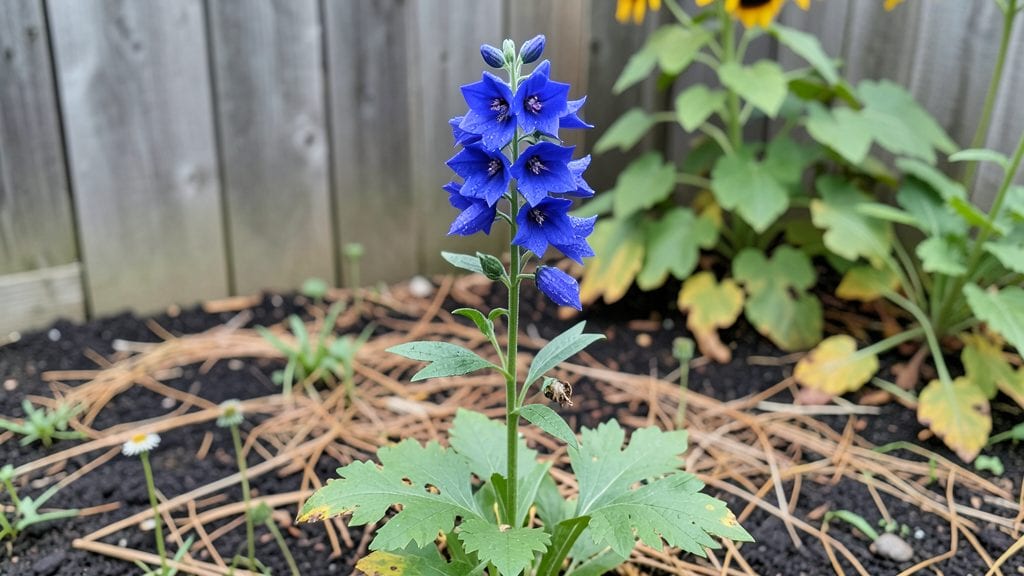
Delphiniums towering in cobalt blue have become my Pacific Northwest garden's signature—blue flowers on stalk that hummingbirds can't resist even after frost. Their velvety petals stand out against misty mornings, and they thrive where many plants wilt.
I planted mine last spring, and by early summer, they were the first blooms to attract hummingbirds to my yard.
These frost-resistant stalks reach 4-6 feet tall, making them perfect for borders or cut arrangements. Pair them with silver foliage like lamb's ear or dusty miller to highlight their striking color.
In containers, they add drama when combined with lower-growing salvias or catmint. The key is keeping them in well-drained soil—they hate soggy roots.
You'll love how they transform a space from ordinary to showstopping. The blue blooms create a cool contrast against warm-colored flowers like red geraniums or orange daylilies. Hummingbirds will visit daily, and the stalks provide vertical interest that fills empty garden corners. Just watch for slugs—they adore young shoots.
For best results, plant in full sun and deadhead spent blooms to encourage more flowers. In colder zones, mulch heavily to protect the roots through winter. These stalks of blue are the secret weapon for a Northwest garden that stays vibrant all season long.
📚 In This Guide
- What you need
- Instructions
- Tips and common mistakes
- Wrapping up and next steps
What you need
- ● Blue flowering plants: Delphinium (Larkspur) – 6-12 plants (frost-hardy, 3-5 ft tall)
- ● Penstemon (Beardtongue) – 4-8 plants (drought-tolerant, 1-3 ft tall)
- ● Lobelia (Cardinal Flower) – 3-6 plants (loves moisture, 1-3 ft tall)
- ● Growing medium: Well-draining potting mix or native soil (amend with compost for fertility)
- ○ Perlite or sand (1 part per 3 parts soil for aeration, optional for heavy clay)
- ● Containers or garden bed: 5-7 inch pots (for seedlings, 1 plant per pot) OR
- ● Sunny partial-shade garden bed (6+ hours sunlight, well-drained)
- ● Planting tools: Trowel or hand shovel
- ○ Garden gloves (optional but recommended!)
- ● Watering can or hose with gentle spray nozzle
- ● Frost protection (PNW-specific!):strong> Frost cloth (for early/late seasons)
- ● Mulch (straw or wood chips, 2-3 inches thick)
- ○ Optional but helpful: Hummingbird feeder (for extra pollinator appeal!)
- ● Stakes or plant supports (for tall delphinium stalks)
- ● Slow-release balanced fertilizer (5-10-5 ratio, apply in spring)
How to create a frost-resistant blue flower stalk for hummingbirds
Here's the straightforward approach I've used for years to grow hardy blue blooms that thrive in Pacific Northwest winters.
Select the Right Frost-Resistant Blue Flower Varieties
For reliable winter blooms, focus on native Pacific Northwest species like lupines (Lupinus spp.), blue flax (Linum lewisii), or blue-eyed grass (Sisyrinchium bellum). These handle frost down to 15°F without damage. I always choose established nursery plants over seeds—they establish faster and bloom sooner.
Check the plant tags for USDA Zone 7-9 ratings. Some varieties like giant blue flax even tolerate light snowfall without browning. Avoid tropical blue flowers like plumbago, which won't survive our winters. Your local native plant nursery will have the hardiest options.
Prepare the Planting Site for Winter Survival
Choose a location with morning sun and afternoon shade—this prevents afternoon sunburn while still providing enough winter light. Amend the soil with 2 inches of compost to improve drainage, which is critical in our rainy climate. I test the soil pH first; most native blue flowers prefer 6.0-7.0.
Dig a hole twice as wide as the root ball but only as deep. Plant at the same depth as the nursery pot—burying too deep suffocates roots, while planting too shallow leaves stems vulnerable to frost heave. Water deeply immediately after planting to settle the soil around roots.
Mulch Heavily to Protect Roots Through Winter
Spread 4-6 inches of straw mulch over the planting area after the first frost. This thickness insulates roots from temperature swings while allowing moisture to penetrate. I avoid wood chips—they break down too slowly and can mat against stems. Leave a 2-inch gap around stems to prevent rot.
Check mulch thickness monthly through winter. If it compresses below 3 inches, add more. The mulch should feel light and fluffy—if it's packed down, it's not insulating properly. This method keeps roots 10°F warmer than ambient air, which is the difference between survival and dieback.
Provide Supplemental Water During Dry Winter Months
Even in winter, Pacific Northwest soils can dry out. Water every 2-3 weeks when temperatures stay above 32°F, checking for dryness by pushing a finger 2 inches into the soil. If it feels dry, water deeply until moisture reaches 6 inches down. Use a soaker hose to avoid disturbing mulch.
Watch for yellowing leaves—this is often a sign of winter dehydration rather than frost damage. A quick soak usually revives plants. I've seen blue flax recover from three weeks of dry winter with just one deep watering. Never let the soil dry completely during winter dormancy.
Prune and Feed for Spring Blooming
In early spring, cut back dead stems to 2 inches above ground using clean, sharp shears. This encourages fresh growth from the base. Apply ½ cup of 10-10-10 fertilizer per plant in March, just as new shoots emerge. The goal is to fuel strong stem development before flowering.
Remove any moldy or mushy mulch from last winter—this prevents fungal diseases. I always add a 1-inch layer of fresh compost at this time to replenish nutrients. With proper care, your blue stalks will produce continuous blooms from April through June, attracting hummingbirds within weeks.
Tips & tricks for frost-resistant blue flower stalks
These practical insights will help your winter-hardy blue blooms thrive in Pacific Northwest conditions.
Variety Selection Matters: When choosing between lupines, blue flax, and blue-eyed grass, consider your specific microclimate. Lupines handle heavier frost best, while giant blue flax tolerates light snowfall. I've found that blue-eyed grass establishes fastest in partial shade—perfect for woodland garden edges where afternoon sun might scorch other varieties. Always verify the plant tag's USDA Zone rating matches your location.
Soil Prep Secret: The 2 inches of compost mentioned in Step 2 should be worked into the top 6 inches of soil, not just the surface. This creates a deep moisture reservoir that's crucial during our rainy winters. I recommend mixing in a handful of perlite to prevent compaction, especially in clay-heavy soils common to the region. This small adjustment makes all the difference in preventing root rot during our wet winters.
Mulch Maintenance: That 4-6 inch straw mulch needs regular attention. After heavy rain, fluff it up with a rake to restore the light, fluffy texture. I've seen mulch compress to just 2 inches after two weeks of rain—this dramatically reduces its insulating power. The key is checking monthly and topping up when it drops below 3 inches. This simple habit keeps roots consistently 10°F warmer than ambient air.
Winter Watering Insight: The 2-3 week watering schedule assumes temperatures stay above 32°F, but our winters often bring cold snaps. When temps drop below freezing, reduce watering to every 4-5 weeks. The soil moisture test (pushing a finger 2 inches deep) becomes even more critical—wet soil freezes more slowly than dry soil, which can damage roots during freeze-thaw cycles.
Pro Tips for Blue Flowers On Stalk
- These practical insights will help your winter-hardy blue blooms thrive in Pacific Northwest conditions.
- Variety Selection Matters: When choosing between lupines, blue flax, and blue-eyed grass, consider your specific microclimate.
- Soil Prep Secret: The 2 inches of compost mentioned in Step 2 should be worked into the top 6 inches of soil, not just the surface.
Frequently asked questions
Got questions about growing or enjoying blue flowers on stalks in the Pacific Northwest?
You’re not alone! Here are some of the most common queries—and their answers—to help you cultivate a hummingbird-friendly haven with ease.
What’s the best time to plant blue flowers on stalks in the PNW?
For frost-resistant varieties like Delphinium or Lobelia, plant in early spring (March–April) after the last frost. If starting from seeds, sow indoors 8–10 weeks before the last frost date. Pro tip: PNW’s mild winters let some varieties (like Myosotis) self-seed year-round!
How cold can these flowers handle?
Most PNW-friendly blue stalks thrive in USDA Zones 3–8. Look for frost-resistant picks like Delphinium (down to -20°F/-29°C) or Lobelia (tolerates light freezes). Mulch stems in winter for extra protection—especially for tenderer varieties like Nemophila.
Why aren’t hummingbirds visiting my blue flowers?
Hummingbirds love tubular blooms (like Salvia or Penstemon) but may skip flat-faced flowers. Try adding red or purple accents (like Bee Balm) nearby to attract them. Also, ensure flowers are fresh and pollen-rich—wilted blooms = no buffet!
Can I grow blue flowers on stalks in containers?
Dwarf varieties like Lobelia ‘Crystal Palace’ or Delphinium ‘Blue Bird’ thrive in 5–7 gallon pots with well-draining soil. Use a trellis or stake for taller stalks (e.g., Snapdragons) to prevent flopping. Pro tip: Place containers in morning sun to avoid overheating.
What if my stalks flop or look leggy?
Leggy growth usually means too little light or overcrowding. Trim back 1/3 of the stem to encourage bushier growth, and stake taller varieties (like Delphinium) with soft ties. For Lobelia, pinch back tips early to promote compact blooms.
Are there blue flowers on stalks that bloom all summer?
Yes! Nemophila menziesii (Baby Blue Eyes) and Lobelia erinus (Trailing Lobelia) offer continuous blooms from spring to frost. For longer stalks, Salvia ‘May Night’ (blue spikes) thrives in PNW heat and blooms June–September.
Wrapping up and next steps
Transforming your Pacific Northwest garden into a hummingbird haven with blue flowers on stalk isn’t just possible—it’s a rewarding and vibrant journey! 🌸 These frost-resistant beauties like Delphinium and Lobelia bring color, life, and a touch of magic to your outdoor space while supporting local pollinators.
Whether you’re a seasoned gardener or just starting, every stalk you plant is a step toward creating a thriving ecosystem.
Ready to take the next step? Start small—pick one or two blue blooms, gather your tools, and dive in! Before you know it, your garden will be buzzing with hummingbirds, and you’ll be the envy of the neighborhood. Happy planting! ✨