
Flowers
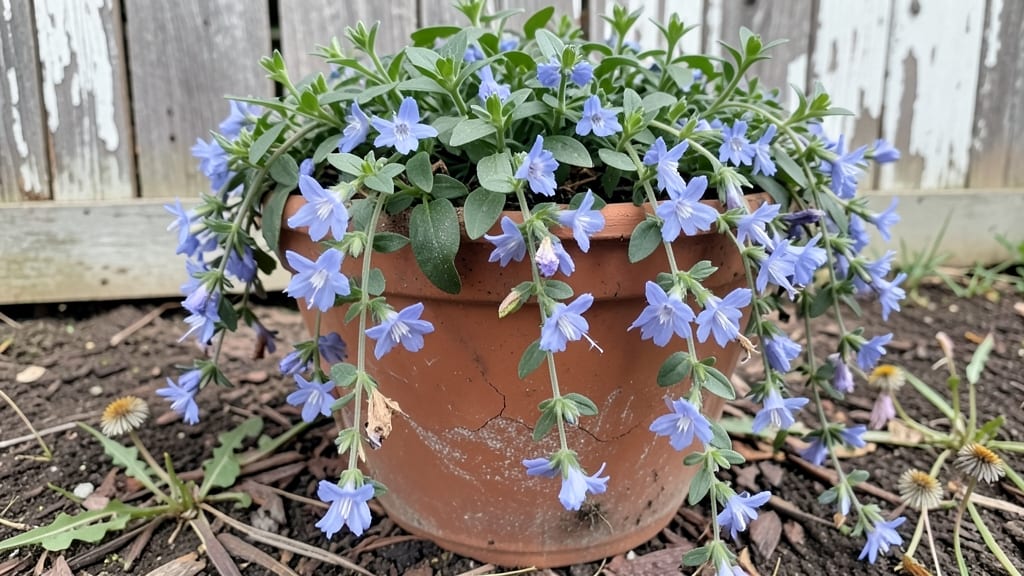
That first flush of Blue Enchantment flowers in your Pacific Northwest garden doesn’t just stop eyes—it stops time. 🌿 The deep cobalt blooms stand out against misty mornings and rainy afternoons, turning even a simple border into a showstopper.
I planted mine last spring after seeing how they transformed a neighbor’s dull corner into a year-round magnet for hummingbirds and butterflies.
What makes this flower special isn’t just its color—it’s the way it works in any design. Pair it with silver foliage for a modern look, or tuck it into a cottage garden with lavender and roses for soft contrast.
The blooms last from early summer through fall, and with proper placement, they’ll even peek through winter’s bare branches. My favorite trick? Planting them near a seating area where the color pops against green chairs.
You’ll end up with a garden that feels alive all year, where every season gets a fresh palette. The flowers attract pollinators like crazy, and their deep hue makes other plants look brighter by comparison.
It’s the kind of impact that makes neighbors ask, “What’s that striking blue?”—and then you get to brag about your secret weapon.
Works in containers, borders, or even as a standalone specimen. Whether you’re going for drama or subtle elegance, this flower delivers. Let’s talk placement and pairings next—trust me, you’ll want to see these in action.
📚 In This Guide
- What you need
- Instructions
- Tips and common mistakes
- Wrapping up and next steps
What you need
- ● Blue Enchantment Flower seeds or rooted cuttings: 1–2 plants (or seeds) per pot/location for optimal growth.
- ● Ensure they’re Lobelia erinus ‘Blue Enchantment’ (the variety known for its vibrant blue blooms!).
- ● Well-draining potting mix: 1–2 gallons per pot (or 1 cubic yard for in-ground planting).
- ○ Optional: Mix in perlite or sand (10–20%) for extra drainage.
- ● Containers (if not planting in-ground): 6–12-inch pots with drainage holes (1–2 plants per pot).
- ● Pro tip: Terracotta pots help prevent root rot! 💡
- ● Basic gardening tools: Trowel or small shovel (for transplanting).
- ● Pruning shears (for trimming dead blooms or shaping).
- ● Gloves (to protect your hands—those tiny leaves can be prickly!).
- ● Sunlight & location: Partial shade to full sun (4–6 hours of sunlight daily).
- ● Protected spot from harsh winds (especially in coastal PNW areas).
- ● Watering supplies: Watering can or hose with a gentle spray nozzle.
- ● Note: Keep soil consistently moist but not soggy!
- ○ Fertilizer (optional but recommended): Balanced liquid fertilizer (10-10-10 or 20-20-20, diluted to half-strength).
- ● Apply every 4–6 weeks during the growing season.
Step-by-step guide to planting and caring for Blue Enchantment flower
This stunning Pacific Northwest favorite thrives with the right approach—here’s how to make it your garden’s showstopper.
🪴 Step 1: Choose the Perfect Location and Soil
Blue Enchantment flowers adore partial shade to full sun, but in the PNW’s humid summers, morning sun with afternoon shade prevents leaf scorch. I always pick a spot with well-draining soil—these beauties hate soggy roots. Amend heavy clay with 2-3 inches of compost to improve aeration and moisture retention.
Dig a hole twice as wide as the root ball but no deeper. The top of the root ball should sit level with the surrounding soil—burying too deep suffocates the plant. Water the hole thoroughly before planting to help roots settle into moist soil.
🌱 Step 2: Plant and Water for Strong Establishment
Gently remove the plant from its container and loosen any circling roots with your fingers. Place it in the hole, backfilling with soil while pressing lightly to eliminate air pockets. Water deeply right after planting—1 gallon per plant—to encourage root spread.
Here’s the thing—Blue Enchantment flowers need consistent moisture during their first 6-8 weeks to establish roots. Mulch around the base with 2-3 inches of organic mulch (like shredded bark) to lock in moisture and keep roots cool. Watch for yellowing leaves—this usually means overwatering or poor drainage.
☀️ Step 3: Feed and Prune for Year-Round Blooms
Feed your plant once in early spring with a balanced 10-10-10 fertilizer (about 1 tablespoon per plant) to kickstart growth. In the PNW’s mild climate, you can give a light feeding in late summer too—just half the spring dose. Over-fertilizing leads to lush foliage but fewer flowers.
Deadhead spent blooms weekly to encourage continuous flowering. Use clean pruners to snip just above a set of leaves. In late winter, prune back one-third of the plant’s height to shape it and remove weak growth. This keeps the plant compact and bushy—exactly how Blue Enchantment looks in catalog photos.
💧 Step 4: Adjust Care for Seasonal Changes
Summer in the PNW can be wet, so reduce watering to once a week unless the soil feels dry 2 inches below the surface. In winter, cut back to every 2-3 weeks—these plants are drought-tolerant once established but still need occasional hydration.
Frost won’t harm Blue Enchantment, but heavy snow can damage stems. Gently brush off accumulation, and avoid pruning until late winter when new growth appears. You’ll know it’s ready for a fresh trim when you see buds forming at the tips—that’s your cue to shape it for spring.
✂️ Step 5: Divide and Propagate Every 3-4 Years
Blue Enchantment spreads slowly but benefits from division every 3-4 years to rejuvenate growth. Wait until early spring before new shoots appear. Dig up the entire clump, separate sections with clean pruners or a sharp knife, and replant the best-looking divisions immediately.
This is the moment that matters: Keep divisions in shade for the first 2 weeks after transplanting. Water them daily until roots establish—you’ll see new leaves in 3-4 weeks. The older clump will bounce back with fresh vigor, and you’ll have extra plants for friends or problem spots in your garden.
Tips & tricks for perfect Blue Enchantment flower care
Real talk: The difference between a thriving Blue Enchantment and one that struggles often comes down to these simple but critical steps.
Location Intelligence: That "partial shade to full sun" recommendation isn't just flexible—it's strategic. In the PNW's humid summers, I've learned the hard way that afternoon sun can scorch the leaves. The ideal spot gets morning sun (for energy) but afternoon shade (for protection). If you're planting against a north-facing wall, you might get away with full sun all day.
Soil Prep Secret: The 2-3 inches of compost isn't just about nutrients—it's about creating the perfect texture. I mix in perlite or coarse sand if my native soil is too dense, which prevents that dreaded "soggy roots" issue. Test your soil's drainage by digging a hole, filling it with water, and seeing how long it takes to drain—if it's still wet after 2 hours, you need more amendments.
Watering Wisdom: Those first 6-8 weeks are make-or-break for root establishment. I set a reminder on my phone for the 1-gallon watering right after planting, then stick to the consistent moisture rule. The yellowing leaves warning sign is your plant's SOS—it means either overwatering (check for poor drainage) or underwatering (stick your finger 2 inches deep—if dry, water).
Pruning Precision: When you're pruning back one-third in late winter, aim for just above a leaf node where you see buds forming. This isn't about making your plant look neat—it's about encouraging new growth from those exact spots. I always prune with clean, sharp tools to prevent disease spread, and I never remove more than one-third at a time or you'll shock the plant.
Pro Tips for Blue Enchantment Flower
- Real talk: The difference between a thriving Blue Enchantment and one that struggles often comes down to these simple but critical steps.
- Location Intelligence: That "partial shade to full sun" recommendation isn't just flexible—it's strategic.
- Soil Prep Secret: The 2-3 inches of compost isn't just about nutrients—it's about creating the perfect texture.
Frequently asked questions
Got questions about the stunning Blue Enchantment Flower? You’re not alone! Here are some of the most common inquiries—plus quick, helpful answers to keep your garden (or your curiosity) blooming.
How cold-hardy is the Blue Enchantment Flower for Pacific Northwest winters?
The Blue Enchantment Flower (a cultivar of Heuchera) thrives in USDA Zones 4-9, making it perfect for PNW winters. With its thick, evergreen foliage, it survives down to -30°F—just mulch heavily in late fall for extra protection.
When is the best time to plant Blue Enchantment Flower in the Pacific Northwest?
For root establishment, plant in early spring (March–April) or early fall (September–October). Avoid summer heatwaves, which can stress young plants. If buying potted specimens, water deeply before transplanting to reduce shock.
Why aren’t my Blue Enchantment Flowers blooming as expected?
These beauties are foliage-focused, not flower stars! While they produce tiny, delicate blooms in late spring, their real magic is their vibrant, year-round leaves. If you crave more flowers, try pairing them with Heuchera ‘Palace Purple’ or Astilbe nearby.
Can I grow Blue Enchantment Flower in containers, and what’s the ideal soil mix?
Use a well-draining potting mix with perlite or sand (50% potting soil, 30% perlite, 20% compost). Containers should have drainage holes—these plants hate soggy roots. A 12-inch pot works for one plant, but larger pots = happier roots.
What’s a great alternative if I can’t find Blue Enchantment Flower?
Try these PNW-friendly Heuchera varieties for similar bold color and texture:
- Heuchera ‘Lime Rickey’ – Zesty lime-green leaves
- Heuchera ‘Plum Pudding’ – Deep burgundy foliage
- Heuchera ‘Fireworks’ – Variegated pink/white edges
Wrapping up and next steps
The Blue Enchantment Flower isn’t just a burst of color—it’s a symbol of resilience and natural beauty thriving in the Pacific Northwest’s ever-changing seasons.
Whether you’re drawn to its striking hues, its low-maintenance charm, or its ability to brighten any space, this flower proves that bold choices can bring joy year-round. 🌿✨
Ready to bring a little magic to your garden or home? Start small—plant a single Blue Enchantment in your yard, or add a cutting to a vase for an instant mood boost. The next step is yours: let its enchanting allure inspire your next gardening adventure!