
Flowers
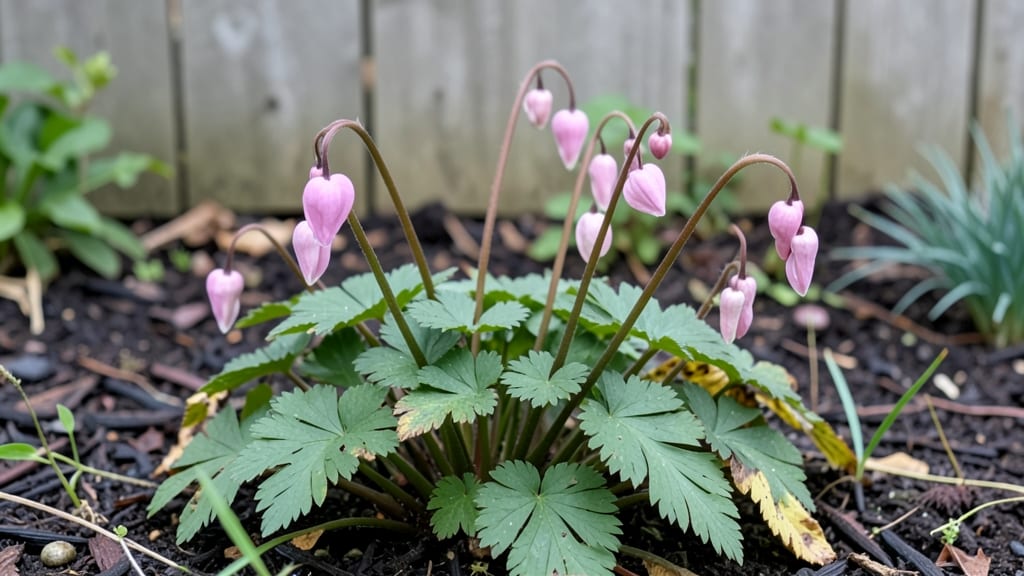
The bleeding heart flower transforms shady corners into dreamy, romantic displays with its delicate, heart-shaped blooms. 🌿 I remember the first time I planted mine—how it softened a dark garden corner with ethereal pinks and whites that lasted for weeks.
This shade-loving beauty thrives where most flowers struggle, making it the perfect solution for under trees or north-facing beds.
You’ll need a spot with partial to full shade, rich, well-draining soil, and consistent moisture. The key is planting in early spring or fall when the roots can establish before extreme heat or cold.
A 3-inch layer of mulch keeps roots cool and retains moisture, which is critical since bleeding hearts hate drying out.
By summer, you’ll be rewarded with arching stems laden with lacy foliage and heart-shaped flowers that sway in the breeze. The plant’s graceful habit makes it a standout in borders or containers, while its late-spring blooms provide a stunning contrast to spring bulbs.
With minimal care—just occasional deadheading and dividing every 3-4 years—this elegant perennial keeps coming back stronger. It’s the kind of plant that makes gardening feel effortlessly beautiful, year after year.
📚 In This Guide
- What you need
- Instructions
- Tips and common mistakes
- Wrapping up and next steps
What you need
- ● Bleeding heart plants: 1-3 nursery-grown plants (potted, 1-2 years old) or seeds (if starting from scratch).
- ● Pro tip: Choose Dicentra spectabilis for classic pink/white blooms or Dicentra eximia (fragrant bleeding heart) for a fragrant twist! 🌸
- ● Planting site: Partial to full shade (4+ hours of dappled light or filtered shade).
- ● Well-draining, moist but not soggy soil (amend with compost if needed).
- ● pH range: 6.0–7.0 (slightly acidic to neutral).
- ● Tools: Garden trowel or transplant spade.
- ○ Gloves (optional but recommended for soil handling).
- ● Watering can or hose with a gentle spray nozzle.
- ● Mulch (2–3 inches of shredded bark or leaves to retain moisture).
- ● Slow-release fertilizer (balanced 10-10-10 or organic options like composted manure).
- ● Epsom salt (1 tbsp per gallon of water monthly for magnesium boosts).
- ● Staking or small pebbles (to support heavy foliage in windy areas).
- ● Pruning shears (for deadheading spent blooms or shaping plants).
- ● Disease-resistant varieties (e.g., ‘Alba’ for white blooms or ‘Gold Heart’ for golden foliage).
How to grow bleeding heart flowers for stunning shade gardens
Here's how to cultivate these graceful perennials with arching foliage and heart-shaped blooms.
🌱 Step 1: Choose the Perfect Planting Location
Bleeding hearts thrive in partial to full shade—select a spot that receives morning sun with afternoon shade or dappled sunlight throughout the day. I always test the area by placing a white piece of paper under the leaves of nearby plants. If the paper stays mostly white after a few hours, the shade is adequate.
The ideal location also has well-draining soil with a slightly acidic to neutral pH (6.0-7.0). Amend heavy clay soil with 2-3 inches of organic compost or leaf mold to improve drainage and fertility. Avoid areas where water pools after rain, as soggy roots lead to root rot.
🪴 Step 2: Prepare the Soil and Plant Bare-Root Tubers
Dig a hole twice as wide as the root ball but only as deep as the top of the tuber. Bleeding hearts grow from bare-root tubers, not seeds, so handle them gently—never soak them before planting. The crown (where the roots meet the stem) should sit just below the soil surface—burying it too deep suffocates the plant.
Space plants 18-24 inches apart to allow for their lush, arching growth. Mix 1 cup of bone meal into the planting hole to provide slow-release phosphorus, which encourages strong root development. Water deeply after planting to settle the soil and remove air pockets.
☀️ Step 3: Provide Consistent Moisture and Mulch
Bleeding hearts demand consistent moisture—never let the soil dry out completely. Water 1-2 inches per week, adjusting for rain. I check soil moisture by inserting my finger 2 inches deep; if it feels dry, it's time to water. Overhead watering can cause fungal issues, so use a soaker hose or water at the base.
Apply 2-3 inches of mulch (like shredded bark or wood chips) around the base to retain moisture and suppress weeds. Keep mulch 2 inches away from the crown to prevent rot. Mulch also insulates roots in winter, protecting tubers from freezing temperatures.
✂️ Step 4: Prune and Divide for Long-Term Health
After the first flush of blooms fades in early summer, cut back the foliage by half to encourage a second, often more vigorous round of flowers. I use clean, sharp pruners to make cuts just above a leaf node. Avoid heavy pruning in fall—let the foliage die back naturally to feed the tubers for next year.
Every 3-4 years, divide clumps in early spring or fall. Dig up the tubers, separate them with a sterilized knife, and replant the healthiest sections. This prevents overcrowding and rejuvenates blooms. Discard any mushy or shriveled tubers—they won’t regrow.
⏰ Step 5: Winter Care for Next Year’s Blooms
Bleeding hearts are hardy to USDA Zone 3, but they benefit from a thick layer of mulch (4-6 inches) in winter. I use straw or shredded leaves for extra insulation. Avoid heavy mulch in spring until the ground thaws—trapped moisture can rot tubers.
In early spring, remove old mulch and check for new shoots. If the ground is still frozen, wait until soil temperatures reach 50°F before watering. Fertilize lightly with a balanced 10-10-10 formula in early spring to support new growth.
Tips & tricks for perfect bleeding heart flower cultivation
These essential insights will help you transform your shade garden into a thriving display of delicate elegance.
Location Scouting: Test potential spots during the hottest part of the day—if your white paper stays mostly white after 2-3 hours, you've found the perfect shade. I've seen bleeding hearts struggle in areas that get even brief afternoon sun, so prioritize morning light with full shade after 10 AM. The foliage's lacy texture actually helps filter light, creating a microclimate that works to your advantage.
Planting Precision: When creating that planting hole twice as wide as the root ball, think of it as creating a "nest" for your tuber. The extra width encourages root expansion without competition. I've noticed plants with cramped holes develop shallow root systems that struggle during dry spells. Gently loosen the sides of the hole to prevent compacted soil that could restrict growth.
Watering Wisdom: The 1-2 inches per week guideline assumes average rainfall—adjust based on your local climate. In my experience, container-grown bleeding hearts need watering every 2-3 days during summer heat. Use your finger test consistently: if the top 2 inches feel dry at the same time each week, you're maintaining the right moisture balance without overwatering.
Pruning Technique: When cutting back foliage by half after the first bloom, aim to remove the oldest, most leggy growth first. This encourages new shoots from lower nodes, creating a fuller plant. I always sterilize my pruners with rubbing alcohol between cuts to prevent spreading any potential fungal spores that could harm the tender new growth.
Pro Tips for Bleding Heart Flower
- These essential insights will help you transform your shade garden into a thriving display of delicate elegance.
- Location Scouting: Test potential spots during the hottest part of the day—if your white paper stays mostly white after 2-3 hours, you've found the perfect shade.
- Planting Precision: When creating that planting hole twice as wide as the root ball, think of it as creating a "nest" for your tuber.
Frequently asked questions
Got questions about growing and caring for bleeding heart flowers? You’re not alone! Here are some of the most common queries—and their answers—to help you nurture these delicate beauties with confidence.
How do I know if my bleeding heart plant is getting enough light?
Bleeding hearts thrive in partial to full shade, ideally 4–6 hours of morning sun or dappled light. If leaves look pale or leggy, it’s likely getting too much sun. Yellowing leaves? Too little light. Aim for a spot where sunlight filters gently through trees or a north-facing window.
When is the best time to plant bleeding heart flowers?
Plant them in early spring or early fall when soil is cool but workable. This gives roots time to establish before summer heat. Avoid planting in late spring—you’ll miss the first year’s blooms! If transplanting established plants, do it in fall for best results.
Why aren’t my bleeding heart flowers blooming?
Common culprits include too much sun (they prefer shade), poor soil (amend with compost), or over-fertilizing (use a balanced, low-nitrogen fertilizer sparingly). Also, young plants (under 2 years old) may not bloom—patience is key! Deadhead spent blooms to encourage reblooming.
Are bleeding hearts prone to pests, and how do I prevent them?
Yes! Slugs, snails, and aphids love them. Use organic slug bait or beer traps for slugs, and spray aphids with soapy water. For prevention, mulch around the base (but avoid piling it against stems) and water in the morning to deter pests.
Can I grow bleeding hearts in containers?
Choose a large pot (at least 12 inches deep) with drainage holes and use a well-draining potting mix. Opt for ‘Gypsy’ or ‘Davidii’ varieties—they’re more compact. Keep soil consistently moist and move containers to shade during peak summer heat.
Wrapping up and next steps
The bleeding heart flower is a dream for gardeners who crave shade-loving beauty with minimal fuss—its delicate, heart-shaped blooms and lush foliage bring effortless charm to any garden corner. Whether you’re a beginner or a seasoned green thumb, this plant rewards patience with stunning, seasonal displays and easy care.
Ready to grow your own? Start by gathering your supplies and choosing a spot with dappled shade—your garden’s new star is just a few steps away! 🌿✨