
Planting
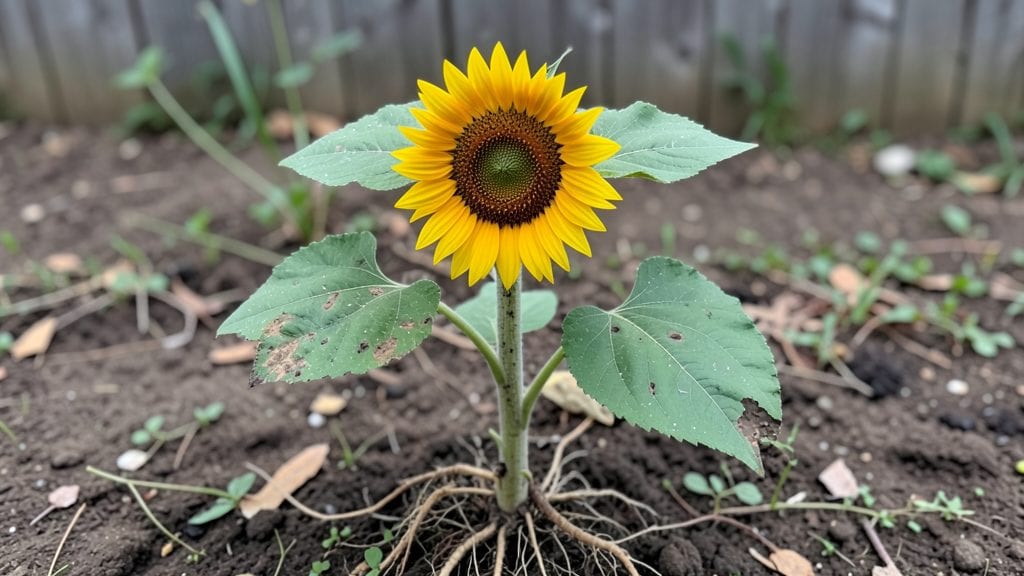
The deep, robust sunflower root system is the secret to their towering height—until my first crop wobbled like a tipsy ballerina after a gust. 🌱 The deeper the roots, the stronger the stem, and the more drought-resistant your plants become.
Most gardeners focus on the towering blooms but neglect the hidden foundation. Sunflower roots spread 12–18 inches wide while diving deep, anchoring the plant like a skyscraper’s foundation. Loose, well-draining soil lets those roots explore freely—compacted dirt strangles them before they can do their job.
📚 In This Guide
- What you need
- Instructions
- Tips and common mistakes
- Wrapping up and next steps
What you need
- ● Sunflower seeds: Choose Helianthus annuus varieties (e.g., 'Mammoth' or 'Russian Giant'). Buy 10–20 seeds for experiments or 50+ seeds for larger studies.
- ● Growing containers: Small pots (4–6 inches deep) for seedling observation.
- ○ Large containers (12+ inches deep) to mimic field conditions (optional but ideal for deep-root studies).
- ● Potting soil: Well-draining, loamy mix (e.g., 60% topsoil, 30% perlite, 10% compost). Avoid heavy clay.
- ● Watering can or spray bottle: For gentle, consistent hydration.
- ● Measuring tape or ruler: To track root depth (mark increments in inches/cm).
- ○ Clear plastic or acrylic sheet (optional): For creating a "root window" in containers to visualize growth.
- ● Hand trowel: For planting seeds at 1–2 inches deep.
- ● Pruning shears or scissors: To carefully excavate roots for study (sterilize with rubbing alcohol!).
- ● Notebook & pen: To log root depth, branching, and growth patterns.
- ● Growth light or sunny windowsill: Sunflowers need 6–8 hours of sunlight daily.
- ○ Rooting hormone (optional): Speeds up germination if testing in controlled environments.
- ● Camera or smartphone: Document progress with timestamps!
How to cultivate a robust sunflower root system for sturdy growth
Strong roots mean strong stems—here’s how to give your sunflowers the deep foundation they crave.
🌱 Step 1: Loosen Soil to Encourage Deep Root Penetration
Sunflowers thrive when their roots can dive deep, so break up compacted soil to a depth of 12-18 inches before planting. Use a broadfork or tiller to aerate the earth without disrupting the soil structure—this mimics natural root pathways. You’ll see clumps of soil crumble easily when worked, signaling the right texture for root expansion.
If your soil is heavy clay, mix in 2-3 inches of compost to improve drainage while retaining moisture. The goal is a loose, crumbly texture that lets roots explore downward effortlessly. Avoid overworking the soil, or you’ll create a powdery mess that compacts again when watered.
☀️ Step 2: Plant Seeds at the Right Depth for Strong Anchorage
Sow sunflower seeds 1-2 inches deep, pressing them gently into the soil but not burying them too far. Deeper planting delays germination because the seedling must push through more soil to reach light. Instead, aim for a depth where the seed feels snug but not buried—think of it as planting just below the topsoil layer.
Space seeds 6-12 inches apart in rows 18-24 inches apart, depending on the variety. Larger sunflowers need more room to avoid competition. Water the soil thoroughly after planting to settle the seeds and trigger germination. You’ll know moisture is right when the soil surface looks slightly damp but not glistening.
💧 Step 3: Water Deeply and Infrequently to Stimulate Root Growth
Sunflowers develop deep taproots when watered deeply but infrequently. After planting, water 1-2 inches per week, allowing the soil to dry slightly between waterings. This encourages roots to seek moisture below the surface, creating a stronger anchor. Shallow, frequent watering keeps roots near the top, making plants more prone to toppling in wind.
Use a soaker hose or drip irrigation to deliver water directly to the base of the plant, avoiding wet foliage. Mulch around the base with 2-3 inches of straw or wood chips to retain moisture and regulate soil temperature. You’ll notice healthier stems and fewer wilting leaves when roots are established deep.
✂️ Step 4: Provide Support Early to Prevent Stem Weakness
Sunflowers with shallow roots often lean or snap under their own weight. Install 6-foot stakes or cages at planting time, securing them 12 inches into the ground for stability. Tie stems loosely to the support as they grow, using soft fabric or twine to avoid damaging the stem. This mimics natural wind resistance while allowing roots to strengthen.
Real talk: If you wait until the plant is already leaning, it’s too late. The stem won’t recover its rigidity once it’s grown weak. Start support early, and you’ll see straighter, sturdier plants that hold their own in breezy conditions.
Tips & tricks for perfect sunflower root systems
Took me years of trial-and-error gardening to figure out these sunflower secrets—here's how to avoid my mistakes and grow plants that stand tall.
Soil Texture is Everything: In Step 1, when loosening soil to 12-18 inches, focus on creating a "sponge-like" texture rather than just breaking it up. Press your fingers into the soil after working it—it should hold its shape when squeezed but still crumble easily. This ideal texture lets roots penetrate deeply without resistance. For clay-heavy soils, work the 2-3 inches of compost into the top 6 inches only, not throughout the entire depth, to maintain proper drainage at root level.
Seed Placement Precision: The 1-2 inch planting depth in Step 2 is more about pressure than measurement. Gently press the seed until the surrounding soil feels firmly settled around it—you should see a slight indentation where the seed sits. This firm contact helps prevent seedling heave (when young plants push themselves out of the soil) while still allowing easy emergence. For larger varieties, aim for the shallower end of this range (closer to 1 inch) since they need less support to establish.
Watering Strategy for Root Development: The 1-2 inches per week watering guideline in Step 3 works best when delivered all at once rather than split doses. Use a rain gauge or tuna can to measure exactly 1-2 inches of water per week, delivered either through deep watering sessions or by letting rainfall accumulate. The key is letting the soil dry completely between waterings—roots will follow moisture downward, creating that sturdy taproot system. If you notice leaves wilting slightly before your scheduled watering day, your roots are already seeking deeper moisture.
Support System Timing: When installing those 6-foot stakes in Step 4, don't wait until you see leaning—act at planting time. The secret is burying the stakes at a 15-degree angle rather than straight up, which creates a natural windbreak while allowing the plant to grow into the support. Use soft plant ties that can stretch as the stem grows, and check them weekly to prevent constriction. I've seen sunflowers grow straight as arrows when supported this way, even in windy conditions.
Pro Tips for Sunflower Root System
- Took me years of trial-and-error gardening to figure out these sunflower secrets—here's how to avoid my mistakes and grow plants that stand tall.
- Soil Texture is Everything: In Step 1, when loosening soil to 12-18 inches, focus on creating a "sponge-like" texture rather than just breaking it up.
- Seed Placement Precision: The 1-2 inch planting depth in Step 2 is more about pressure than measurement.
Frequently asked questions
Got questions about sunflower root systems?
You’re not alone! Here are some of the most common queries—plus straightforward answers to help you grow like a pro.
How deep do sunflower roots actually grow?
Sunflower roots can reach 6 to 10 feet deep (or even deeper in loose, well-drained soil)! This deep taproot helps them access water and nutrients, especially in dry conditions. Pro tip: Avoid compacted soil or heavy clay—it can stunt root growth and weaken the plant.
When do sunflower roots start developing?
Roots begin forming within 24–48 hours after germination, but the real growth spurt happens 2–3 weeks later when the seedling has 2–4 true leaves. During this phase, keep the soil consistently moist (not soggy) to encourage strong root penetration.
Can sunflowers grow without a deep root system?
Technically, yes—but they’ll be much weaker. Shallow roots (from container growth or compacted soil) lead to top-heavy stems that flop or snap in wind/storms. For robust plants, amend soil with compost and avoid overcrowding.
Why are my sunflower roots rotting?
Root rot is usually caused by overwatering, poor drainage, or fungal infections. If soil stays soggy for days, roots suffocate and rot. Fix it: Improve drainage (add perlite/sand), water only at the base, and avoid wet foliage. If rot is severe, replant in fresh, well-draining soil.
Do sunflowers need special soil for deep roots?
Not necessarily! Sunflowers adapt to most soil types, but they thrive in loose, fertile loam with good drainage. For heavy clay or sandy soil, mix in 2–3 inches of compost before planting. A pH of 6.0–7.5 is ideal—test your soil if growth seems stunted.
Wrapping up and next steps
Understanding the sunflower root system isn’t just about theory—it’s your secret weapon for growing taller, healthier, and more resilient plants! 🌱 From the deep taproots that anchor your sunflowers to the fibrous secondary roots that boost nutrient uptake, every detail matters.
Whether you're a beginner or a seasoned gardener, these insights will help you optimize soil, spacing, and care for sunflowers that reach new heights.
Ready to put your newfound knowledge into action? Start by testing your soil and adjusting your planting plan—your sunflowers (and your future harvest) will thank you! 🌻