Flowers
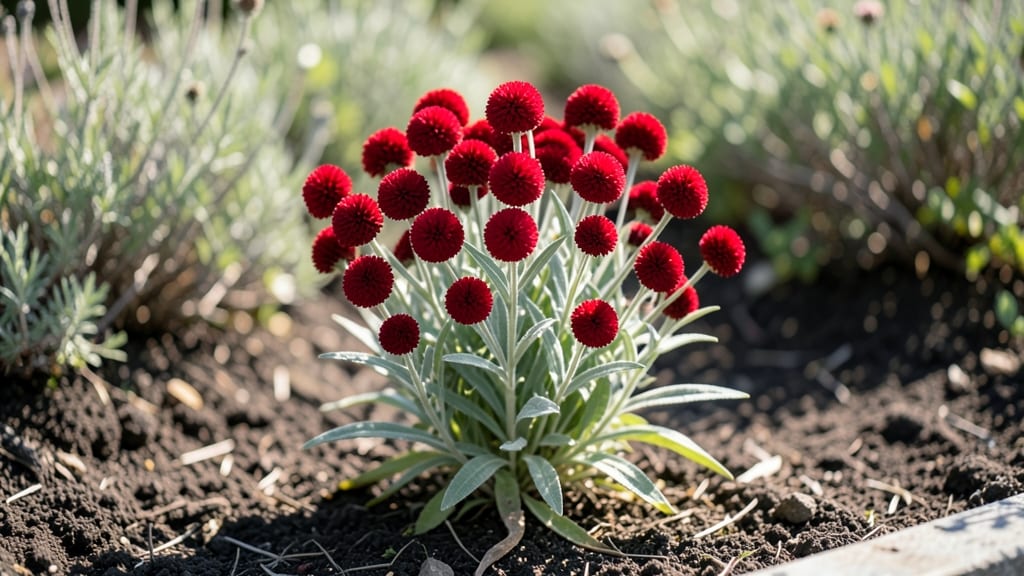
The red globe amaranth flower feels like cheating—these fiery red orbs stay vibrant from summer through frost with almost no care at all. 🌻 I’ve grown them in everything from full sun beds to containers on my balcony, and they never disappoint. The secret?
They thrive on neglect, so even if you forget to water them once, they’ll bounce back. You’ll need well-draining soil (they hate soggy roots) and 6+ hours of sun daily, but beyond that, they’re low-maintenance.
Start seeds indoors 8-10 weeks before your last frost or sow directly after soil warms—no transplant shock here. These plants grow 1-3 feet tall, making them perfect for borders, cut flowers, or dried arrangements.
What you’ll love most is their bold, papery blooms that last weeks longer than most annuals. They resist deer, rabbits, and even most pests, and their drought tolerance means fewer watering trips.
Snip stems for long-lasting bouquets or let them dry for winter decor—either way, they’re a foolproof way to add drama. Works in zones 2-11, so whether you’re in a hot desert climate or a cool mountain region, these plants deliver. Let’s get them growing!
📚 In This Guide
- What you need
- Instructions
- Tips and common mistakes
- Wrapping up and next steps
What you need
- ● Red Globe Amaranth Seeds or Plants: Seeds: 1–2 packets (50–100 seeds per packet, depending on variety)
- ● Plants: 3–5 mature plants (6–12 inches tall, with full blooms)
- ● Well-Draining Potting Mix: 5–10 gallons (for containers) or enough to fill garden beds (1–2 cubic feet per plant)
- ○ Optional: Add perlite or sand (10–20%) for extra drainage
- ● Containers or Garden Space: Containers: 12–18 inches deep and wide (1 plant per container)
- ● Garden Beds: Full sun (6+ hours/day) with loose, fertile soil
- ● Gardening Tools: Trowel or small shovel
- ● Pruning shears (for deadheading or harvesting)
- ○ Gloves (optional but recommended)
- ● Watering Supplies: Watering can or hose with a gentle spray nozzle
- ○ Optional: Drip irrigation kit for automated care
- ○ Fertilizer (Optional but Helpful): Balanced liquid fertilizer (e.g., 10-10-10) or slow-release granules
- ● Compost or worm castings (for organic enrichment)
- ● Sunlight & Climate: Full sun exposure (6+ hours/day)
- ● Hardiness: USDA Zones 2–11 (heat- and drought-tolerant!)
Step-by-step instructions for growing red globe amaranth flowers
Here's how to grow these vibrant blooms with minimal effort—just follow these simple steps.
🌱 Step 1: Choose the Perfect Planting Spot
Red globe amaranth thrives in full sun with at least 6-8 hours of direct light daily. I always pick the sunniest corner of my garden because these plants reward bold sunlight with even more dramatic color. If you're growing in containers, place them where they'll get maximum exposure—even a balcony facing south works.
Check your spot's drainage before planting. Amaranth hates soggy roots, so if your soil stays wet for more than a day after rain, amend it with 2-3 inches of coarse sand or perlite mixed into the top 12 inches of soil. You'll know the drainage is right when water soaks in within 10-15 minutes after watering.
🌱 Step 2: Plant Seeds at the Right Depth and Spacing
Sow seeds ¼ inch deep—that's roughly the thickness of a dime—because deeper planting slows germination. Space them 12-18 inches apart in all directions; they grow bushy and won't need thinning later. I like to plant them in clusters of 3 or 4 for a fuller look, but don't crowd them beyond that.
Water gently after planting to settle the soil around the seeds. You'll see tiny green sprouts in 7-14 days, depending on your climate. If your area has cool nights, germination might take longer—just be patient. Once seedlings reach 2 inches tall, thin them to your desired spacing, pulling weaker ones at the base to avoid disturbing roots.
☀️ Step 3: Water and Fertilize for Lush Growth
Keep the soil evenly moist but never soggy—amaranth roots rot easily if left waterlogged. Water at the base in the morning so leaves dry quickly, reducing fungal risks. You'll know it's time to water again when the top 1-2 inches of soil feel dry to touch. Overwatering is the fastest way to kill these tough plants, so resist the urge to check them daily.
Feed plants with a balanced 10-10-10 fertilizer every 4-6 weeks during the growing season. I mix 1 tablespoon of fertilizer into 1 gallon of water and apply it at the base. Stop fertilizing once flowers start forming—too much nitrogen encourages leafy growth over blooms. You'll see vibrant red globes developing within 8-10 weeks from seed.
✂️ Step 4: Deadhead and Maintain for Long-Lasting Color
Pinch back the tips of young plants when they reach 6 inches tall to encourage bushier growth. This simple step prevents leggy stems and makes plants fuller faster. You'll notice new side shoots forming within 2-3 weeks—that's your signal it's working.
Deadhead spent flowers by snipping them off at the base with clean scissors. This redirects the plant's energy into producing more blooms instead of setting seed. I do this every 2 weeks during peak flowering, and my plants keep blooming until frost. If you're growing in containers, trim back stems by ⅓ in early summer to promote compact growth.
Tips & tricks for perfect red globe amaranth flowers
Here's what I've learned after growing these stunning blooms for years—simple tricks that make all the difference.
Sunlight Secret: If you're growing in containers, rotate them every 3-4 days to ensure even exposure to that critical 6-8 hours of sunlight. I've seen plants develop uneven growth when one side gets more sun, so this quick rotation keeps them perfectly balanced.
Germination Hack: For faster sprouts, soak your seeds in warm water for 4-6 hours before planting. This mimics natural rainfall and can shave 2-3 days off your 7-14 day germination window. Just make sure to plant them immediately after soaking—they'll be eager to grow!
Fertilizer Timing: The 4-6 week feeding schedule works perfectly, but here's a pro move: switch to a low-nitrogen 5-10-10 fertilizer once you see flower buds forming. This helps direct energy to blooms instead of leaves. I make the switch when I notice the first hint of red color appearing.
Container Growth: If you're growing in pots, choose containers that are at least 12 inches deep—amaranth has deep roots that need room to spread. I've had great success with 18-inch diameter containers that give plants plenty of space without overcrowding. Add a layer of 1-2 inches of gravel at the bottom for even better drainage.
Pro Tips for Red Globe Amaranth Flower
- Here's what I've learned after growing these stunning blooms for years—simple tricks that make all the difference.
- Sunlight Secret: If you're growing in containers, rotate them every 3-4 days to ensure even exposure to that critical 6-8 hours of sunlight.
- Germination Hack: For faster sprouts, soak your seeds in warm water for 4-6 hours before planting.
Frequently asked questions
Got questions about keeping your red globe amaranth flowers vibrant and thriving? You’re not alone! Here are some of the most common queries—and their straightforward answers.
Can red globe amaranth grow in containers or do they need a garden bed?
These hardy beauties thrive in containers as long as the pot is at least 12 inches deep and has drainage holes. Use well-draining potting mix and place them in full sun (6+ hours daily). Just keep an eye on watering—containers dry out faster than garden beds.
How long does it take for red globe amaranth flowers to bloom?
Patience pays off! From seed, expect blooms in 8–12 weeks under ideal conditions (warm soil, full sun). If starting from transplants, you’ll see color in 4–6 weeks. Deadhead spent blooms to encourage continuous flowering—even in cooler months.
Are red globe amaranth flowers frost-tolerant?
Yes, but with limits! They handle light frosts (28°F) and even snow, but growth slows in cold snaps. For year-round color, plant in zones 2–11. In colder climates, mulch the base to protect roots. Bonus: Their deep red hue pops against winter greenery!
Do red globe amaranth flowers attract pollinators?
You bet! These flowers are a magnet for bees, butterflies, and hummingbirds. Their nectar-rich blooms support pollinators year-round, making them a top pick for eco-friendly gardens. Just avoid pesticides—let the critters feast!
What can I do if my red globe amaranth flowers look leggy or sparse?
Leggy growth usually means too little light or overcrowding. Prune back stems by 1/3 to encourage bushier growth, and space plants 12–18 inches apart. If indoors, move to a sunnier spot or supplement with grow lights. Fertilize lightly with balanced 10-10-10 once a month.
Pro Tip:
For extra-long blooms, pinch back new growth in early spring. This trick redirects energy to flower production instead of foliage. Works like a charm!
Wrapping up and next steps
The red globe amaranth is a standout star in any garden—vibrant, low-maintenance, and packed with personality! Whether you’re drawn to its striking blooms or its resilience, this flower proves that beauty doesn’t need effort. 🌸
Ready to transform your outdoor space? Start by planting a few seeds or buying a young plant, and watch your garden pop with color all season long. With minimal care, you’ll enjoy a showstopper that’s as easy as it is eye-catching!