
Flowers
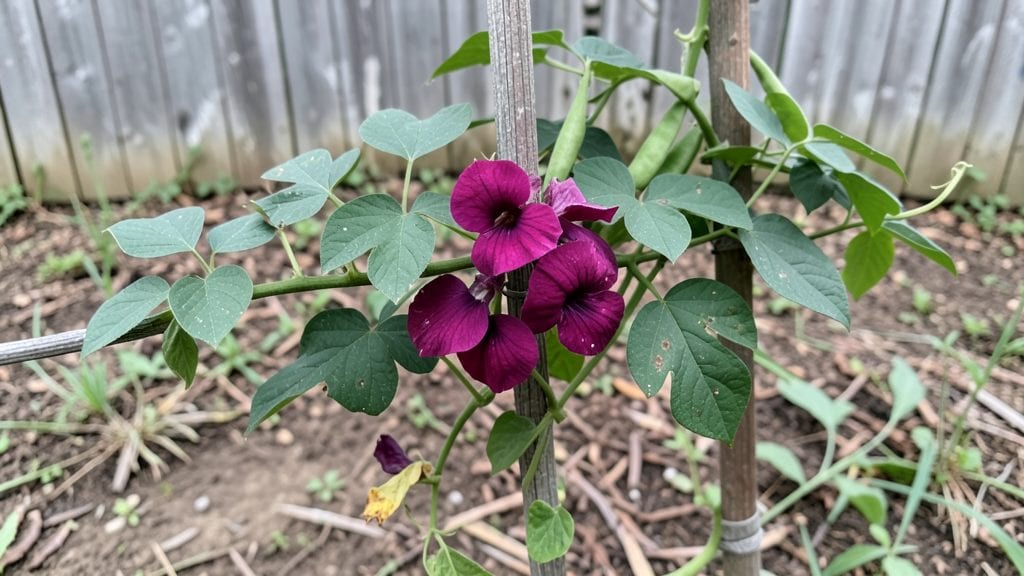
Growing a purple flower bean vine transforms any space into a living watercolor—those velvety purple blooms climb like confetti, needing almost no effort from you. 🌿 I’ve let mine sprawl over trellises and pergolas for years, and the only complaint I’ve ever gotten is from neighbors asking where I bought it.
The secret? It thrives on neglect, fixes nitrogen in the soil, and even produces edible beans.
Sunlight is the only non-negotiable: give it 6+ hours of morning sun and afternoon shade in hot climates. Well-draining soil with average fertility works, but it’s surprisingly forgiving—even my heavy clay soil produces vibrant blooms.
Water when the top inch feels dry, and you’ll see those signature butterfly-shaped flowers within 8-12 weeks of planting. The vines grow 10-15 feet in a single season, so trellises or sturdy fences are a must.
Pruning keeps it tidy and encourages more flowers—just trim back leggy growth in early spring. Deadhead spent blooms to prolong flowering, and watch bees and butterflies flock to your garden.
The beans? Mild, nutty, and perfect for stir-fries or drying. Even the leaves make a nitrogen-rich mulch. It’s the kind of plant that makes gardening feel like magic.
Works in zones 8-11 as a perennial, but in cooler climates, treat it as an annual or overwinter it in containers. The real win? You’ll have color from early summer until frost, with minimal fuss. Let’s get those vines climbing!
📚 In This Guide
- What you need
- Instructions
- Tips and common mistakes
- Wrapping up and next steps
What you need
- ● Seeds or Seedlings: 5–10 Clitoria ternatea seeds (organic, non-GMO preferred) OR
- ● 2–3 healthy young seedlings (from a nursery or trusted seller)
- ● Containers or Garden Space: For Pots: 5–10-inch diameter containers (with drainage holes) OR
- ● For Ground Planting: Well-draining soil in a sunny to partially shaded spot (6+ hours of light daily)
- ● Soil: 2–3 bags of well-draining potting mix (or garden soil amended with perlite/sand for outdoor planting)
- ○ Optional: 1 cup compost or worm castings for nutrient boost
- ● Support Structure: Trellis, cage, or sturdy stakes (3–6 feet tall, depending on desired vine length)
- ● Basic Tools: Garden trowel or small shovel
- ● Watering can or hose with gentle spray nozzle
- ● Pruning shears (for trimming)
- ○ Optional (But Helpful!): pH testing kit (ideal soil pH: 6.0–7.0)
- ● Slow-release fertilizer (balanced 10-10-10 or organic options like fish emulsion)
- ● Mulch (straw or shredded leaves to retain moisture)
- ● Climate Considerations: Hardiness: USDA Zones 9–11 (can be grown as an annual in cooler climates)
- ● Indoor Growers: Grow light or sunny windowsill (south-facing preferred)
Step-by-Step instructions for cultivating a thriving purple flower bean vine
Here's the method I've perfected for vibrant, low-maintenance vines that bloom season after season.
🌱 Step 1: Select and Prepare the Optimal Growing Location
The purple flower bean vine thrives in partial shade to full sun—at least 4-6 hours of direct sunlight daily for best flowering. I always choose a spot with morning sun and afternoon shade to prevent leaf scorch while ensuring abundant blooms. If growing in containers, position them where they'll receive filtered light during peak afternoon heat.
Test the soil's drainage by pressing your finger 1 inch deep—if water pools, amend with 1-2 inches of perlite or coarse sand to improve aeration. These vines hate soggy roots, so containers must have multiple drainage holes and a saucer underneath to catch excess water. I swear by terra cotta pots because they wick away moisture naturally through the walls.
🌿 Step 2: Plant Seeds or Transplants at the Right Time
Start seeds indoors 8-10 weeks before your last frost date in biodegradable pots filled with sterile seed-starting mix. Plant seeds ½ inch deep—they germinate best at 70-75°F. Keep the soil consistently moist (not soggy) until you see first true leaves (about 10-14 days). Here's the thing—if your home runs cooler, germination may take 2-3 extra days, so don't rush to move them.
For transplants, wait until soil temperatures reach 60°F and nighttime frosts have passed. Bury the root ball 1 inch deeper than it was in the nursery pot to encourage stability. Space plants 12-18 inches apart in the ground or 6 inches apart in containers. I always add a slow-release fertilizer at planting to give the vines a nutrient boost without overwhelming them.
💧 Step 3: Water and Feed for Continuous Blooms
Water deeply once a week during the first month to establish roots, then adjust based on soil moisture. Stick your finger 2 inches deep—if it feels dry, water until it runs out the drainage holes. Overwatering causes yellowing leaves, while underwatering leads to drooping vines. I water in the early morning to reduce evaporation and fungal risks.
Feed every 4-6 weeks with a balanced liquid fertilizer (10-10-10) diluted to half strength. The key is consistency over excess—purple flower bean vines respond better to steady nutrition than heavy doses. You'll notice new growth and more blooms within 2-3 weeks of feeding. If leaves show purple undersides, it's a sign of phosphorus deficiency—switch to a high-phosphorus fertilizer immediately.
✂️ Step 4: Prune and Train for Bushier Growth
Pinch back the top set of leaves when the vine reaches 12 inches tall to encourage branching. This is the moment that matters—it triggers lateral growth where future blooms will form. I always use clean, sharp scissors to avoid crushing stems. Remove any yellow or damaged leaves regularly to redirect energy to flowering.
Train the vines along a trellis, arbor, or sturdy fence by gently tying them with soft plant ties every 6-8 inches. Never use wire or tight knots—these vines are delicate and can snap under pressure. Prune back one-third of the vine after flowering to promote a second flush of blooms. Real talk: if you skip pruning, you'll get fewer but larger flowers—trade-off your call, but I prefer the bushier look.
⏰ Step 5: Overwinter and Prepare for Next Season
In colder climates, cut back vines to 6 inches tall after the first frost and mulch heavily with 2-3 inches of straw or shredded leaves. Purple flower bean vines are semi-hardy and can survive mild winters, but they need protection from freezing winds. I wrap containers in bubble wrap and move them to a garage or unheated shed if temperatures drop below 20°F.
In spring, remove old mulch and fertilize lightly with compost or worm castings to replenish nutrients. If growing in containers, refresh the top 2 inches of soil with new potting mix. You'll see new shoots emerge within 3-4 weeks—that's your signal everything's ready for another season of color. Don't skip this step (I learned the hard way when I missed it and lost half my vines to winter dieback).
Tips & tricks for perfect purple flower bean vine cultivation
Took me years to figure out these little details that make all the difference between a struggling vine and one that blooms like crazy. Here's what nobody tells you—
Light Balance: The 4-6 hours of direct sunlight mentioned in Step 1 is your sweet spot, but timing matters just as much as duration. Position your vines so they receive morning sun (when it's less intense) and afternoon shade (when UV rays are strongest). I've seen vines get leaf burn from too much midday sun even with that "4-6 hours" guideline—watch for crispy edges on leaves as your warning sign. If growing in containers, rotate them weekly to ensure even light exposure all around.
Germination Hack: Those 70-75°F temperatures for seed germination are non-negotiable, but here's what I learned after failing three times: Use a seedling heat mat set to 75°F under your biodegradable pots. If you don't have one, place pots on top of your refrigerator (not inside—humidity is too high) or near a sunny window with a clear plastic wrap tent to trap warmth. The goal is consistent warmth at the soil level, not just ambient room temperature. I also add a spray bottle with warm water to maintain moisture without making the soil soggy.
Pruning Precision: When you pinch back that top set of leaves at 12 inches tall in Step 4, aim for the spot just above a leaf node where two leaves meet. This is where new branches will emerge. I use my thumbnail to gently feel for the node—it's slightly thicker than the stem. Also, prune in the morning when the plant is fully hydrated; this reduces stress and helps the vine recover faster. For training, I've found that using old t-shirts cut into strips works just as well as soft plant ties and decomposes naturally in the soil.
Winter Protection Strategy: That 20°F threshold for moving containers is critical, but here's the real talk: I've lost vines when I waited until after they were already frozen. Start monitoring your local forecast 2 weeks before the first frost and begin preparing gradually. Move containers to a sheltered spot (like against a garage wall) before wrapping them in bubble wrap. For in-ground plants, mound an extra 1-2 inches of mulch around the base after the initial 2-3 inches—this creates an insulating barrier that can make the difference between survival and winter kill.
Pro Tips for Purple Flower Bean Vine
- Took me years to figure out these little details that make all the difference between a struggling vine and one that blooms like crazy.
- Light Balance: The 4-6 hours of direct sunlight mentioned in Step 1 is your sweet spot, but timing matters just as much as duration.
- Germination Hack: Those 70-75°F temperatures for seed germination are non-negotiable, but here's what I learned after failing three times: Use a seedling heat mat set to 75°F under your biodegradable pots.
Frequently asked questions
Got questions about growing or caring for your purple flower bean vine? You’re not alone—this vibrant plant is full of surprises! Here’s what you need to know to keep your vine thriving with minimal fuss.
How fast does the purple flower bean vine grow?
The purple flower bean vine (Centrosema pubescens) is a fast grower! Under ideal conditions (warmth, humidity, and consistent moisture), it can climb 10–15 feet in a single season. Provide a sturdy trellis or fence early to support its rapid growth and prevent tangling.
When is the best time to plant purple flower bean vine?
Plant your purple flower bean vine in spring after the last frost when soil temperatures reach at least 60°F (15°C). It thrives in warm climates but can also grow in containers and overwinter indoors in cooler zones. Avoid planting in fall—it’s sensitive to cold and may not survive frost.
Can I grow purple flower bean vine indoors?
Yes! This vine adapts well to containers and can thrive indoors near a sunny window or under grow lights. Use a well-draining potting mix and rotate the pot occasionally for even growth. Just ensure high humidity (mist leaves or use a pebble tray) to mimic its tropical roots.
Why aren’t my purple flower bean vine’s flowers opening?
If your vine isn’t blooming, check these common issues:
- Lack of sunlight: Needs 6+ hours of direct sun daily.
- Over-fertilizing: Too much nitrogen = leafy growth, no flowers. Use a balanced, low-nitrogen fertilizer instead.
- Stress: Sudden temperature drops or dry soil can delay blooms.
What’s a good alternative if I can’t grow purple flower vine?
If your climate isn’t ideal, try these low-maintenance, purple-blooming vines:
- Morning glory (Ipomoea spp.) – Fast-growing, drought-tolerant annual.
- Sweet pea (Lathyrus odoratus) – Fragrant, cool-season blooms.
- Nasturtium (Tropaeolum spp.) – Edible flowers, thrives in containers.
Wrapping up and next steps
Transforming your space with the purple flower bean vine is easier than you think! With just a little sunlight, well-draining soil, and occasional watering, you’ll enjoy vibrant blooms all year. Whether you’re a seasoned gardener or just starting out, this hardy plant is your ticket to effortless beauty.
Ready to bring some purple magic to your garden or patio? Grab your supplies, follow the steps, and watch your vine thrive! 🌸✨ Start planting today—your future blooms will thank you!