
Container Gardens
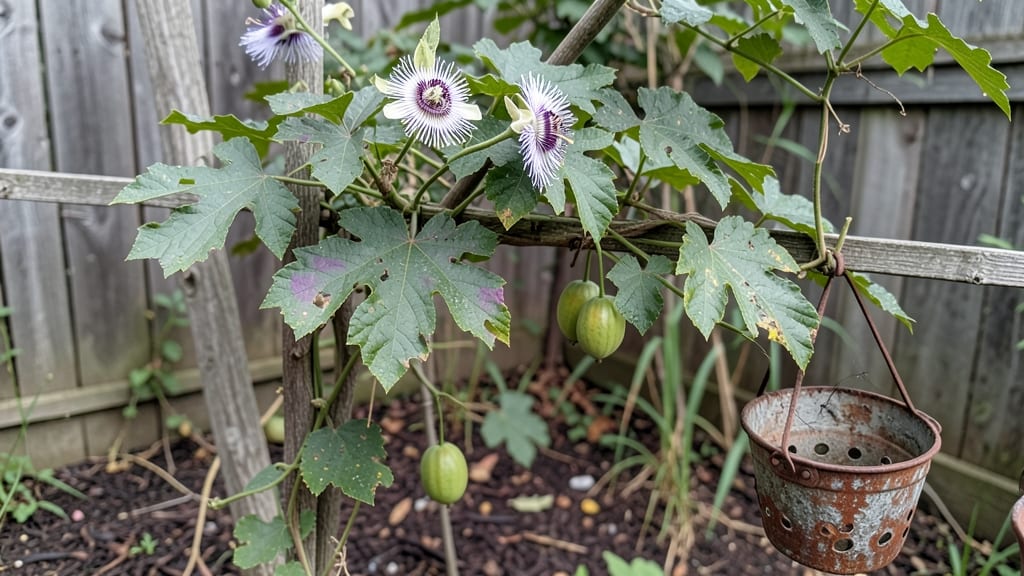
Growing passion flowers in containers lets you turn even a tiny patio into a fragrant hummingbird magnet—no yard required. 🌿 I learned the hard way that regular garden advice won’t cut it for these thirsty climbers, but with the right container and care, you’ll get blooms from spring to frost.
The secret starts with a 5-gallon minimum pot for vines to spread, plus a trellis that keeps them climbing instead of flopping.
Your container needs three critical things: drainage holes (non-negotiable), a lightweight mix of 50% potting soil and 50% perlite, and a sturdy support like a 4-foot tall obelisk.
Passion vines grow fast—up to 10 feet a season—so choose a pot you can move easily when they get heavy. Watering’s the trickiest part: let the top inch dry between soakings, but never let them wilt.
By midsummer, you’ll see those exotic, fragrant blooms drawing hummingbirds like a magnet, and the vines will climb your trellis like a green waterfall. The key to overwintering? Move pots indoors near a bright window before frost, and you’ll get a head start next spring.
No more waiting for garden-center plants—your container will be the first to bloom.
Works for Patio Passion (Passiflora caerulea) or Blue Dawn (Passiflora amethystina), both perfect for containers. Just watch for spider mites on dry days and prune leggy growth in early spring. Your hummingbird haven starts with one pot and a little patience—trust me, the first bloom will change everything.
📚 In This Guide
- What you need
- Instructions
- Tips and common mistakes
- Wrapping up and next steps
What you need
- ● Passion flower vine (Passiflora spp.) – Choose a compact variety like Passiflora caerulea (Maypop) or Passiflora incarnata (Maypops). Buy 1-2 healthy nursery-grown plants (4-6 inches tall) for a lush start.
- ● Large container – A 10-15 gallon pot with drainage holes (minimum 18-24 inches in diameter to accommodate root growth and trellis support). Terracotta or fabric pots work well!
- ● High-quality potting mix – 3-5 gallons of a well-draining blend (e.g., 60% potting soil, 30% perlite, 10% compost). Avoid garden soil—it compacts too easily!
- ● Trellis or support structure – A metal, wooden, or sturdy plastic trellis (at least 4-6 feet tall) to guide the vine’s growth. DIY options like bamboo stakes or a tomato cage also work!
- ● Slow-release fertilizer – 1 cup of organic granular fertilizer (e.g., 10-10-10 or a bloom-boosting formula like fish emulsion). Look for one with phosphorus and potassium to encourage flowers!
- ● Gloves – A pair of gardening gloves to protect your hands from thorns (passion flowers can be prickly!).
- ● Pruning shears – Sharp, clean shears for trimming dead foliage or shaping the vine.
- ● Watering can or hose with a gentle nozzle – Passion flowers love consistent moisture but hate soggy roots. A 1-gallon watering can is ideal!
- ○ Mulch (optional) – 1-2 inches of organic mulch (e.g., shredded bark or straw) to retain moisture and suppress weeds.
- ○ Hummingbird feeder (optional) – A red, nectar-filled feeder to attract pollinators while your passion flower establishes itself!
- ● Sunlight access – Choose a spot with full sun (6+ hours daily). Passion flowers thrive in warmth but can tolerate partial shade in hot climates.
- ● Drainage plan – Ensure your container sits on a drainage tray or saucer to catch excess water and prevent root rot.
- ● Patience – Passion flowers can take 1-2 seasons to fully bloom, but the wait is worth it for those stunning, fragrant flowers!
Step-by-Step guide for cultivating passion flower in containers
Here’s how to create a thriving container garden that attracts hummingbirds and delivers fragrant blooms all season.
🌱 Step 1: Choose the Right Container and Soil Mix
Passion vines need well-draining soil and room to climb, so select a 12-18 inch deep container with drainage holes. I recommend a fabric grow bag or terra cotta pot—both allow excess moisture to escape while supporting strong root growth. Avoid plastic, which traps heat and can rot roots.
Fill the bottom 2 inches with orchid bark or perlite to improve drainage. Then, mix 3 parts potting soil with 1 part compost and 1 part coarse sand for aeration. Passion vines thrive in slightly acidic soil (pH 6.0-7.0), so test your mix if possible. The soil should feel light and fluffy, like a damp sponge—not compacted like garden dirt.
☀️ Step 2: Plant and Provide Support for Climbing
Plant one vine per container (they can grow 10-20 feet in a season!) by digging a hole twice as wide as the root ball but no deeper. Gently tease the roots apart if they’re circling, then place the plant so the crown sits just above soil level. This prevents rot and encourages strong growth.
Install a trellis, obelisk, or sturdy wire cage immediately—passion vines need support from day one. I use galvanized metal trellises because they last years and won’t rust. Secure the vine loosely to the structure with soft plant ties (avoid wire or plastic straps, which can girdle the stem). Water deeply after planting to settle the soil around roots.
💧 Step 3: Water and Fertilize for Lush Growth
Passion vines are drought-tolerant once established, but young plants need consistent moisture. Water every 2-3 days until new growth appears, then taper to once weekly (adjust for heat—containers dry out faster). The top inch of soil should feel dry before watering again. Overwatering is the fastest way to kill these vines—yellowing leaves signal root stress.
Feed with a balanced liquid fertilizer (10-10-10) every 4-6 weeks during spring and summer. I also sprinkle 1 tablespoon of worm castings into the soil monthly for slow-release nutrients. Stop fertilizing in fall to encourage dormancy if your climate gets cold. Watch for dark green, glossy leaves—that’s your sign the plant is thriving.
✂️ Step 4: Prune and Train for Maximum Blooms
Prune in early spring to shape the vine and remove dead growth. Cut back overly long stems by one-third to encourage bushier growth. I also pinch off the first few blooms in spring—this redirects energy to stronger new shoots that produce larger, more fragrant flowers later in the season.
Train the vine along the trellis by tying new growth to the structure as it grows. Passion vines grow clockwise, so guide them upward in a spiral. Deadhead spent blooms regularly to prevent seed pods from draining energy. If your vine gets leggy or sparse, trim back to a healthy bud—it’ll bounce back with vigorous new growth.
🪴 Step 5: Overwinter and Protect for Next Year
In USDA Zones 8-11, passion vines are perennial and can stay in containers year-round. Move pots to a sheltered spot (like a garage or under eaves) before first frost, and reduce watering to once every 2-3 weeks. Wrap the container in burlap for insulation if temperatures drop below 30°F.
In colder zones, dig up the plant in fall, trim back half the foliage, and pot it in fresh soil. Store indoors near a bright window (or under grow lights) and water sparingly until spring. Resist the urge to fertilize—dormant plants need rest. You’ll see new shoots in 4-6 weeks when you repot it outdoors in spring.
Tips & tricks for perfect passion flower containers
These pro-level insights will help you cultivate a thriving passion vine that blooms beautifully and attracts hummingbirds all season.
Container Selection: The 12-18 inch depth recommendation isn't arbitrary—it accommodates the vine's deep root system while preventing overcrowding. For extra stability, choose containers that weigh at least 5 pounds when empty. This prevents them from tipping over as the vine grows heavy with foliage and blooms. Terra cotta pots also help regulate soil moisture by allowing evaporation through their walls, which is perfect for passion vines that dislike soggy roots.
Soil Mix Science: That 3:1:1 ratio of potting soil to compost to coarse sand creates the perfect balance of nutrients, aeration, and drainage. I recommend adding a handful of horticultural charcoal to the mix—it's optional but helps prevent fungal issues by keeping the soil fresh. The slightly acidic pH (6.0-7.0) mimics the vine's natural tropical habitat, so don't skip the pH test if your tap water is particularly alkaline.
Support System Strategy: Installing the trellis immediately in Step 2 isn't just about aesthetics—it prevents the vine from developing weak, sprawling growth patterns. For maximum bloom production, position your trellis to face south if possible. This gives the vine optimal sunlight exposure throughout the day, which is crucial for energy production and flower development. Galvanized metal trellises last years, but if you prefer something more decorative, consider powder-coated metal options that won't rust.
Winter Protection Wisdom: The 30°F threshold for wrapping containers in burlap is critical—below this temperature, the roots can suffer even if the foliage looks fine. For added protection in colder zones, place containers on insulating materials like foam board or thick cardboard before moving them to sheltered spots. This extra layer can make the difference between a plant that survives winter and one that thrives in spring.
Pro Tips for Passion Flower Container
- These pro-level insights will help you cultivate a thriving passion vine that blooms beautifully and attracts hummingbirds all season.
- Container Selection: The 12-18 inch depth recommendation isn't arbitrary—it accommodates the vine's deep root system while preventing overcrowding.
- Soil Mix Science: That 3:1:1 ratio of potting soil to compost to coarse sand creates the perfect balance of nutrients, aeration, and drainage.
Frequently asked questions
Got questions about growing passion flowers in containers? You’re not alone! Here are some of the most common queries—and their answers—to help you create a thriving hummingbird haven with ease.
Can passion flowers grow well in containers year-round?
Yes, but with a few tweaks! Most passion flower varieties thrive in containers during warm months (spring to fall). In cooler climates, move pots indoors or to a sheltered spot during winter. Choose cold-hardy types like Passiflora incarnata (maypop) for better resilience. Just ensure your container has drainage holes to prevent root rot.
How do I attract hummingbirds to my container-grown passion flowers?
Hummingbirds love passion flowers—especially the tubular blooms! Plant near a sunny window or patio where they can spot the flowers easily. Add a small hummingbird feeder nearby (use a 4:1 sugar-water ratio) for extra appeal. Pro tip: Avoid pesticides, as they can harm these delicate visitors.
How long does it take for passion flowers to bloom in containers?
Patience pays off! With proper care (sunlight, water, and fertilizer), expect blooms in 6–12 months for young plants. Established passion vines may flower sooner, especially if pruned correctly. Feed with a balanced fertilizer every 4–6 weeks during growing season for faster results.
What’s the best container size for passion flowers?
Bigger is better! Aim for a container at least 12–18 inches wide and deep to accommodate sprawling roots. Passion vines can grow 10–30 feet long, so choose a sturdy pot or trellis. For dwarf varieties (like Passiflora caerulea), a 10-inch pot works, but upgrade as the plant matures.
Why are my passion flower leaves turning yellow?
Yellow leaves usually signal overwatering or poor drainage. Let the top inch of soil dry out between waterings, and ensure your container has drainage holes. Check for root rot by gently lifting the plant—mushy roots mean it’s time to repot in fresh, well-draining soil. Bonus tip: Yellowing can also mean nutrient deficiency; try a balanced fertilizer to revive growth.
Wrapping up and next steps
Growing a passion flower container garden is a rewarding way to attract hummingbirds, fill your space with fragrant blooms, and enjoy year-round beauty—all while keeping things manageable.
Whether you’re a beginner or a seasoned gardener, the key is choosing the right variety, providing proper care, and creating a cozy environment for your plants to thrive. 🌸
Now that you’re armed with the blueprint, roll up your sleeves and get planting! Start by selecting your container, sourcing healthy cuttings or seedlings, and setting up a nurturing space. Watch as your passion flower transforms into a vibrant hummingbird haven—one fragrant bloom at a time. Happy gardening! 🌿