Flowers
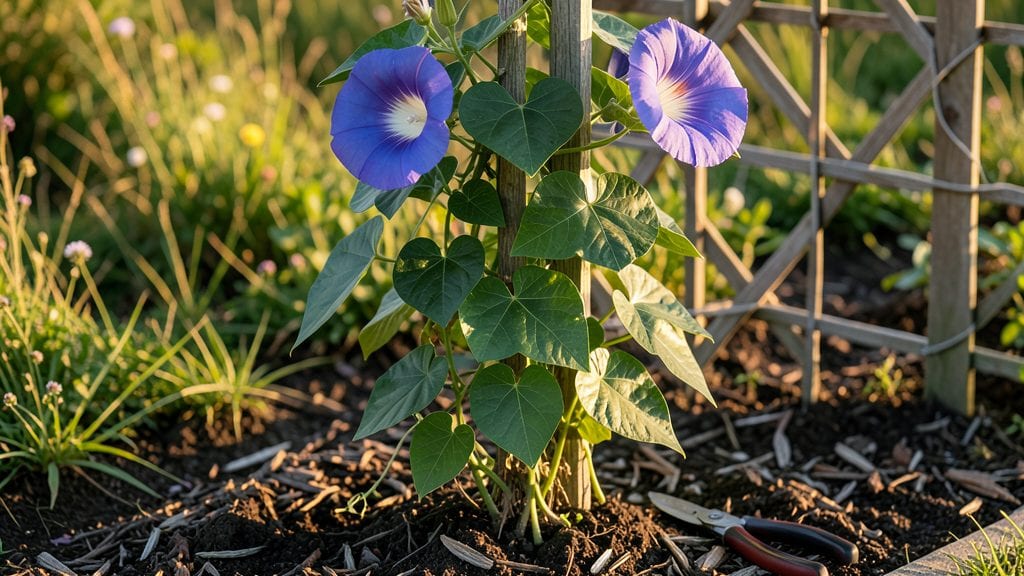
The morning glory flower vine transforms every fence or trellis into a twilight garden alive with buzzing wings—planting mine last spring after watching hummingbirds swarm the dusk blooms made my yard feel like a living postcard. 🌿 The key is getting them started right: fast-growing seeds, sturdy support, and just enough water to keep them climbing without flopping.
These vines thrive in full sun to partial shade, though they’ll bloom most prolifically where they get at least 6 hours of sunlight daily. A well-draining soil mix—even poor soil works—means fewer struggles with rot or weak stems.
Plant seeds ½ inch deep after the last frost, and watch for those first tendrils within 7-10 days. The real magic happens when they reach your trellis, twisting upward like nature’s own ladders.
By midsummer, you’ll have a vibrant blue-purple canopy that opens in the morning and closes by afternoon—hence the name. Hummingbirds will visit daily, and you’ll enjoy cut flowers that last 2-3 days in a vase.
The trick to keeping them blooming? Prune back leggy growth in early summer to encourage bushier vines. Just avoid heavy pruning late in the season, or you’ll sacrifice next year’s blooms.
Morning glories are annuals, so they’ll die back with frost—but they self-seed like crazy. Save seeds from your healthiest plants, and next year’s vines will pop up even faster.
Perfect for low-maintenance climbers, these vines prove you don’t need a green thumb to create a showstopping display. Let’s get those seeds in the ground!
📚 In This Guide
- What you need
- Instructions
- Tips and common mistakes
- Wrapping up and next steps
What you need
- ● Morning glory seeds: Choose a variety like Ipomoea purpurea (heavenly blue) or Ipomoea nil (Japanese morning glory). Start with 50–100 seeds for a vibrant display.
- ● Growing containers or garden bed: Containers: 5–10 gallon pots with drainage holes (1–2 plants per container). Opt for lightweight materials like fabric grow bags or plastic.
- ● Garden beds: Well-draining soil in a sunny spot (6+ hours of sunlight daily). Avoid soggy areas!
- ● Potting mix: A high-quality, well-draining blend (e.g., 50% peat moss, 30% perlite, 20% compost). Avoid heavy clay soil.
- ● Trellis, fence, or support structure: A 6–10 ft tall trellis, arbor, or wire mesh (minimum 1–2 inch diameter spacing for vines to climb). Bamboo or metal works great!
- ● Watering can or hose with gentle spray nozzle: Morning glories love moisture but hate soggy roots.
- ○ Fertilizer (optional but helpful): Balanced fertilizer (10-10-10 or 20-20-20): Use ½ tsp per plant every 4–6 weeks during growing season.
- ● Compost or worm castings: Mix 1 cup per square foot into soil at planting time for slow-release nutrients.
- ● Mulch: Straw or shredded leaves to retain moisture and suppress weeds. Apply a 2–3 inch layer around plants.
- ● Hummingbird feeders: Place near your vine to attract pollinators! Use a 4:1 sugar-water ratio (refill weekly).
- ● Pruning shears: For trimming dead vines or shaping growth (sterilize blades with rubbing alcohol).
- ● Seed-starting kit (if sowing indoors): Includes seed trays, heat mat (70–75°F ideal), and grow lights.
- ● Plant markers: Label seeds with variety names (morning glories reseed easily, and colors can vary!).
Step-by-step instructions for cultivating morning glory vines
Here's how to coax these fast-growing climbers into a thriving hummingbird magnet.
🌱 Step 1: Choose the Perfect Planting Location and Prep Soil
Morning glories thrive in full sun to partial shade, with at least 6-8 hours of direct sunlight daily. I always plant mine along fences, trellises, or pergolas where they can climb and spread quickly. The soil should drain well but retain moisture—amend heavy clay with 1-2 inches of compost to improve aeration.
Dig a hole twice as wide as the root ball but no deeper. Loosen the sides to encourage root spread. Here's the thing—morning glories are shallow-rooted, so don't bury them too deep. The top of the root ball should sit just below soil level. If your soil is sandy, mix in a handful of organic matter to help retain moisture.
🌱 Step 2: Plant Seeds at the Right Time and Depth
Direct-sow seeds 2-3 weeks after your last frost date when soil temperatures reach 60°F or warmer. Morning glories germinate best in warm soil—cold, wet conditions will delay or prevent sprouting. Plant seeds ½ inch deep and 6-8 inches apart in rows spaced 18-24 inches apart.
I like to plant in clusters of 3-4 seeds every 12 inches along trellises for a dense, continuous display. Water gently after planting to settle the soil, but avoid soaking—this can wash seeds too deep. If you're in a warm climate, you can plant seeds in early spring or even late summer for fall blooms.
☀️ Step 3: Provide Support and Consistent Care
Install a sturdy trellis, fence, or arbor before planting—morning glories grow 6-10 feet per season and need reliable support. I use a 6-foot tall wire trellis for my garden, and the vines twine effortlessly as they grow. Water 1 inch per week, keeping soil evenly moist but not soggy.
Here's where it gets fun—they're drought-tolerant once established, but consistent moisture during the first 4-6 weeks ensures strong vines. You'll see the first tendrils appear within 7-10 days of germination. Once the vines reach the top of the trellis, they'll cascade down, creating a stunning waterfall of blooms. Prune leggy growth to encourage bushier vines and more flowers.
✂️ Step 4: Encourage Continuous Blooms and Maintain Health
Deadhead spent blooms daily to prompt new flowers—morning glories are annuals that produce one bloom per stem, and removing faded flowers redirects energy to fresh growth. I pinch off the first few blooms to encourage stronger vines that produce more flowers later in the season.
Watch for aphids or spider mites, which love the tender new growth. A strong spray of water usually knocks them off, but if infestations persist, use an insecticidal soap. Morning glories are generally low-maintenance, but they reward attentive care with nonstop blooms from early summer until frost. The more you deadhead, the longer the show lasts.
Tips & tricks for perfect morning glory flower vine cultivation
These practical insights will help you transform your garden into a vibrant hummingbird sanctuary with minimal effort.
Sunlight Strategy: The 6-8 hours of direct sunlight specified isn't just a suggestion—it's a non-negotiable for morning glories. I've learned the hard way that partial shade can lead to sparse blooms. Position your trellis where it gets morning sun and afternoon shade in hot climates, as the delicate blooms can scorch in intense afternoon heat.
Soil Science: The shallow-rooted nature of morning glories means you should never bury them deeper than their root ball sits naturally. I've seen beginners plant them too deep, which causes root rot. Instead, create a mound of soil and place the root ball on top, then gently fill around it. For sandy soils, mix in a handful of compost per planting hole to help retain moisture without suffocating roots.
Germination Timing: The 2-3 weeks after last frost window is critical, but don't stress if you're in a warm climate. I've successfully planted morning glories in late summer for fall blooms by monitoring soil temperatures with a simple thermometer. The 60°F minimum isn't arbitrary—it's when the seeds' natural dormancy breaks. If your soil is cooler, consider using a mini greenhouse or row cover to create warmth.
Watering Wisdom: While morning glories are drought-tolerant once established, that 1 inch per week during the first 4-6 weeks is essential for strong vine development. I've found that watering deeply once a week (rather than daily light watering) encourages deeper root growth. Use a rain gauge or tuna can to measure your watering—eyeballing it often leads to either underwatering or soggy soil.
Pro Tips for Morning Glory Flower Vine
- These practical insights will help you transform your garden into a vibrant hummingbird sanctuary with minimal effort.
- Sunlight Strategy: The 6-8 hours of direct sunlight specified isn't just a suggestion—it's a non-negotiable for morning glories.
- Soil Science: The shallow-rooted nature of morning glories means you should never bury them deeper than their root ball sits naturally.
Frequently asked questions
Got questions about cultivating your own morning glory flower vine? You’re not alone! Here are some of the most common queries—plus quick, practical answers to help you grow a thriving hummingbird haven.
How fast does a morning glory vine grow?
Morning glories are fast growers! With the right conditions, they can climb 5–10 feet in just one season. Some varieties, like Heavenly Blue, may grow even quicker—up to 12 inches per week. Plant early for maximum blooms, but be ready for rapid expansion!
When is the best time to plant morning glory seeds?
Timing matters! For most climates, direct-sow seeds after the last frost (spring) when soil is at least 60°F. Morning glories are frost-sensitive, so avoid planting too early. In warmer zones, you can even plant in late summer for fall blooms. Pro tip: Soak seeds overnight for faster germination!
Why aren’t my morning glory flowers lasting long?
Morning glories are ephemeral bloomers—each flower typically lasts just one day! But if blooms fade too quickly or don’t appear at all, check for:
- Overcrowding: Thin vines for better airflow.
- Lack of water: Keep soil consistently moist (but not soggy).
- Poor sunlight: These vines thrive in full sun (6+ hours/day).
- Pests: Watch for slugs or aphids munching on leaves.
Can I grow morning glory in containers?
Morning glories love containers—just choose a deep pot (12+ inches) with drainage holes and a trellis or cage for support. Use a lightweight potting mix and fertilize lightly every 2–3 weeks. Dwarf varieties like Blackie are perfect for small spaces!
What can I plant with morning glory for a pollinator-friendly garden?
Pair morning glories with companion plants to attract hummingbirds and bees all season:
- Nasturtiums: Repel pests and add color.
- Marigolds: Deter aphids naturally.
- Sunflowers: Provide extra nectar sources.
- Bee balm: Extends the blooming season.
Wrapping up and next steps
Growing a morning glory flower vine is a rewarding journey that transforms your garden into a vibrant hummingbird haven! 🌸 With the right soil, sunlight, and a little patience, you’ll soon enjoy cascading blooms that brighten up your space and attract pollinators.
Whether you’re a seasoned gardener or just starting, this twilight-friendly vine is a fantastic addition to trellises, fences, or containers.
Ready to dive in? Start small—plant a few seeds or cuttings this season and watch your garden come alive with color and movement. Happy gardening! 🌱