Flowers
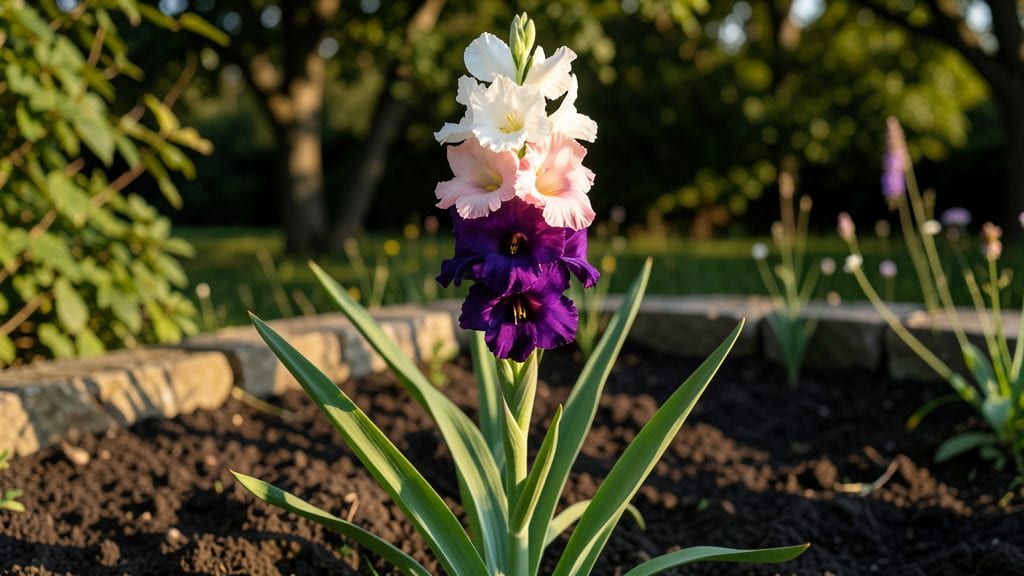
The boldest gladiolus flower colors transform your summer garden into a vertical rainbow. 🌿 I’ve grown these showstoppers for years, and every season teaches me new ways to make them pop—whether in dramatic borders or mixed arrangements.
The key lies in choosing shades that complement your garden’s palette while standing out against foliage. Red gladiolus like ‘Attention’ or deep purple ‘Black Star’ create instant drama, while soft pinks and whites add contrast. Bicolors like ‘Green Star’ with its chartreuse stripes add unexpected flair.
Pairing them with salvias, dahlias, or even ornamental grasses makes the stems look even taller and more striking. The secret? Planting in clusters of three or more so the colors sing together rather than compete.
By late summer, you’ll have 6-foot-tall spikes bursting with color that lasts weeks in vases too. The blooms open sequentially, giving you a gradual show from bottom to top. Just watch for thrips—those tiny pests love glads—and deadhead spent blooms to keep the stems producing.
Works for full-sun borders, cutting gardens, or even container displays. Let’s make your summer garden unforgettable!
📚 In This Guide
- What you need
- Instructions
- Tips and common mistakes
- Wrapping up and next steps
What you need
- ● Gladiolus corms (12–24 per variety, depending on desired fullness): Choose certified disease-free corms from a reputable nursery.
- ● Select colors that match your vision—think reds, pinks, purples, whites, oranges, and even bi-colors!
- ● Well-draining potting mix or garden soil (5–10 gallons, amended with compost for nutrients).
- ● Organic fertilizer (balanced 10-10-10 or slow-release bulb food).
- ● Garden stakes or trellis (6-inch tall, 1 per corm to support tall stems).
- ● Mulch (straw or shredded bark to retain moisture and regulate temperature).
- ● Floral knife or sharp scissors (for trimming stems at a 45° angle).
- ● Vase or container (clean, with a narrow neck to hold stems securely).
- ○ Floral preservative (optional but extends vase life by 3–5 days).
- ● Ribbon or twine (for bundling stems or adding a decorative touch).
- ● Garden gloves (to protect hands while handling corms or soil).
- ● pH testing kit (ideal soil pH for gladiolus: 6.0–6.8).
- ● Slow-release watering system (like drip irrigation for consistent moisture).
- ● Color chart or mood board (to plan your gladiolus color palette before planting!).
How to choose and arrange gladiolus for a stunning color display
Here's how I create eye-catching summer arrangements using these bold blooms.
🌿 Step 1: Select Color Combinations That Pop
Gladiolus come in 12 bold shades, and the secret to a showstopping display is pairing complementary tones. I always start with 3-4 colors—one dominant hue and two accent shades. For example, deep purple gladiolus paired with bright pink and crimson creates instant drama. Look for color families on the wheel: warm tones (reds, oranges) or cool tones (blues, purples) work best together.
Here's the thing—white gladiolus act as a neutral canvas, letting other colors shine. I often plant them in clusters between bold hues to create visual breathing room. Pro tip: Avoid clashing colors like neon yellow with hot pink unless you're going for a retro '70s vibe. Your goal is harmony, not chaos.
☀️ Step 2: Plant in Staggered Rows for Continuous Blooms
To extend your color show, plant gladiolus in three staggered rows with 2-week intervals. Start with the earliest blooming variety in the back row, then mid-season in the middle, and late bloomers in front. This creates a wave effect where one color fades just as another peaks. Space each corm 4-6 inches apart in rows 12-18 inches apart—crowding leads to weak stems and floppy blooms.
I always face the tallest varieties toward the back and shorter ones in front. The reason? You want the boldest colors to be visible from a distance. A 6-inch-tall deep red gladiolus will get lost behind a 4-foot-tall purple one. Plant in full sun (6+ hours daily) for the most vibrant colors—shady spots produce pale, lackluster blooms that won't pop.
💧 Step 3: Water and Fertilize for Maximum Color Intensity
Gladiolus need consistent moisture but hate soggy roots. Water deeply 2-3 times weekly until the top 6 inches of soil feels moist. I check by sticking my finger in—if it's dry at that depth, it's time to water. Too much water dilutes color intensity, while too little causes buds to dry out before opening. Mulch with 2-3 inches of straw after planting to retain moisture and prevent soil splashes from staining petals.
Feed with a balanced fertilizer (10-10-10) when shoots reach 6 inches tall, then again when spikes appear. The key to vibrant colors is phosphorus—it boosts bloom production. I swear by a final top-dressing of 5-10-10 when buds form. Avoid high-nitrogen fertilizers after this point—they'll produce lush foliage but weak, pale flowers.
✂️ Step 4: Deadhead and Support for Long-Lasting Color
Remove spent blooms immediately by cutting the stem just above the next bud. This redirects energy to lower buds, giving you more blooms per stem. I always wear gloves—gladiolus sap can irritate skin. Support tall varieties with stakes or rings before they need them. A 4-foot gladiolus will flop under its own weight without support, ruining your color display.
Here's where it gets fun—watch the color progression as each stem matures. The first buds open at the bottom, then work upward. By deadheading, you'll see new blooms emerge every 2-3 days, extending your color show by 3-4 weeks. Cut back foliage in fall when it yellows, but leave the corms in the ground—they'll multiply and give you even more color next season.
Tips & tricks for perfect gladiolus color arrangements
Creating a vibrant gladiolus display is all about strategic planning—and these tricks ensure your bold colors shine.
Color Theory Matters: When selecting your 3-4 colors in Step 1, think about the color wheel. Warm tones like red and orange create energy, while cool tones like purple and blue bring calm. I always add a white gladiolus to brighten the arrangement—it reflects light and makes other colors pop. For extra drama, try a two-tone variety like pink-and-white striped blooms in your dominant row.
Timing Secret: The 2-week intervals between staggered rows in Step 2 are non-negotiable for continuous blooms. If you're short on time, consider planting all three rows at once but choose varieties with similar bloom times. Just be prepared for a shorter display window. Pro tip: Check your local nursery's bloom charts—they often list expected bloom dates for each variety, so you can plan your 3-4 color sequence more precisely.
Sunlight Strategy: Those 6+ hours of full sun in Step 2 aren't just about growth—they're about color intensity. I've seen pale, washed-out gladiolus from partial shade, and it's heartbreaking. If your garden has limited sun, choose the sunniest spot possible and supplement with a reflective surface like a white garden wall or mirror to bounce extra light onto your plants. This trick can make a noticeable difference in color vibrancy.
Fertilizer Hack: That 5-10-10 top-dressing in Step 3 is your secret weapon for vibrant blooms. The phosphorus boosts flower production, but here's what nobody tells you—mix a pinch of Epsom salt (about 1 tablespoon per plant) with your fertilizer. The magnesium helps prevent yellowing leaves, which keeps your plants looking healthy and focused on producing those bold colors. Just don't overdo it—too much can cause problems of its own.
Pro Tips for Gladiolus Flower Colors
- Creating a vibrant gladiolus display is all about strategic planning—and these tricks ensure your bold colors shine.
- Color Theory Matters: When selecting your 3-4 colors in Step 1, think about the color wheel.
- Timing Secret: The 2-week intervals between staggered rows in Step 2 are non-negotiable for continuous blooms.
Frequently asked questions
Got questions about gladiolus flower colors? You’re not alone! Here are answers to the most common queries to help you pick, grow, and enjoy these stunning blooms with confidence.
What’s the most popular gladiolus color?
The classic pink gladiolus (like ‘Attraction’ or ‘Pink Parfait’) is a perennial favorite, but deep reds, purples, and whites also top charts. For bold statements, try orange or bi-color varieties—they’re trending fast!
When do gladiolus flowers bloom in different colors?
Bloom times vary slightly by color: pinks and whites often open first (late summer), while deep purples and reds may lag by 1–2 weeks. Pastels like lavender or peach tend to bloom a bit later. Plant in spring for summer-long color shows!
Can I mix gladiolus colors in one garden bed?
Mixing colors (e.g., reds with whites or purples with yellows) creates stunning contrasts. Just space them 3–4 inches apart to avoid overcrowding. Pro tip: Plant taller varieties (like deep reds) at the back and shorter ones (like pastels) in front for drama.
Why are my gladiolus flowers fading faster than expected?
Fading fast? Check these fixes:
- Water stress: Glads need 1–2 inches of water weekly—drought speeds up wilting.
- Heat shock: Bright sunlight (especially for light colors like white or yellow) can bleach petals. Provide afternoon shade in hot climates.
- Over-fertilizing: Too much nitrogen = lush leaves, weak blooms. Use a balanced 10-10-10 fertilizer instead.
Are there gladiolus colors that attract more pollinators?
Yes! Bright pinks, purples, and oranges (like ‘Black Ninja’ or ‘Apricot’) are bee and butterfly magnets. White glads also draw night-flying moths. For a pollinator paradise, pair them with coneflowers or sunflowers!
What’s a good alternative if I can’t grow gladiolus?
Try these easy, long-blooming alternatives with similar drama:
- Dahlias (bold colors, same height range)
- Canna lilies (tropical vibes, heat-tolerant)
- Bearded irises (classic, low-maintenance)
Wrapping up and next steps
From fiery reds to dreamy purples and sunny yellows, gladiolus flowers bring unmatched drama to any garden or bouquet! 🌸 Whether you’re drawn to bold statement hues or soft pastels, these 12 shades prove that summer blooms can be both striking and versatile.
Now that you’ve explored their meanings, care tips, and creative uses, why not plant your own patch or craft a custom arrangement? Grab some bulbs, get inspired, and let your garden bloom with confidence—your future floral masterpiece is just a season away! 🌱✨