Flowers
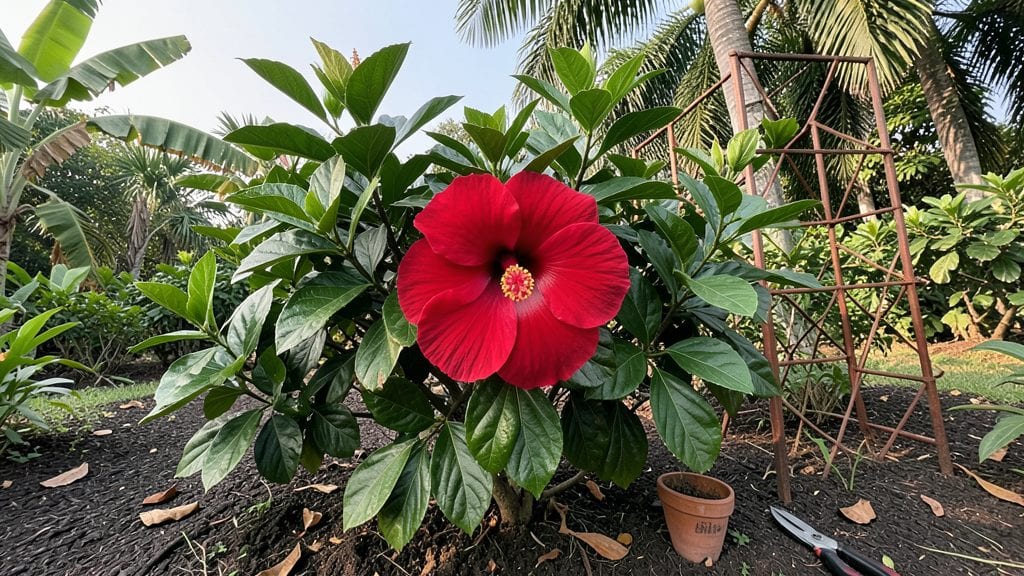
The giant hibiscus flower transforms any garden into a tropical paradise with its bold, dinner-plate blooms that last all day. 🌺 I planted mine last spring, and now it’s the first thing neighbors comment on when they walk by—those velvety petals in fiery reds, deep purples, and buttery yellows make every summer afternoon feel like a vacation.
The secret isn’t just the plant itself, but how it thrives with the right balance of sun, soil, and a little pampering that keeps it blooming nonstop.
Growing giant hibiscus isn’t about luck—it’s about matching their tropical roots to your climate. In warmer zones (7-11), they’re perennial powerhouses, while colder areas treat them as annual showstoppers that reward you with one spectacular season.
They demand full sun (6+ hours daily) and soil that drains like a sandy loam but holds moisture—think rich, slightly acidic mix with a handful of compost. Watering’s the trickiest part: keep the roots moist but never soggy, or you’ll lose those stunning blooms to root rot.
By late summer, your plant will be covered in blooms that open at dawn and close by dusk, their centers packed with pollen that attracts hummingbirds.
Prune lightly after each flush to encourage bushier growth, and feed every 4-6 weeks with a balanced fertilizer (10-10-10) to keep the petals oversized and vibrant. The payoff? A garden centerpiece that turns heads and fills the air with a sweet, honey-like fragrance—all while being tougher than it looks.
Whether you’re using it as a border plant, container specimen, or focal point near your patio, giant hibiscus adapts beautifully. In cooler climates, bring potted plants indoors before frost or grow them in containers you can winter-over.
The key is patience—it takes about 2-3 years for mature plants to hit their full dramatic potential, but once they do, you’ll never want to live without them.
📚 In This Guide
- What you need
- Instructions
- Tips and common mistakes
- Wrapping up and next steps
What you need
- ● Giant hibiscus plant: Start with a healthy, disease-free Hibiscus rosa-sinensis (available as bare-root, potted, or seeds at nurseries or online). Pro tip: 🌱 Choose a variety suited to your USDA hardiness zone (typically 9–11, but some cold-hardy cultivars thrive in zones 8–10).
- ● Well-draining potting mix: 5–10 gallons of a blend designed for tropical plants (e.g., 60% peat moss, 20% perlite, 20% compost). Pro tip: 💡 Avoid heavy clay soil—hibiscus roots hate soggy feet!
- ● Container (if not planting in-ground): Minimum 15-gallon pot (24" diameter) for dwarf varieties.
- ● Minimum 30–50-gallon pot (36"+ diameter) for standard or giant varieties.
- ● Drainage holes (non-negotiable!)
- ● Slow-release fertilizer: 1–2 cups of balanced 10-10-10 or 6-6-6 granular fertilizer mixed into the soil at planting. Pro tip: 🌡️ Hibiscus are heavy feeders—fertilize monthly during growing season (spring–fall).
- ● Garden trowel or shovel (for planting).
- ● Pruning shears (sterilized with rubbing alcohol).
- ● Gloves (to protect from thorns and soil-borne pathogens).
- ● Watering can or hose with adjustable nozzle (for deep watering).
- ○ pH test kit (optional but helpful—hibiscus prefer 6.1–7.5 pH).
- ○ Mulch (optional): 2–3 inches of pine bark or coconut coir to retain moisture and regulate soil temp.
- ● Sunlight: Full sun (6–8+ hours daily). Pro tip: ✨ In hot climates, provide afternoon shade to prevent leaf scorch.
- ● Temperature: Ideal: 70–85°F (day), 60–70°F (night).
- ● Cold-hardy varieties tolerate down to 25°F with protection.
- ● Water: 1–2 inches per week (more in extreme heat). Keep soil consistently moist but not waterlogged.
- ● Humidity: 50–70% (use a humidifier or pebble tray in dry climates).
Step-by-Step guide to cultivating giant hibiscus flowers
Here's how to coax those dramatic tropical blooms into your garden—even where summers aren't naturally steamy.
🌱 Step 1: Choose the Right Variety and Planting Location
Giant hibiscus (Hibiscus rosa-sinensis) thrives in USDA zones 9-11, but you can grow them in cooler zones as container plants. For outdoor planting, select a spot with full sun (6+ hours daily) and shelter from strong winds. The plant's massive leaves and flowers need stable warmth—think 70-90°F during the day.
If your summers dip below 60°F, opt for container growing. A 15-gallon pot gives roots room to establish while allowing you to move the plant indoors when temperatures drop below 50°F. I always plant mine near a south-facing wall, which reflects extra heat onto the foliage. Watch for bright green, glossy leaves—that's your sign the plant is happy and photosynthesizing properly.
☀️ Step 2: Prepare Soil and Plant with Proper Spacing
Giant hibiscus demands well-draining soil—mix equal parts garden soil, compost, and perlite to create a loose, airy medium. The roots hate soggy conditions, so if your native soil drains poorly, amend it with sand or coconut coir. For containers, use a cactus/succulent mix blended with compost.
Dig a hole twice as wide as the root ball but no deeper. Hibiscus plants need space to spread—plant 8-10 feet apart in garden beds or 12-15 feet apart if you want dramatic single-species displays. Gently remove the plant from its container, tease apart any circling roots, and place it so the top of the root ball sits 1 inch below soil level. This prevents stem rot while encouraging strong root growth.
💧 Step 3: Water Deeply and Establish a Consistent Routine
The first 2 weeks after planting are critical—water deeply every other day until you see new growth (usually bright green leaves at the tips). Giant hibiscus has deep taproots, so 1-2 gallons per watering ensures moisture reaches the roots. Let the top 2-3 inches of soil dry out between waterings to prevent fungal issues.
Here's the thing—hibiscus plants wilting slightly in the afternoon is normal, but crispy leaves or drooping stems means underwatering. If you're growing in containers, check soil moisture by sticking your finger 2 inches deep—if it feels dry, water thoroughly. Mulch with 2-3 inches of organic mulch (like shredded bark) to retain moisture and regulate soil temperature.
✂️ Step 4: Prune for Bushier Growth and Blooms
Prune late winter or early spring before new growth begins. Cut back one-third of the plant's height to encourage bushier growth and more flowering sites. Always prune just above a leaf node (the bump where leaves attach) to stimulate branching. Remove any dead, diseased, or crossing branches first—they compete with healthy growth.
After the first flush of blooms, lightly trim again in mid-summer to shape the plant and remove spent flowers. This prevents the plant from putting energy into seed production. I like to pinch back new growth to 4-5 leaves—this forces the plant to branch out instead of growing tall and leggy. Watch for new leaf clusters forming at the pruned spots; that's your reward for proper pruning.
🌿 Step 5: Feed and Protect for Year-Round Success
Fertilize every 4-6 weeks during the growing season with a balanced, water-soluble fertilizer (10-10-10 or 20-20-20). Hibiscus is a heavy feeder, but half-strength applications prevent root burn. Stop fertilizing 2 months before the first frost—you don't want tender new growth damaged by cold.
In cooler climates, bring potted hibiscus indoors before temperatures drop below 50°F. Place it near a south-facing window or under grow lights for 12-14 hours daily. Reduce watering to every 7-10 days once growth slows in winter. Watch for yellowing leaves—this usually means overwatering or nutrient deficiency. Adjust care accordingly, and you'll have a vibrant, blooming plant ready for spring.
Tips & tricks for perfect giant hibiscus flowers
Here's what nobody tells you about growing these tropical beauties—details that make all the difference between a struggling plant and a showstopper.
Location is Everything: In Step 1, that south-facing wall isn't just a suggestion—it's a game-changer. The reflected heat can add 5-10°F to your plant's environment, helping it thrive in cooler zones. If you don't have a wall, use a reflective barrier like aluminum foil on the north side of your container to mimic the effect. Remember, hibiscus needs warmth to photosynthesize properly, so avoid placing it where cold air settles, like near AC units or drafty windows.
Soil Science Matters: When mixing your soil in Step 2, don't just eyeball the equal parts—use a scale or measuring cup for precision. The perlite-to-compost ratio should be exactly 1:1:1 for that perfect airy texture. I've seen plants struggle because someone used too much compost, which can compact over time. For containers, add a handful of horticultural charcoal to prevent fungal issues—it's a secret weapon for keeping roots healthy. The 1-inch depth placement below soil level is critical too; it encourages root growth without causing rot.
Watering Wisdom: During those critical first 2 weeks in Step 3, I can't stress enough how important it is to check soil moisture before watering. Stick your finger 2 inches deep—if it feels damp, wait another day. Overwatering is the #1 killer of hibiscus plants. For containers, I use a moisture meter to avoid guesswork. And that afternoon wilting? It's completely normal as long as the plant perks up in the morning. If it stays wilted, you're underwatering.
Pruning Payoff: When you're pruning in Step 4, look for those leaf nodes—they're the key to bushier growth. Always cut just above one to encourage new branches. I like to prune on a cloudy day to reduce stress on the plant. After your mid-summer trim, watch for those new leaf clusters forming—this is your reward for proper pruning technique. And if you're worried about over-pruning, remember: hibiscus is forgiving. It'll bounce back with more vigor than you'd expect.
Pro Tips for Giant Hibiscus Flower
- Here's what nobody tells you about growing these tropical beauties—details that make all the difference between a struggling plant and a showstopper.
- Location is Everything: In Step 1, that south-facing wall isn't just a suggestion—it's a game-changer.
- Soil Science Matters: When mixing your soil in Step 2, don't just eyeball the equal parts—use a scale or measuring cup for precision.
Frequently asked questions
Got questions about growing or caring for giant hibiscus flowers? You’re not alone! Here are some of the most common queries—plus quick, practical answers to help you nurture these stunning tropical beauties with confidence.
How long does it take for a giant hibiscus to bloom?
A healthy giant hibiscus (Hibiscus rosa-sinensis) typically takes 1–3 years to produce its first blooms, depending on growing conditions. With proper care—full sun, well-draining soil, and regular fertilization—you may see vibrant flowers as early as spring or summer of the second year. Patience pays off for those jaw-dropping 5–6-inch blooms!
Can giant hibiscus survive cold winters?
Native to tropical regions, giant hibiscus is not frost-tolerant and will die back in temperatures below 30°F (-1°C). To protect your plant:
- Move potted hibiscus indoors before the first frost.
- Mulch the base of in-ground plants with straw or burlap for insulation.
- Consider Hibiscus syriacus (hardy hibiscus) as a cold-hardy alternative for zones 5–9.
Why aren’t my giant hibiscus flowers opening?
Bud drop or failure to open is often caused by:
- Too much shade: Ensure 6+ hours of direct sunlight daily.
- Overwatering: Let the top 1–2 inches of soil dry between waterings.
- Nutrient deficiency: Feed with a balanced fertilizer (10-10-10) every 4–6 weeks in growing season.
- Stress from transplant shock: Avoid moving potted plants too frequently.
What’s the best soil mix for giant hibiscus?
Giant hibiscus thrives in well-draining, slightly acidic soil (pH 6.0–6.5). Mix equal parts:
- Garden soil (or potting mix)
- Perlite or coarse sand (for aeration)
- Compost or peat moss (for nutrients)
How do I prune giant hibiscus for more blooms?
Prune in late winter or early spring to encourage bushier growth and more flowers:
- Trim dead or yellowing leaves to the base.
- Cut back overly long stems by 1/3 to promote branching.
- Remove spent blooms regularly to redirect energy to new flowers.
- Avoid heavy pruning in summer—it can stress the plant.
Wrapping up and next steps
The giant hibiscus flower isn’t just a tropical dream—it’s a stunning, rewarding addition to your garden that thrives with the right care.
Whether you’re drawn to its bold blooms or the challenge of nurturing a showstopper, remember that patience and attention to its needs will pay off in spectacular fashion. 🌺
Ready to bring this tropical beauty into your space? Start small—grow one plant, experiment with its conditions, and let your confidence (and collection!) grow. Happy gardening!