
Planting
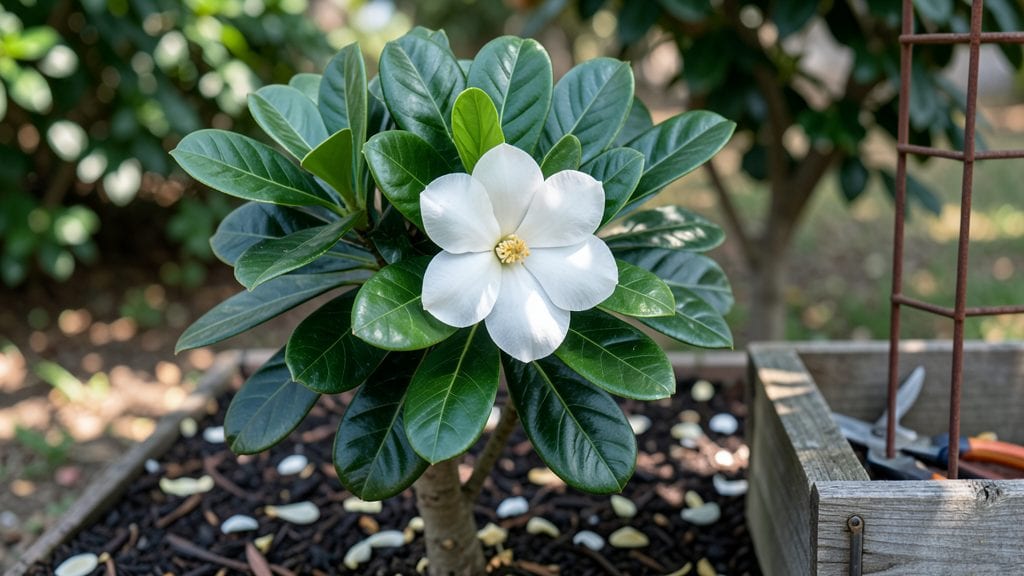
The creamy white gardenia plant flowers you crave—intoxicatingly fragrant and hummingbird-loved—thrive in containers, gracing patios, balconies, or sunny windowsills with their tropical charm. 🌸 can enjoy their fragrance up close.
The key lies in mimicking their natural humid, slightly acidic environment, which is simpler than you might think with the right setup.
You’ll need well-draining potting mix mixed with perlite or orchid bark, a container with drainage holes (at least 12 inches in diameter), and a spot that gets morning sun and afternoon shade—critical for preventing leaf scorch.
Watering is where many gardeners stumble: keep the soil consistently moist but never soggy, and mist the leaves daily in dry climates. A humidity tray or pebble tray underneath the pot helps recreate their tropical home without fuss.
By late spring, you’ll be rewarded with glossy dark green leaves and clusters of highly fragrant flowers that last for weeks. Prune lightly after blooming to encourage bushier growth, and feed monthly with an acid-loving plant fertilizer during the growing season.
The best part? These plants reward patience with years of blooms, making them a low-maintenance luxury for any outdoor space.
Even in cooler zones, gardenias can thrive in containers—just bring them indoors before temperatures drop below 50°F. With the right care, your gardenia will become the fragrant centerpiece of your garden, effortlessly drawing admiration from neighbors and pollinators alike.
📚 In This Guide
- What you need
- Instructions
- Tips and common mistakes
- Wrapping up and next steps
What you need
- ● Gardenia plant: Choose a healthy 1- to 3-year-old gardenia (e.g., Gardenia jasminoides or Gardenia augusta) from a nursery. Opt for a potted plant with vibrant green leaves and buds.
- ● Container: A well-draining pot (12–18 inches in diameter) with drainage holes. Terracotta or ceramic pots work best to prevent root rot.
- ● Potting mix: A high-quality, acidic (pH 5.0–6.5) mix designed for azaleas or camellias (or blend 50% peat moss, 30% pine bark, and 20% perlite). Avoid garden soil—it’s too alkaline!
- ● Drainage material: Small pebbles, perlite, or broken pottery pieces (1–2 inches thick) to layer at the container’s bottom.
- ● Fertilizer: A balanced, acidic fertilizer (e.g., 8-3-9 or 10-10-10 with iron chelate). Use a slow-release granular or liquid fertilizer formulated for flowering plants.
- ● Watering can: With a rose attachment for gentle, targeted watering.
- ● Pruning shears: Sharp, clean shears (sterilized with rubbing alcohol) for trimming dead blooms or overgrown branches.
- ● Humidity tray or pebbles: A shallow tray with water and pebbles (or a humidifier) to maintain 50–70% humidity around the plant.
- ● Sunlight access: A south- or west-facing window (or a grow light) for 4–6 hours of bright, indirect light daily.
- ● Mulch: Pine bark or coconut coir to retain moisture and mimic gardenia’s natural acidic soil.
- ● Epsom salt: (1 tsp per gallon of water) monthly to boost magnesium and enhance blooms.
- ● Plant support: A small stake or trellis if your gardenia grows tall and leggy.
- ● Soil pH test kit: To monitor and adjust acidity if needed (aim for pH 5.0–6.5).
- ● Decorative elements: Moss, pebbles, or a decorative pot cover for a tropical vibe!
Step-by-step guide to growing gardenias in containers
Here’s how to coax those intoxicating blooms from your gardenia—even in pots.
🪴 Step 1: Choose the Right Container and Soil Mix
Gardenias need well-draining, acidic soil (pH 5.0–6.5) to thrive, so skip generic potting mix. I blend 50% peat moss with 50% perlite for airy, moisture-retentive roots. The container should have drainage holes—gardenias hate soggy feet—and be at least 12 inches deep to accommodate their taproots.
Here’s the thing—gardenias are finicky about pot size. Too small, and they’ll flower poorly; too big, and the soil stays wet too long. Start with a 14-inch pot for each plant, then upgrade as they grow. Terra cotta pots help wick away excess moisture, but if you prefer plastic, add a layer of orchid bark at the bottom to improve drainage.
🌱 Step 2: Plant and Support for Optimal Growth
Dig a hole in your soil mix twice as wide as the root ball but no deeper—gardenias resent being buried too low. Gently tease out any circling roots to encourage outward growth. Place a stake or tomato cage next to the plant now (yes, now) and loosely tie the main stem to it. Gardenias grow top-heavy, and they’ll thank you later when they’re not toppling over.
Water thoroughly after planting until it drains freely from the bottom. Then, let the top inch of soil dry out before watering again. Overwatering is the #1 killer of container gardenias—you’ll know it’s right when the soil feels like a wrung-out sponge, not a swamp.
☀️ Step 3: Position for Light and Humidity
Gardenias crave bright, indirect light—think morning sun and afternoon shade. A south or west-facing patio works, but if your space gets harsh afternoon rays, move the pot to a spot where it gets 4–6 hours of filtered light daily. Direct midday sun will scorch leaves, and you’ll lose those fragrant blooms.
Humidity is non-negotiable. If your air feels dry (like most homes in winter), mist the plant daily or place the pot on a pebble tray filled with water. You’ll see the difference in shiny, glossy leaves—a sign your gardenia’s happy. In low humidity, buds may drop before opening, so don’t skip this step.
💧 Step 4: Feed and Prune for Continuous Blooms
Feed your gardenia every 4–6 weeks during spring and summer with an acid-loving plant fertilizer (like one formulated for azaleas or rhododendrons). I use half-strength to avoid burning roots—gardenias are sensitive to salt buildup. Flush the soil with water after fertilizing to rinse away excess salts.
Prune right after flowering to shape the plant and encourage new growth. Cut back leggy stems to a bud or joint (never a bare stem), and remove any yellow or diseased leaves immediately. This keeps the plant compact and directs energy into next year’s blooms. Just don’t prune too late in the season—new growth won’t harden off before winter.
⏰ Step 5: Winter Care for Next Year’s Blooms
When temperatures drop below 40°F, move your gardenia indoors near a bright window (south-facing is ideal). Reduce watering—let the top 2 inches of soil dry out between waterings—and stop fertilizing until spring. Cold drafts will shock the plant, so avoid placing it near doors or vents.
Here’s the moment that matters: In late winter, before buds form, give your gardenia a warm shower to remove dust and pests. Then, place it back in bright, indirect light and resume watering when the top inch of soil feels dry. This jumpstarts the blooming cycle—you’ll see buds in 6–8 weeks if you’ve got the light and care right.
Tips & tricks for perfect container-grown gardenias
Here's what nobody tells you about keeping these divas blooming year after year.
Soil pH Secret: Test your soil mix's acidity with a pH meter before planting—gardenias demand that 5.0-6.5 range. If your mix runs neutral, add sphagnum peat moss or cottonseed meal to lower the pH gradually. I've seen gardenias refuse to bloom when soil pH creeps above 7.0, no matter how much I watered them. The roots simply can't absorb nutrients properly in alkaline conditions.
Watering Wisdom: The inch of dry soil rule works, but there's a trick to checking moisture levels properly. Stick your finger 2 inches deep—that's where the roots actually are. If the soil feels damp at this depth, wait another day. Many beginners overwater because they only check the surface, which stays dry even when roots are waterlogged below. A moisture meter solves this guessing game entirely.
Light Positioning: That 4-6 hours of filtered light window is non-negotiable, but here's how to maximize it: Rotate your pot quarter-turn weekly so all sides get equal exposure. You'll notice new growth leaning toward the light—this is your plant telling you it needs to be repositioned. South-facing windows work best, but if you only have east exposure, supplement with a grow light for 2-3 hours in the afternoon to mimic natural sunlight patterns.
Winter Revival: When you move your gardenia indoors below 40°F, place it in the bathroom during the day. The steam from showers creates natural humidity without extra misting. Just avoid placing it directly near the shower stream—soggy leaves lead to fungal issues. This simple relocation can prevent that dreaded bud drop that happens when indoor air gets too dry.
Pro Tips for Gardenia Plant Flowers
- Here's what nobody tells you about keeping these divas blooming year after year.
- Soil pH Secret: Test your soil mix's acidity with a pH meter before planting—gardenias demand that 5.0-6.5 range.
- Watering Wisdom: The inch of dry soil rule works, but there's a trick to checking moisture levels properly.
Frequently asked questions
about growing gardenia plant flowers—because every gardener deserves a little peace of mind!How often should I water my gardenia plant?
Water your gardenia when the top 1-2 inches of soil feel dry—usually 2-3 times per week in warm weather, but reduce to once a week in cooler months. Overwatering is the #1 killer, so ensure pots have drainage holes. Pro tip: Check moisture with your finger before watering!
Why aren’t my gardenia flowers opening?
Gardenia buds often refuse to open due to low humidity, poor light, or stress. Move your plant to bright, indirect light (like an east-facing window) and boost humidity with a pebble tray or humidifier. Avoid drafts—gardenias hate sudden temperature swings!
Can I grow gardenias indoors year-round?
Gardenias thrive indoors with 6+ hours of bright light daily (a grow light helps in winter). Keep temps between 65–75°F and fertilize monthly in spring/summer. Just watch for pests like spider mites—spray leaves with water weekly to deter them.
How do I prune gardenia plants for more flowers?
Prune right after flowering (late spring/early summer) to shape the plant and encourage new growth. Cut back 1/3 of the oldest stems to the nearest leaf node. Avoid heavy pruning in fall/winter—it stresses the plant! Bonus: Deadhead spent blooms to redirect energy to new flowers.
Are there fragrant alternatives to gardenias?
If gardenias feel finicky, try these low-maintenance, fragrant picks:
- Jasmine – Thrives in shade, ultra-scented!
- Tuberose – Night-blooming, sweet perfume.
- Sweet Olive – Drought-tolerant, lemony fragrance.
Wrapping up and next steps
Gardenia flowers bring elegance and intoxicating fragrance to any space—whether you’re growing them in containers or your garden. With the right soil, sunlight, and care, these stunning blooms can thrive and reward you with months of beauty. 🌸
Ready to transform your patio or balcony? Start by gathering your supplies, then follow the steps to plant and nurture your gardenias. Soon, you’ll be enjoying their luxurious scent and velvety petals—and maybe even sharing cuttings with fellow plant lovers! 🌱
Next step: Pick your favorite gardenia variety and get planting! 💚