Flowers
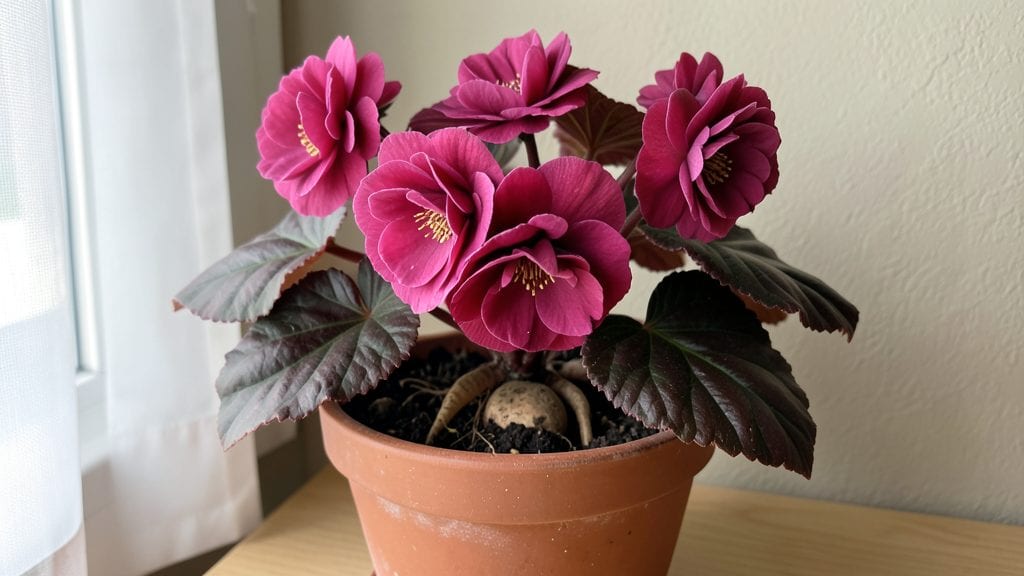
Double begonia flowers bring lush, velvety blooms to shady corners where other plants struggle. 🌿 I’ve grown these showstoppers in everything from hanging baskets to woodland garden beds, and their secret isn’t complicated—just the right balance of moisture, shade, and occasional pruning to keep them flowering nonstop.
These beauties love 60-70% shade (morning sun is fine, but afternoon glare burns the leaves), well-draining potting mix with peat moss or coconut coir, and water that keeps the soil damp but never soggy.
The double-flowered varieties need a little extra care—sturdy stakes or cages to support their heavy blooms and regular deadheading to encourage more flowers. Most beginners overwater or let them dry out, which causes those dreaded brown edges on the leaves.
With the right setup, you’ll get continuous blooms from spring through fall, and even indoors near a bright window. The flowers come in every color except true blue, and the foliage adds texture with its waxy, heart-shaped leaves.
Once you master the basics, these plants reward you with years of effortless beauty—just keep them happy and out of harsh light.
Whether you’re growing them in containers or tucked into garden beds, double begonias adapt beautifully to partial shade. Start with healthy cuttings or divisions, and soon you’ll have a thriving display that turns heads without needing full sun. Let’s get those blooms growing!
📚 In This Guide
- What you need
- Instructions
- Tips and common mistakes
- Wrapping up and next steps
What you need
- ● Double Begonia Tubers or Seeds: 3–5 tubers (or seeds) per container (6-inch pots work well). Choose healthy, firm tubers with visible buds.
- ● Potting Mix: 5–10 gallons of well-draining, peat-based mix (e.g., African violet mix) or a blend of 60% peat, 30% perlite, and 10% vermiculite.
- ● Containers: 6–8-inch pots (for tubers) with drainage holes.
- ○ Hanging baskets (optional, for trailing varieties).
- ● Fertilizer: Balanced liquid fertilizer (10-10-10 or 20-20-20) or slow-release granules (e.g., Osmocote).
- ● Watering Can or Spray Bottle: With a fine rose nozzle for gentle hydration.
- ● Gloves: Lightweight gardening gloves to protect hands from soil.
- ● Trowel or Small Shovel: For transplanting tubers or mixing soil.
- ● Mulch: Pine bark or coconut coir (1–2 inches) to retain moisture.
- ● Grow Lights (Indoor Growers): LED grow bulbs (5000K–6500K) for 12–14 hours/day.
- ○ Humidity Dome or Plastic Cover: To create a greenhouse effect during germination (optional but helpful).
- ● Plant Labels: Waterproof markers to track varieties.
Step-by-step instructions for cultivating lush double begonia blooms
Here’s how to coax those dramatic double blooms into full, velvety glory—even in shady spots.
🌱 Step 1: Choose the Right Variety and Prepare Containers
Double begonias thrive in 4-inch pots with excellent drainage—think terracotta or containers with drainage holes. I always use well-draining potting mix (never garden soil) because begonias hate soggy roots. Mix in 10% perlite or orchid bark to improve airflow and prevent rot.
Fill the pot ¾ full with the mix, leaving room for roots to spread. Press lightly to settle the soil but don’t compact it—begonias need loose, airy roots. Here’s the thing: double begonias need bright, indirect light (think dappled shade or a north-facing window). Too much direct sun scorches their delicate leaves, but too little light means weak stems and sparse blooms.
💧 Step 2: Plant and Water for Optimal Germination
Gently remove the begonia from its nursery pot and tease the roots if they’re circling. Place it in the center of your prepared container, then fill the remaining space with more potting mix, pressing lightly around the base. Water thoroughly until it drains freely from the bottom—this ensures the roots settle into moist but not waterlogged soil.
After planting, keep the soil evenly moist (not soggy) for the first 2 weeks. I like to water from the bottom by placing the pot in a shallow tray of water for 10-15 minutes—this prevents disturbing the roots while encouraging deep hydration. Watch for yellowing leaves (a sign of overwatering) or drooping stems (a cry for more moisture).
☀️ Step 3: Provide Light and Encourage Blooming
Double begonias need bright, indirect light—think 4-6 hours of filtered sun daily. A grow light (12-14 hours/day) works wonders if natural light is lacking. I’ve found that placing them 12-18 inches from a south-facing window keeps them happy without scorching.
Here’s where it gets fun: pinch back leggy stems when they reach 4-6 inches tall. This encourages bushier growth and more blooms. Use clean scissors to snip just above a leaf node (where leaves meet the stem). You’ll see new side shoots forming within 2-3 weeks—that’s your signal everything’s working.
✂️ Step 4: Deadhead and Fertilize for Continuous Blooms
Deadheading spent blooms weekly keeps your begonias producing new flowers. Simply pinch or snip off the faded blossoms just above the next set of leaves. This redirects the plant’s energy into fresh blooms instead of seed production.
Feed with a balanced liquid fertilizer (10-10-10) every 2-3 weeks during the growing season. I dilute it to half-strength—begonias are sensitive to salt buildup, and over-fertilizing leads to leaf burn. Water before fertilizing to protect roots, and always apply fertilizer to moist (not dry) soil.
🪴 Step 5: Overwinter and Revive for Next Season
When temperatures drop below 50°F, begonias go dormant. Reduce watering and move them to a cool, bright spot (like a garage with a window). Check soil moisture once a month—it should stay slightly dry. In late winter, resume watering and fertilizing as growth resumes.
Real talk: If your begonia looks leggy or sparse after winter, don’t panic. Prune back 1/3 of the stems in early spring to encourage fresh, bushy growth. With the right care, your double begonias will reward you with months of vibrant, double-layered blooms—even in shady corners.
Tips & tricks for perfect double begonia blooms
These simple tricks will help you coax those stunning double blooms from your begonias—even when sunlight is scarce.
Container Selection Matters: The 4-inch pot size is ideal because it gives roots enough room to spread without becoming waterlogged. If you're using a larger container, add extra perlite to the mix to maintain that crucial airflow. I've found that terracotta pots actually help wick away excess moisture, which is perfect for begonias that hate soggy roots.
Lighting Hack for Shady Spots: When you can't get that perfect 4-6 hours of filtered light, supplement with a grow light for 12-14 hours daily. Position it 12-18 inches away—closer than that and you risk burning those delicate leaves. I've had great success with LED grow lights on a timer, which means you don't even need to remember to turn them on and off.
Watering Wisdom: That 10-15 minute bottom-watering technique is a game-changer for beginners. It ensures the roots drink up moisture without disturbing the soil structure. Pro tip: Use room-temperature water—cold water can shock the roots and cause stress. And always check for yellowing leaves after watering; that's your first sign of overwatering.
Pruning Payoff: When you pinch back those leggy stems at 4-6 inches, you're not just shaping the plant—you're triggering a growth spurt. Those new side shoots that appear in 2-3 weeks are where your next round of blooms will form. Use clean scissors and make your cuts just above a leaf node for the best results.
Pro Tips for Double Begonia Flowers
- These simple tricks will help you coax those stunning double blooms from your begonias—even when sunlight is scarce.
- Container Selection Matters: The 4-inch pot size is ideal because it gives roots enough room to spread without becoming waterlogged.
- Lighting Hack for Shady Spots: When you can't get that perfect 4-6 hours of filtered light, supplement with a grow light for 12-14 hours daily.
Frequently asked questions
Got questions about growing double begonia flowers?
You’re not alone! Here are some of the most common queries—plus quick, practical answers to help you nurture these stunning, shade-loving blooms like a pro.
How often should I water double begonia flowers?
Keep the soil consistently moist but never soggy—water when the top inch feels dry. Double begonias love humidity, so mist leaves or use a pebble tray to mimic their tropical habitat. Overwatering is the #1 killer, so ensure pots have drainage holes!
When do double begonia flowers bloom, and how long does it last?
With proper care, double begonias bloom spring through fall, peaking in summer. Expect vibrant flowers for 3–4 months if you prune spent blooms and fertilize monthly. Deadhead regularly to encourage nonstop color!
Can double begonias survive in full shade?
These shade stars thrive in low to bright indirect light (think dappled sunlight or east-facing windows). Avoid harsh midday sun, which can scorch delicate leaves. A north-facing spot is ideal for indoor growers.
Why are my double begonia leaves turning yellow or spotted?
Yellow leaves often signal overwatering or poor drainage, while brown spots may mean fungal issues (like powdery mildew) or pests (check for aphids!). Improve airflow, reduce water, and treat with neem oil if needed.
Are there any low-maintenance alternatives to double begonias?
Yes! Try Wax Begonias (hardier, drought-tolerant) or Impatiens (similar shade love, prolific blooms). For trailing beauty, Creeping Jenny or Fuchsias are great picks. All thrive in similar conditions!
Wrapping up and next steps
Double begonia flowers are a stunning addition to any shaded garden, offering vibrant blooms with minimal fuss. With the right care—like well-draining soil, gentle watering, and bright (but indirect) light—you’ll be rewarded with lush, long-lasting flowers that brighten up dark corners.
Whether you’re a seasoned gardener or just starting out, these beauties are worth the effort!
Ready to dive in? Start small—pick one variety, gather your supplies, and give it a try! Soon, you’ll be sharing your thriving double begonias with neighbors (and maybe even winning a few compliments). Happy gardening! 🌿💐