
Flowers
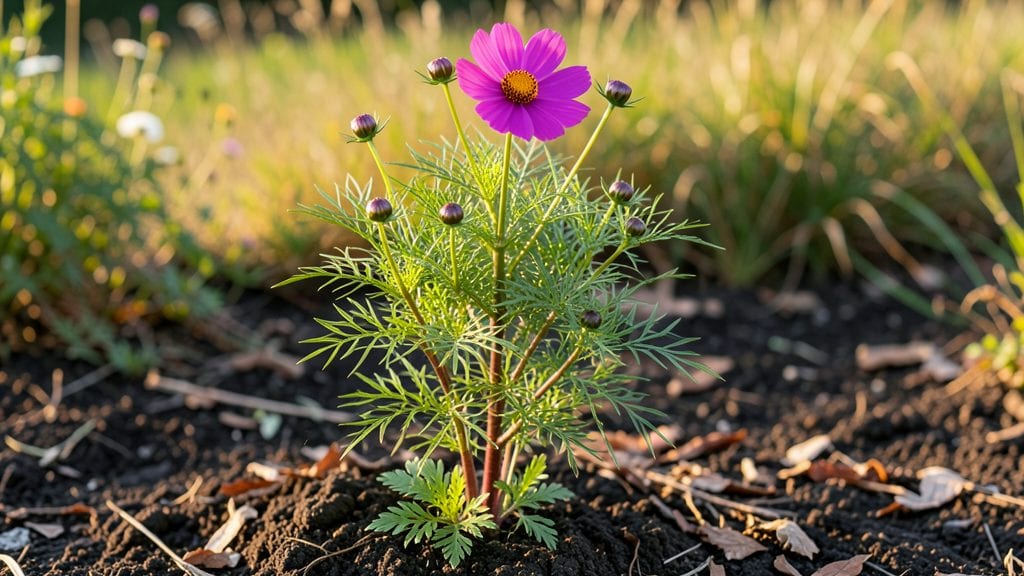
Understanding the cosmos flower growth stages transforms a handful of seeds into a garden full of effortless, sun-loving blooms that last all summer. ✨ I still remember the first time I watched my seedlings unfurl their fern-like leaves—it felt like watching magic happen in slow motion.
The journey from tiny seed to towering, daisy-like flowers is surprisingly predictable once you know what to expect at each stage.
From seed to full bloom takes about 3 months, but the real excitement happens in the first 6-8 weeks. You’ll start with delicate, feathery seedlings that look nothing like the bold flowers they’ll become.
By week 4, you’ll see the first true leaves appear, and by week 6, those leaves will transform into the familiar fern-like foliage. The plant grows fast—sometimes 2-3 inches per week—so you’ll need to keep an eye on spacing to avoid overcrowding.
By month 3, you’ll be rewarded with clusters of pink, white, or magenta blooms that keep coming back if you deadhead spent flowers. The flowers themselves start as tight buds, then unfurl into their signature ruffled, daisy-like shape, and they’ll continue blooming until frost.
The best part? Cosmos are drought-tolerant once established, so they reward even the busiest gardeners with minimal effort.
Whether you’re growing cosmos in full sun or a slightly shadier spot, the stages remain the same—just the timing might shift. The key to long-lasting blooms is regular deadheading and keeping the soil moist but not soggy.
Ready to watch your garden transform? Let’s break down each stage so you know exactly what to expect—and how to give your cosmos the best chance to shine.
📚 In This Guide
- What you need
- Instructions
- Tips and common mistakes
- Wrapping up and next steps
What you need
- ● Cosmos seeds: Choose heirloom or hybrid varieties (e.g., Cosmos bipinnatus or Cosmos sulphureus). Start with 5–10 seeds for a small garden or 20+ seeds for a full bed.
- ● Seed-starting mix: Use a lightweight, sterile potting mix (e.g., Miracle-Gro Seed Starting Potting Mix) for sowing indoors. 1–2 gallons per batch of seeds.
- ● Garden soil: Well-draining, loamy soil with a pH of 6.0–7.0. Amend with compost (1–2 inches mixed into the top 12 inches of soil).
- ● Containers: For indoor starts: Biodegradable peat pots (3–4 inches deep) or seed trays with individual cells.
- ● For direct sowing: Well-drained pots (4-inch diameter) or a seedling flat.
- ● Fertilizer: Balanced 10-10-10 fertilizer (1 tbsp per gallon of water) for seedlings.
- ● Slow-release organic granular fertilizer (e.g., Fish emulsion) for transplanting.
- ● Hand trowel or transplanting spade for digging.
- ● Watering can with a fine rose nozzle (to avoid disturbing seeds).
- ● Misting spray bottle (for keeping seeds moist indoors).
- ● Garden gloves (to protect hands from soil and thorns on mature plants).
- ● Pruning shears (for deadheading and shaping).
- ○ Stakes or cages (optional, for tall varieties like Cosmos bipinnatus).
- ● Sunlight: Full sun (6–8+ hours daily). Cosmos thrives in hot, sunny climates (USDA Zones 3–11).
- ● Watering schedule: Keep soil consistently moist (not soggy) until germination. After that, water 1–2 times per week (deep watering encourages strong roots).
- ● Temperature: Ideal germination range: 70–75°F (21–24°C). Avoid frost (cosmos is frost-sensitive).
- ● Spacing: Thin seedlings to 12–18 inches apart for bushy growth or 24+ inches for taller varieties.
How to recognize and support cosmos through each growth phase
Watch your cosmos transform from delicate sprouts to towering blooms—here's exactly what to expect at each stage.
🌱 Step 1: Germination and First True Leaves (Days 7-21)
After sowing seeds, keep the soil consistently moist but not soggy—cosmos seeds germinate best at 65-75°F. You'll see tiny green sprouts push through the soil in 7-14 days, though cooler temperatures may extend this to 3 weeks. These first leaves are called cotyledons, and they look like small, rounded shields.
Once the cotyledons unfurl, wait 3-5 more days for the first true leaves to appear—these will look more feathery and resemble miniature versions of the mature foliage. This is your signal to reduce watering slightly; overwatering now can cause damping-off, where seedlings collapse at the base. Thin seedlings to 12 inches apart if crowded, keeping the strongest one per spot.
🌿 Step 2: Vegetative Growth and Stem Elongation (Weeks 3-6)
During this phase, cosmos stems will shoot up 2-4 inches per week, reaching 12-18 inches tall by week 6. The leaves will grow larger and more intricate, with a fern-like texture. You'll notice the plants developing a woody base near the soil—this is normal and indicates strong root establishment.
Here's where light becomes critical: cosmos thrive in full sun (6+ hours daily), but young plants need gradual exposure. If stems grow leggy (long and thin with widely spaced leaves), they're stretching toward light. Move the container or plant to a sunnier spot immediately, or provide afternoon shade if direct sun is too intense in your climate.
☀️ Step 3: Bud Formation and Pre-Bloom (Weeks 6-8)
When stems reach 18-24 inches tall, you'll spot tiny green buds forming at the terminal ends. These buds will swell and develop color—typically pink, white, or magenta—over 7-10 days. This is your cue to reduce nitrogen-heavy fertilizers; cosmos bloom best when shifted to a low-nitrogen, high-phosphorus feed to encourage flowering.
Deadhead spent blooms immediately (remove faded flowers by pinching them off at the base) to redirect the plant's energy into new buds. You'll see a cascade of fresh blooms within 3-5 days of consistent deadheading. Avoid over-pruning—never trim more than one-third of the plant's height at once, or you'll stunt growth.
✂️ Step 4: Full Bloom and Maintenance (Weeks 8-12+)
At peak bloom, cosmos will produce 3-5 inch wide flowers on stems that can reach 3-5 feet tall. Each flower lasts 1-2 days, but the plant continuously produces new buds. The secret to prolonged flowering is consistent care: water at the base early in the morning, keeping soil 1-2 inches deep moist but never waterlogged.
After the first flush of blooms, you may notice stems becoming woody and less flexible. This is natural aging. To extend the season, cut back one-third of the plant's height after the initial bloom wave subsides. New growth will emerge from the base, producing a second round of flowers in 3-4 weeks. In cooler climates, cosmos may go dormant in fall—cut stems back to 6 inches tall and mulch to protect roots.
Tips & tricks for perfect cosmos flower growth
Here's what nobody tells you about nurturing cosmos from seed to showstopping blooms—these are the details that separate a patch of pretty plants from a garden showstopper.
Germination Secrets: The 65-75°F temperature range isn't just a suggestion—it's the sweet spot where cosmos seeds activate their germination enzymes. If your space runs cooler, consider using a seedling heat mat for the first 7-14 days to jumpstart sprouting. I've seen germination times stretch to 3 weeks in chilly basements, so don't rush to resow if nothing appears by day 14—patience pays off here.
Light Management Strategy: That leggy growth in Step 2? It's your plant's SOS signal for more light. Instead of immediately moving seedlings to full sun, I recommend a gradual transition: start with 3 hours of morning sun for the first week, then increase by 1 hour daily. This hardening process prevents sunburn on tender stems while encouraging sturdy growth. For container growers, rotate pots weekly to ensure even light exposure on all sides.
Bud Formation Boost: The 7-10 days it takes for those first buds to color up is where many gardeners make their biggest mistake—over-fertilizing. Switch to a low-nitrogen, high-phosphorus feed (like a 5-10-5 ratio) exactly when buds appear, and apply it to the soil at the base of the plant, not the leaves. I've seen cosmos produce 30% more blooms when fertilized this way during the budding phase.
Pruning Precision: When you're deadheading in Step 3, aim to remove only the faded flower heads—leave the first set of leaves below them intact. This preserves the plant's energy reserves while encouraging new buds to form from those leaf nodes. For that one-third height reduction after the first bloom wave, always cut just above a leaf node where new growth will emerge. I've revived seemingly spent cosmos plants with this technique, producing a second flush of blooms in just 3-4 weeks.
Pro Tips for Cosmos Flower Growth Stages
- Here's what nobody tells you about nurturing cosmos from seed to showstopping blooms—these are the details that separate a patch of pretty plants from a garden showstopper.
- Germination Secrets: The 65-75°F temperature range isn't just a suggestion—it's the sweet spot where cosmos seeds activate their germination enzymes.
- Light Management Strategy: That leggy growth in Step 2?
Frequently asked questions
about cosmos flower growth stages—because every gardener deserves clarity! Here’s what you’ve been wondering:How long does it take for cosmos flowers to grow from seed?
Most cosmos varieties bloom in 8–12 weeks from seed, depending on light and temperature. If planted in early spring (after the last frost), you’ll likely see flowers by mid-summer. For a longer bloom season, try successive plantings every 2–3 weeks!
Can cosmos flowers survive winter?
Nope! Cosmos are annuals and won’t return after frost. However, they self-seed wildly—so you’ll often find new sprouts next spring. In colder zones, save seeds from mature plants or start fresh indoors in late winter.
Do cosmos need full sun to grow?
Yes! Cosmos thrive in 6+ hours of direct sunlight daily. While they tolerate partial shade, blooms will be sparser and leggier. If your garden is shady, opt for shorter varieties like ‘Sensation’ (2–3 ft tall) for better adaptation.
Why aren’t my cosmos flowers opening?
Common culprits include overcrowding (thin plants to 12–18” apart), poor soil (amend with compost), or pests like aphids. Check for sticky leaves or chewed buds. Aphids? Blast ‘em off with water or introduce ladybugs!
Are there cosmos varieties that bloom all summer?
‘Bright Lights’ (mixed colors) and ‘Double Click’ (pink/purple) are prolific rebloomers if deadheaded regularly. For continuous color, pair cosmos with self-seeding annuals like zinnias or sweet alyssum.
Pro Tip:
For extra-vibrant cosmos, pinch back young plants (when 6” tall) to encourage bushier growth. This trick = more blooms and fewer floppy stems!
Wrapping up and next steps
Watching a cosmos flower bloom from seed is a rewarding journey filled with vibrant colors and natural beauty! 🌸 By understanding each growth stage—from germination to full bloom—you’ll unlock the secrets to nurturing thriving plants.
Whether you’re a beginner or a seasoned gardener, your efforts will soon be rewarded with stunning, low-maintenance blooms that attract pollinators and brighten any space.
Ready to take the next step? Start by planting your seeds today and track their progress with the tips you’ve learned. Before you know it, your garden will be a dazzling display of cosmos flowers—proof that patience and care pay off in the most beautiful ways! 🌱✨