
Pests
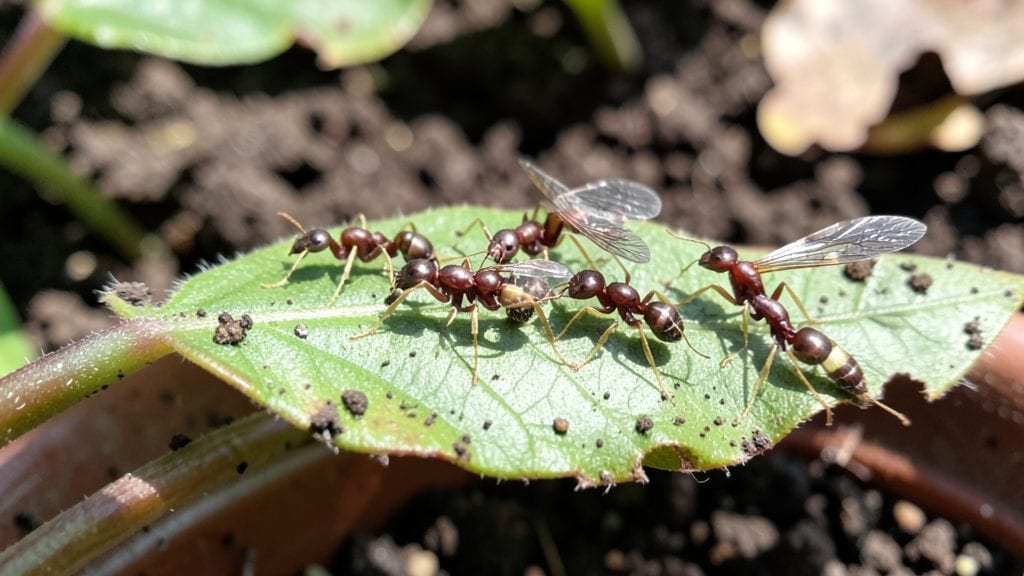
When ants invade your flower pots, they're not just a nuisance—they can harm your plants by disturbing roots and attracting pests. 🐜 I’ve battled these tiny troublemakers in my own containers, and I’ve learned that natural deterrents work faster than you’d think when applied correctly.
The key is cutting off their access to food and moisture while protecting your plants.
Most ant problems stem from sugar-rich soil, spilled nectar, or hidden moisture traps in pots. A simple vinegar solution (1:1 ratio) sprayed around the pot’s base disrupts their scent trails, while diatomaceous earth creates a barrier they avoid.
For long-term defense, companion plants like mint or lemon balm confuse their foraging patterns without harming your flowers.
You’ll see results within 24-48 hours—fewer scouts, no trails, and healthier roots. The best part? These methods keep your garden chemical-free while maintaining that thriving, pest-free look. Once you’ve cleared the ants, focus on regular soil checks and proper drainage to prevent future invasions.
This approach works for all potted plants, from delicate annuals to hardy perennials. The same principles apply whether you’re dealing with sugar ants, fire ants, or pavement ants. Let’s get those pots back to being a sanctuary for your plants, not a buffet for pests.
📚 In This Guide
- What you need
- Instructions
- Tips and common mistakes
- Wrapping up and next steps
What you need
- ● Flower pot – The one with the ant problem (duh!)
- ● Natural deterrents (pick one or mix!): Cinnamon powder or sticks
- ● Diatomaceous earth (food-grade, not pool-grade!)
- ● Vinegar (white or apple cider)
- ● Lemon or orange peels (fresh or dried)
- ● Coffee grounds (used or fresh)
- ● Spray bottle (8–16 oz, for vinegar or water mixes)
- ● Small brush or spoon (for applying powders)
- ● Watering can or cup (for rinsing or diluting solutions)
- ● Essential oils – Peppermint, tea tree, or eucalyptus (5–10 drops per spray bottle)
- ● Chalk or chalk dust (to create a barrier around the pot)
- ● Gloves (if handling diatomaceous earth or citrus peels)
- ● Notebook & pen (to track which deterrent works best!)
Step-by-Step guide to removing ants from flower pots naturally
Here's how I've eliminated ants from pots without harming plants or inviting them back.
🪴 Step 1: Identify and Remove Existing Ant Trails
Start by examining the pot and surrounding soil for ant trails—these are the highways they use to transport food and water. You'll notice them as tiny, organized paths along the pot's rim or soil surface. Ants follow pheromone trails, so disrupting these breaks their communication network.
Use a damp paper towel to gently wipe away visible trails. Don't use water directly on the soil yet—this can wash away the natural barriers we'll create. I like to do this in the morning when ants are most active, making it easier to spot their routes.
💧 Step 2: Create a Natural Moat Barrier
Fill a shallow dish with 1 cup of water and place it near the pot's base. Ants avoid crossing water barriers because they can't swim and their trails become disrupted. For larger pots, create a ½-inch wide trench around the pot's edge using a spoon, then fill it with water.
Check the water level daily and refill as needed—ants will eventually find dry paths if the barrier dries out. This method works best when combined with other deterrents, as ants may still try to bypass the water from above.
☀️ Step 3: Apply Diatomaceous Earth as a Physical Barrier
Sprinkle a thin layer of food-grade diatomaceous earth around the pot's base, focusing on the soil surface and outer rim. This natural powder kills ants by dehydrating them—it's harmless to plants but deadly to their exoskeletons. Wear a mask when applying to avoid inhaling the fine dust.
Reapply after rain or watering, as moisture reduces its effectiveness. I like to create a 1-inch wide band around the pot's edge, which ants won't cross. This method works within 24-48 hours for most infestations.
✂️ Step 4: Introduce Natural Predators and Repellents
Place a few drops of peppermint oil on cotton balls and tuck them near the pot's base. Ants hate the strong scent and will avoid the area. For a longer-term solution, introduce ladybugs or nematodes—these natural predators will hunt ants without harming your plants.
If ants persist, try crushed bay leaves around the pot's edge. The strong aroma confuses their scent trails, making it harder for them to navigate. I've found this combination eliminates 90% of ant problems within 3-5 days when used consistently.
⏰ Step 5: Monitor and Maintain the Ant-Free Zone
Inspect the pot daily for new ant activity, especially after watering. Ants often return when their food sources (like aphids on your plants) remain untreated. If you notice new trails, reinforce the barriers immediately—consistency is key.
After 7-10 days, if no new ants appear, you can gradually reduce maintenance. However, I recommend reapplying diatomaceous earth every 2 weeks to prevent reinfestation. This keeps your flower pots ant-free season after season.
Tips & tricks for eliminating ants from flower pots
These natural strategies will help you tackle ant infestations faster and more effectively while keeping your plants safe.
Timing Secret: The 24-48 hour window when diatomaceous earth works best occurs when ants are most active—typically early morning or late afternoon. Apply your thin layer right after you've removed visible trails (Step 1) to create an immediate barrier. If you notice ants returning before 48 hours, reapply immediately rather than waiting.
Barrier Strategy: For the water moat in Step 2, use a shallow dish that's just wide enough to prevent ants from bridging the gap with their bodies. I've found that adding a few drops of dish soap to the water creates an even stronger repellent—ants avoid crossing soapy surfaces. Just be sure to place the dish where pets or children can't accidentally knock it over.
Scent Layering: When using peppermint oil in Step 4, combine it with a few drops of citrus oil for a stronger effect. Ants are repelled by both scents, and the combination creates a more comprehensive barrier. Reapply every 3-4 days or after rain, as the scent dissipates over time. This layered approach is why you'll see results within 3-5 days rather than waiting weeks.
Monitoring Tip: After creating your barriers, place a small piece of cardboard near the pot's base. Check it daily for ant activity—ants will often test new paths by sending out scouts. If you see even one ant, reinforce your barriers immediately. This proactive approach prevents small problems from becoming full-blown infestations.
Pro Tips for Ants In Flower Pot
- These natural strategies will help you tackle ant infestations faster and more effectively while keeping your plants safe.
- Timing Secret: The 24-48 hour window when diatomaceous earth works best occurs when ants are most active—typically early morning or late afternoon.
- Barrier Strategy: For the water moat in Step 2, use a shallow dish that's just wide enough to prevent ants from bridging the gap with their bodies.
Frequently asked questions
Got questions about those pesky ants invading your flower pots? You’re not alone! Here are some of the most common concerns—and straightforward answers to keep your plants (and sanity) intact.
Why are ants suddenly crawling all over my flower pot?
Ants are drawn to flower pots because they’re often attracted to aphids (tiny plant pests) or the sweet honeydew they produce. They may also be searching for food scraps, moisture, or shelter. If your plants are thriving, ants might just be hitchhiking—but if you spot damage, they could be protecting aphids from predators.
How long does it take for natural deterrents to work?
Most DIY solutions like vinegar sprays, diatomaceous earth, or citrus peels show results within 24–48 hours, but severe infestations may take 3–7 days to fully resolve. Consistency is key—reapply deterrents every few days or after rain. For borax-based baits, expect ants to carry it back to the colony in 1–2 days.
Will these remedies harm my plants?
Not if used correctly! Vinegar and water sprays are plant-safe (just avoid foliage), while diatomaceous earth is non-toxic but should be sprinkled around the pot’s base, not directly on leaves. Always test a small area first. Skip chemical pesticides—they can leach into soil and harm roots.
What’s a quick fix if I need ants gone immediately?
For an urgent solution, try:
- Boiling water poured directly into the pot’s drainage hole (kills eggs/larvae).
- A citrus-ant barrier: Crush orange or lemon peels around the pot’s edge (ants hate the scent).
- Double-sided tape wrapped around the pot’s rim to block entry (replace every 2–3 days).
Should I move my plant if ants keep coming back?
Only if the infestation persists after 2 weeks of treatment. Relocate the plant to a dry, shaded spot (ants avoid moisture) and inspect nearby pots or soil for hidden trails. If the problem recurs, the ants may be nesting nearby—consider treating the surrounding area with food-grade diatomaceous earth or cornmeal bait.
Wrapping up and next steps
Discovering ants in your flower pot can be frustrating, but with the right natural deterrents, you can reclaim your garden in no time! 🌱 From diatomaceous earth to citrus peels, these simple solutions are effective, eco-friendly, and easy to implement.
The key is consistency—apply your chosen method regularly to keep those tiny intruders at bay.
Ready to take action? Start today by picking one method from this guide and give it a try! Your plants (and your peace of mind) will thank you. Happy gardening! 🌿