
Flowers
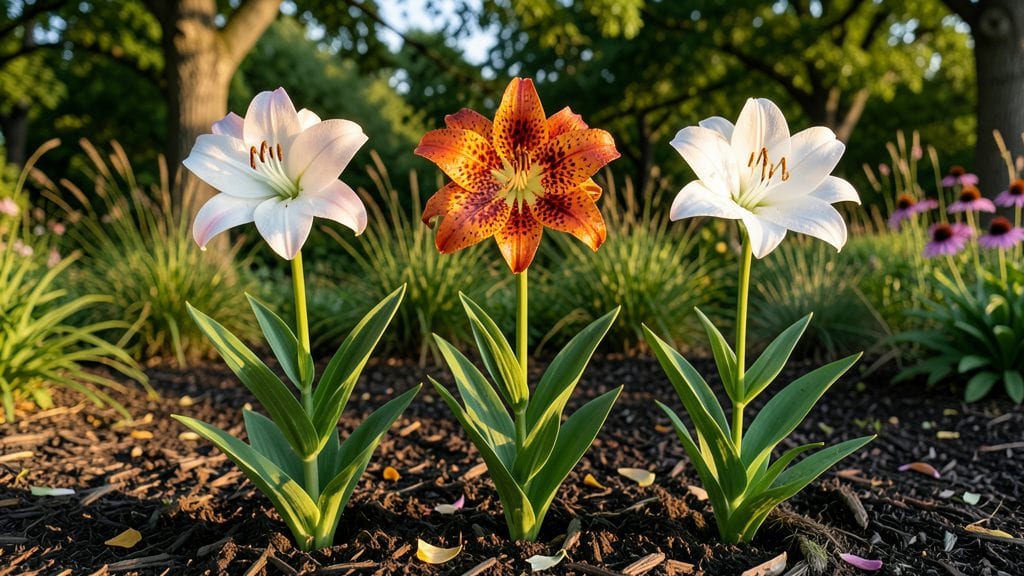
Growing all lily flowers in the Pacific Northwest means mastering the art of frost-proof pruning and seasonal timing—something I perfected after my first winter nearly froze my prized Asiatic lilies to the ground. 🌸 The key isn’t just choosing the right varieties (true lilies, daylilies, or the delicate lilies of the valley) but knowing when to plant them so they establish strong roots before the first hard freeze.
You’ll need well-draining soil mixed with compost, a sunny spot with at least 6 hours of light daily, and a watering routine that keeps bulbs moist but never soggy.
Most lilies thrive in zones 3-9, but Pacific Northwest gardeners must time planting between late summer and early fall for best results—this gives roots time to anchor before winter sets in.
By following these steps, you’ll end up with bold, trumpet-shaped blooms that appear from mid-summer to early fall, depending on the variety. The fragrance alone—especially from stargazer lilies—will make your garden the envy of the neighborhood, and the pruning techniques I’ll share keep them coming back year after year.
Whether you’re dealing with heavy winter rains or late-spring frosts, these methods ensure your lilies stay healthy, hardy, and show-stopping without the guesswork. Let’s get those bulbs in the ground the right way!
📚 In This Guide
- What you need
- Instructions
- Tips and common mistakes
- Wrapping up and next steps
What you need
- ● Lily bulbs: Choose from Asiatic, Oriental, Trumpet, Day, or Stargazer lilies—pick frost-hardy varieties like Lilium martagon (Martagon lily) or Lilium superbum (Turk’s cap lily) for PNW resilience. Quantity: 5–10 bulbs per variety (adjust based on garden size).
- ● Well-draining soil: Mix 1 part compost with 2 parts native PNW soil (or potting mix for containers). Test soil pH: Aim for 6.0–7.0 (slightly acidic to neutral).
- ● Organic mulch: 3–4 inches of shredded bark, straw, or wood chips to insulate roots in winter.
- ● Slow-release fertilizer: 10-10-10 or 5-10-10 NPK ratio (apply 1 tbsp per bulb at planting time).
- ● Garden gloves & knee pads: For comfortable handling of bulbs and soil.
- ● Hand trowel or bulb planter: For precise planting (avoid sharp tools to prevent bulb damage).
- ● Garden fork: To loosen soil 12–18 inches deep (lilies need room to grow!).
- ● Watering can or hose with gentle spray: Lilies hate soggy soil—opt for 1–1.5 inches of water per week (drought-tolerant once established).
- ● Pruning shears: Sharp, sterilized (for deadheading and frost-pruning).
- ○ Container (optional):strong> 10–15 gallon pots with drainage holes for patio lilies (e.g., Lilium longiflorum).
- ● Lily-specific fungicide: Copper-based (e.g., Copper Soap) to prevent bulb rot in wet PNW winters.
- ● Plant supports: Bamboo stakes or rings for tall varieties like Lilium regale (regal lily).
- ● Soil thermometer: Monitor 60–70°F soil temps for optimal bulb planting in early spring.
- ● Frost cloth: Lightweight 30–40g weight to protect emerging shoots in late frosts (April–May in PNW).
Step-by-Step guide to pruning lilies for Pacific Northwest resilience
Here’s how to keep your lily blooms thriving through PNW’s unpredictable frosts and rains.
✂️ Step 1: Time Pruning for Late Fall or Early Spring
Wait until after the first hard frost (typically November in the PNW) or just before new growth appears in early spring (March-April). Pruning too early removes stored energy in the bulb, while waiting too late invites rot. I always check for leaf browning—when 70% of foliage turns yellow, it’s safe to cut back.
Use clean, sharp pruners to avoid crushing stems. Cut 2-3 inches above the ground, leaving a small stump to protect the bulb’s neck from moisture. Never remove all foliage—lilies need those leaves to photosynthesize and fuel next year’s blooms.
🌱 Step 2: Remove Dead or Diseased Growth First
Scan for blackened stems, moldy bulbs, or mushy bases—these are signs of bulb rot or fungal infections common in damp PNW climates. Snip these away immediately, then discard them in the trash (never compost). Healthy stems should feel firm and upright, not hollow or slimy.
If you spot aphids or spider mites (tiny webs on stems), spray with neem oil before pruning. The PNW’s mild winters often let pests linger—early intervention prevents springtime infestations. Work in dry conditions to avoid spreading spores or pests to other plants.
☀️ Step 3: Thin Crowded Foliage for Better Airflow
Lilies in the PNW often multiply, creating dense clumps. Gently dig around the base to separate bulbs that are 2-3 inches apart. Overcrowding traps moisture, promoting rot. Use a hand fork to loosen soil without damaging roots—lilies resent rough handling.
After thinning, water deeply to settle the soil around exposed roots. Avoid overhead watering for a week to let cuts heal. Mulch with 2-3 inches of shredded bark (not fresh wood chips) to insulate bulbs through winter’s occasional freezes.
⏰ Step 4: Prepare for Winter with Strategic Mulching
Spread the shredded bark mulch evenly over the pruned area, extending 6 inches beyond the plant’s base. This mulch layer acts as a frost blanket, protecting bulbs from temperature swings common in the PNW. Check mulch depth in spring—if it’s broken down, add more to maintain insulation.
For hardy lilies like Tiger or Stargazer, this mulching is enough. For tender varieties (e.g., Oriental lilies), add a 12-inch layer of straw on top of the bark for extra protection. Remove mulch in early spring (March) to prevent overheating as temperatures rise.
Tips & tricks for perfect Pacific Northwest lily pruning
Here's what I've learned after years of battling PNW's damp climate to keep my lilies thriving.
Timing Secret: The 70% leaf browning rule in Step 1 is your best indicator—not just the calendar. In wet PNW springs, leaves may yellow earlier due to fungal pressure. If you're unsure, wait an extra week. The goal is to preserve stored energy while removing dead tissue that could harbor diseases like botrytis, which thrives in our rainy season.
Pest Prevention Strategy: In Step 2, don't overlook the tiny webs on stems—those are spider mite eggs. I've found that applying neem oil in early October (before winter rains) creates a protective barrier. For severe infestations, repeat every 10 days until new growth appears in spring. The key is acting before you see visible damage, since PNW's mild winters let pests survive longer than in drier climates.
Airflow Hack: When thinning in Step 3, focus on creating vertical space between bulbs rather than just horizontal separation. Use a hand fork to gently lift and reposition bulbs rather than pulling—their roots are surprisingly delicate. This vertical spacing improves airflow at soil level, which is critical for preventing the gray mold that loves our damp winters.
Mulching Mastery: For Step 4, I've found that adding a 1-inch layer of coarse sand beneath the shredded bark creates better insulation. The sand prevents the mulch from compacting against the bulb neck, which can lead to rot during freeze-thaw cycles. For tender varieties, consider using straw bales instead of loose straw—they hold their shape better in windy PNW winters.
Pro Tips for All Lily Flowers
- Here's what I've learned after years of battling PNW's damp climate to keep my lilies thriving.
- Timing Secret: The 70% leaf browning rule in Step 1 is your best indicator—not just the calendar.
- Pest Prevention Strategy: In Step 2, don't overlook the tiny webs on stems—those are spider mite eggs.
Frequently asked questions
Got questions about growing and caring for all lily flowers?
Whether you're a beginner or a seasoned gardener, these answers will help you navigate the world of lilies with confidence—especially in the Pacific Northwest's frost-prone climate!
What’s the best time to plant lilies in the PNW to survive winter?
Plant bare-root lilies in early fall (September–October) or container-grown lilies in late spring (May–June) for frost-proof roots. PNW’s mild winters allow lilies to establish before cold sets in, but avoid planting too late—roots need time to harden before frost!
Do lilies die in frost, or can they come back every year?
Most lilies (like Asiatic, Oriental, or Stargazer) are hardy perennials and survive PNW frosts if planted correctly. Their bulbs and rhizomes stay dormant underground, then regrow in spring. True bulbs (e.g., Martagon lilies) handle frost better than rhizomatous types (e.g., Daylilies), which may need mulch in harsh winters.
When and how should I prune lilies after blooming?
Prune after foliage yellows (late summer/early fall), but never cut leaves until they’re fully brown—this feeds the bulb for next year! For Asiatic/Oriental lilies, trim spent flower stalks at the base immediately, but leave the rest. Martagon lilies can be pruned lightly to shape. PNW tip: Wait until after the first frost to prune if leaves linger.
Are there frost-resistant lily alternatives for the PNW?
Yes! Try these low-maintenance, cold-hardy options:
Use these organic PNW-friendly fixes:
All three handle PNW’s wet winters better than tropical hybrids.
How do I protect lilies from pests like lily beetles or slugs?
Avoid chemical sprays if bees pollinate your lilies.
Wrapping up and next steps
From the delicate elegance of Calla lilies to the hardy resilience of Tiger lilies, the Pacific Northwest’s climate offers endless opportunities to cultivate stunning lily varieties—even in frost-prone zones! 🌸 With the right pruning blueprint, soil prep, and seasonal care, you’re well on your way to a thriving garden that blooms year after year.
Remember, patience and consistency are key—your lilies will reward you with breathtaking displays if you nurture them like the pros.
Ready to take the next step? Start small:
- Pick one variety to master this season.
- Bookmark this guide and revisit it before each pruning cycle.
- Join a local PNW gardening group—shared tips and troubleshooting make all the difference!